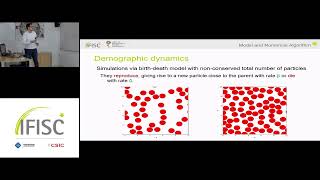
Interacting Particle Systems with Mobility and Demographic Dynamics as Biological Models
Explore complex biological models using interacting particle systems, incorporating mobility and demographic dynamics for advanced scientific understanding.

Bounded Confidence: A Deceptively Simple Model
Explore the intriguing Bounded Confidence model, its dynamics, and applications in complex systems through examples, interpretations, and insightful discussions.
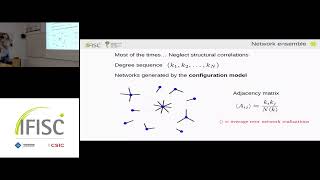
Stochastic Dynamics on Networks: Insights into Opinion Polarization
Explore stochastic dynamics on networks and gain insights into opinion polarization through advanced mathematical modeling and analysis techniques.
LangChain Agents Deep Dive with GPT 3.5 - LangChain
Explore LangChain agents to enhance LLMs with tools for logic, calculation, and search. Learn implementation, customization, and various agent types to superpower your AI applications.

The LangChain Cookbook - Beginner Guide to 7 Essential Concepts
Explore 7 essential LangChain concepts: Schema, Models, Prompts, Indexes, Memory, Chains, and Agents. Learn how to leverage these components for building powerful language AI applications.
Generalizing Scientific Machine Learning and Differentiable Simulation Beyond Continuous Models
Explore advanced scientific machine learning, extending differentiable simulation to complex models like jump diffusions and agent-based systems, addressing challenges in implementation and numerical stability.

Data Collector Model in Agent-Based Modeling with Mesa - Session 18
Learn to implement a Data Collector Model in Mesa, enhancing your agent-based modeling skills with Python and improving data analysis capabilities.

Initialize Traders in Agent-Based Models with Python - Session 7
Learn to initialize traders in agent-based models using Mesa, a Python library for complex systems simulation and analysis.
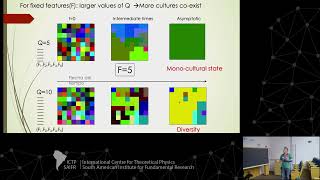
Multi-agent Models in Complex Networks - Class 4
Explore multi-agent models in complex networks, focusing on applications to socio-economic complexity and nonlinear systems.

The Social Credit System
Analyse des systèmes de crédit social chinois, leurs implémentations et impacts potentiels sur la société et l'économie, à travers une modélisation par agents et une perspective technique nuancée.
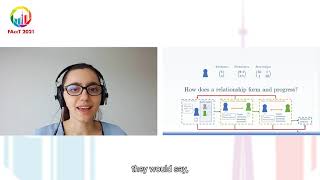
An Agent-Based Model to Evaluate Interventions on Online Dating Platforms to Decrease Racial Homogamy
Explore an agent-based model evaluating interventions on dating platforms to reduce racial homogamy, examining societal impacts and potential solutions.
Integrated Information in the Active Inference Framework
Explore how active inference agents integrate information and consciousness through unified perception and action selection, with insights into information-theoretic measures and agent-environment interactions.
Interpretable Hierarchical Calibration of Agent-Based Models
Explore scientific machine learning's fusion of traditional modeling and ML, focusing on neural network surrogates for agent-based models in epidemiology and automated hierarchical calibration.
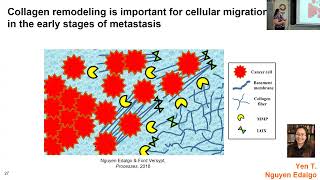
Agent-Based Modeling of Cancer Cell Migration in Response to Tumor Microenvironmental Signals
Explore computational modeling techniques for simulating cancer cell migration and interactions within tumor microenvironments, enhancing understanding of disease progression.
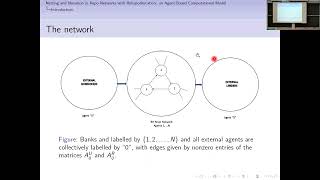
Netting and Novation in Repo Networks with Rehypothecation - Agent-Based Computational Model
Explore computational modeling of repo networks, examining netting, novation, and rehypothecation effects on financial stability and systemic risk.
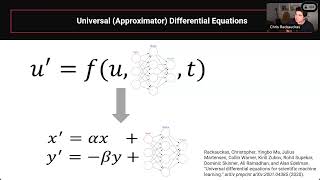
Generalizing Scientific Machine Learning and Differentiable Simulation Beyond Continuous Models
Explore generalizing scientific machine learning beyond continuous models, covering differentiable simulation for chaotic systems, stochastic processes, and inverse problems in advanced scientific computing.
Agent-Based Dynamic Models of Opinion Formation: Where Are We Now?
Explore dynamic models of opinion formation, focusing on continuous opinions at the microscopic level. Examine achievements in analysis and new challenges in dynamical systems, control theory, and AI.
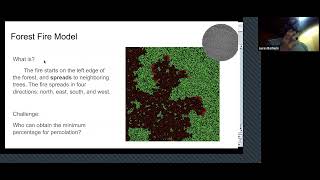
Doing Good Science with Videogames
Explore multidisciplinary problems through interactive simulations, from voter models to cancer stem cell research. Gain hands-on experience with NetLogo to investigate complex systems and emergent properties.
Tools for Agent-Based Modelling in Developmental Biology
Explore tools for agent-based modeling in developmental biology using Julia, including SpatialHashTables.jl, BoundedDegreeGraphs.jl, and AgentTools.jl. Learn about Position-Based Dynamics for particle simulations.
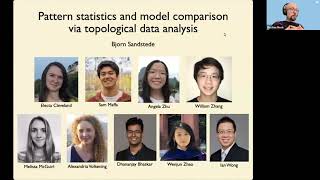
Pattern Statistics and Model Comparison via Topological Data Analysis
Exploring topological data analysis for pattern quantification, model comparison, and feature design in zebrafish skin patterns and other complex systems.
Studying the Behavior of Generative AI-Based Agents in Multi-Agent Systems
Explore generative AI-based agents in multi-agent systems using Concordia library. Learn about language-mediated simulations, flexible component systems, and the Game Master concept for diverse research applications.