City as a Startup - Transforming Downtown Las Vegas
Tony Hsieh's ambitious $350 million Downtown Project aims to transform Las Vegas' urban core into a vibrant, connected community. Explore the project's successes, challenges, and potential lessons for urban revitalization.
The Fabric of our Lives - Cities, Slums, Neighborhoods, People
Explore how cities are defined by connections, examining urban fabric through neighborhood data and individual interactions, with insights on slums as gateways to urban life.
From Scaling to Practice: Real World Applications of Cities Research - 2014
Explore real-world applications of urban scaling research, examining how theoretical insights translate into practical solutions for city planning and development.
The Conceptual Framework of Urban Scaling - 2014
Explore the theoretical foundations of urban scaling, examining how cities grow and evolve over time through complex systems analysis and mathematical modeling.
The Urban Species - How Domesticated Humans Evolved
Explore the evolutionary impact of urbanization on humans, comparing modern megacities to Neolithic settlements and examining potential future changes in our civilization.
The Global and Urban Energy Challenges - Principles of Complexity
Explore global energy challenges, urban energy use, and potential solutions with Sir Christopher Llewellyn-Smith in this comprehensive lecture on the complexities of our energy future.
Citier: Bigger, Denser, Greener - Urban Development Trends in 2011
Explore urban scaling laws and their implications for sustainability, efficiency, and innovation in growing cities through data-driven analysis and complex systems theory.
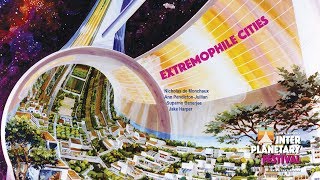
Extremophile Cities - Urban Design for Severe Environments
Exploring urban design solutions for cities facing extreme challenges, from climate change to extraterrestrial habitation. Experts discuss innovative approaches to create resilient, sustainable urban environments in severe conditions.
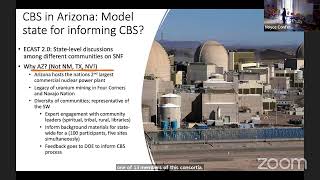
Governing the Ungovernable - Nuclear Waste Management Through Consent-Based Siting
Explore the challenges of nuclear waste management through consent-based siting, focusing on environmental justice, intergenerational impacts, and future governance of radioactive materials.
Fractal Inequality and the Complexity of Repair - Part 1
Exploring how complex systems science can address societal inequalities, from vaccine distribution to economic opportunities. Insights on repairing structural inequities using network analysis and modeling to protect vulnerable populations.
Scaling Laws and Social Networks in the Time of COVID-19 - Part 1
Exploring scaling laws in biology, cities, and economies, and their implications for societal challenges like pandemics and sustainability. Insights from complex systems science for understanding human civilization.
Better Scientific Modeling for Ecological and Social Justice
Exploring how mathematical models can encode blind spots and create externalities, emphasizing the need for rigorous empiricism to achieve ecological and social justice through better scientific modeling.
Emergent Tokyo - Speculations on a Space City
Exploring Tokyo's urban design principles as a model for vibrant, adaptable space cities. Analyzes key features enabling bottom-up urbanism and offers insights for creating livable extraterrestrial settlements.
Geoenvironmental Engineering - Landfills, Slurry Ponds & Contaminated Sites
Comprehensive exploration of geoenvironmental engineering, covering landfill design, waste management, contamination control, and slurry disposal. Focuses on practical applications and environmental protection strategies.
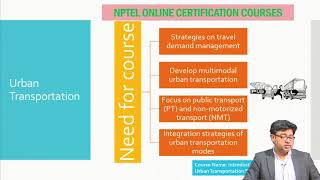
Introduction to Multimodal Urban Transportation System
Comprehensive exploration of urban transportation systems, covering public transit, non-motorized modes, sustainability, and intelligent technologies. Equips learners with knowledge to address modern urban mobility challenges.
Urban Landuse and Transportation Planning - Prof. Debpratim Pandit
This course provides the basic concepts and skill sets to undertake urban landuse and transportation planning and to analyze the impact of various policies either related to infrastructure development, environmental regulation and urban expansion.
Leadership Lab - Research in a Digital Age: Video or Vanish?
Explore digital strategies to amplify research impact, including video abstracts and social media, to enhance visibility, citations, and collaboration opportunities in academia.
Are Some Cities More Punishing for Low-Income Families? - Urban Inequality and Poverty
Exploring urban inequality: How city differences impact poverty experiences, safety nets, and opportunities for low-income families in high-poverty neighborhoods across the United States.

Disaster Recovery and Build Back Better
You will learn topics like Understanding Risk and Vulnerability; The road map of BBB. The Role of Built Environment professions in Disaster Risk Reduction. The Pedagogic dimension for Build Back better, etc.
Population Studies
The aim of the course is to equip students with knowledge usually imparted in diploma and masters courses. Thus the course will serve a base for higher degrees such as Ph.D. Aspirants for civil service exams are also expected to benefit from this.
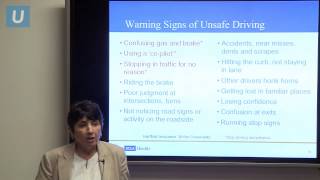
Driving and Dementia - Linda Ercoli, MD | UCLAMDChat
Explore signs of unsafe driving in dementia patients, strategies for caregivers, and alternative transportation options with expert insights from UCLA psychologist Linda Ercoli.