
The Rise of the European Middle Classes in the 19th Century - Lecture 9
Explore the diverse 19th-century European middle classes, their rise to power, cultural impact, and societal contributions, from philanthropy to education and birth control advancements.
Nineteenth-Century Cities - Urban Growth and Social Change in Europe and America
Explore 19th-century urbanization, class segregation, and city development through the lens of European history, with a focus on Paris as a case study of urban transformation and social dynamics.

Industrial Revolutions - European Civilization 1648-1945 - Lecture 8
Explore the gradual process of industrialization, its impact on agriculture, urban expansion, and labor practices, including the rise of class consciousness and industrial discipline.

England, Britain, and the World - Economic Development 1660-1720
Explore Britain's economic boom (1660-1720): agricultural specialization, urbanization, overseas trade expansion, manufacturing growth, and the emergence of a national market economy.

Paris and the Belle Époque - Rebuilding and Class Division in Modern Paris
Explore how Napoleon III and Haussmann's rebuilding project shaped modern Paris, examining its impact on class divisions, urban development, and the city's unique character during the Belle Époque era.

French Industrialization: Workshop and Factory - Lecture 6
Explore France's unique industrialization, focusing on artisans, labor movements, and industrial discipline. Discover how domestic and non-factory work shaped the country's economic landscape and social dynamics.

Economic Expansion in Early Modern England, 1560-1640
Explore England's economic growth from 1560-1640, covering population rise, agricultural improvements, urban expansion, industrial changes, and trade developments, despite persistent economic challenges.

Economic Impact of Population Growth - China and Global Perspectives
Explore the complex relationship between population growth, economic development, and fertility rates, focusing on China's policies and global demographic trends.
Encontro das Águas - Circulation and Displacement in Art
Artista Clarissa Tossin apresenta obras que exploram temas de circulação e deslocamento, abrangendo uma década de produção interdisciplinar e reflexões sobre identidade cultural.
Water Security Series: Impacts of Poor Water Quality on Animal Health
Explore impacts of poor water quality on animal health, discussing research, productivity effects, and potential solutions in Australian agriculture.
Crucibles of Creativity - Exploring Sites of Innovation and Collaboration
Exploring factors behind creative hotspots, from Renaissance Florence to Silicon Valley. Examines social aspects of creativity in science, art, and technology, drawing insights from Science Gallery Dublin to nurture modern innovation.
The Science of Cities: Defining Size, Shape, Scale and Performance Using Percolation Theory
Exploring how city size impacts shape and performance using percolation theory, challenging the notion that bigger cities are always better through innovative spatial analysis methods.
Imagine 2033: Achieving a Healthy and Sustainable Post-Carbon World
Explore a visionary future beyond fossil fuels, examining the potential for a clean energy economy and the challenges to overcome in creating a sustainable post-carbon world.
Climate Conversations - Opposing Views on Rising Tides
Explore the Biden Administration's impact on Australia's climate policy, discussing global commitments, economic sustainability, and potential policy shifts ahead of the Earth Day Summit.
MAX Summit - Deployment and Commercialization of Autonomous Vehicles
Explore deployment and commercialization strategies for urban mobility solutions, focusing on collaboration, customer experience, and overcoming adoption barriers.

IPCC's Latest Assessment on Climate Impacts and Adaptation Options - Key Findings and Implications
Experts discuss IPCC's latest climate change report, focusing on impacts, risks, and adaptation strategies. Key findings and implications for global action in the critical decade to 2030 are explored.
Digital Technologies for the Future Cemetery
Explore innovative digital solutions for modern cemeteries, addressing space constraints and evolving commemoration practices while considering public attitudes and future scenarios.
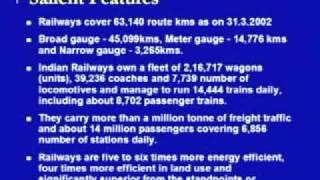
Transportation Engineering II
Comprehensive exploration of railway engineering and airport design, covering track components, geometric design, signaling systems, aircraft characteristics, runway planning, and terminal facilities.
Urban Transportation Planning
Comprehensive exploration of urban transportation planning, covering conceptual aspects, trip analysis, modal split, distribution, route assignment, surveys, land-use models, urban structure, and goods movement.
Luis Bettencourt on The Science of Cities
Luis Bettencourt explores the science of cities, examining their unique properties, scaling laws, and impact on human life. He discusses urban innovation, sustainability challenges, and the future of urban living.
The Decline of Classic Maya Civilization - A Systems Perspective
Explore the systemic factors behind the decline of Southern Maya Lowlands cities around 800 AD, challenging previous collapse theories and examining new archaeological and environmental insights.