Urban Landuse and Transportation Planning - Prof. Debpratim Pandit
This course provides the basic concepts and skill sets to undertake urban landuse and transportation planning and to analyze the impact of various policies either related to infrastructure development, environmental regulation and urban expansion.
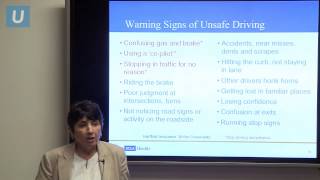
Driving and Dementia - Linda Ercoli, MD | UCLAMDChat
Explore signs of unsafe driving in dementia patients, strategies for caregivers, and alternative transportation options with expert insights from UCLA psychologist Linda Ercoli.
Exploring How Parking Information Influences Connected Car Services to Improve Driver Experience
Discover how detailed parking data enhances connected car services, improves driver experiences, and addresses challenges in Japan's dense urban areas. Explore current trends and future developments in the parking industry.

Wie entsteht eigentlich ein Fahrplan? - Entstehung und Komplexität von Verkehrsfahrplänen
Entdecke die Entstehung von Fahrplänen für öffentliche Verkehrsmittel. Erfahre, wie Baustellen berücksichtigt werden und warum Abweichungen zwischen verschiedenen Quellen auftreten können.
Reimagining Transportation and Mobility in the Upper Roaring Fork Valley - Session 2
Experts discuss innovative approaches to reduce transportation demand, enhance convenience, and leverage emerging technologies for improved mobility in the Upper Roaring Fork Valley.
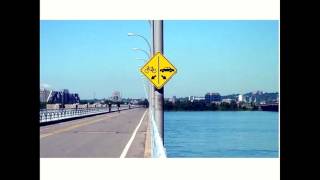
Reimagining Transportation and Mobility in the Upper Roaring Fork Valley
Explore sustainable transportation solutions for the Upper Roaring Fork Valley with expert Jim Charlier, covering economic, demographic, and technological influences on mobility systems.
Toward Equity in Travel Demand Modeling
Explore innovative approaches to incorporate equity considerations in travel demand modeling, addressing transportation disparities and promoting fair access to mobility resources.
An Energy Plan the Earth Can Live With
Exploring sustainable energy solutions for a 1.5°C warming target, emphasizing immediate action, technological advancements, and policy opportunities to address climate change and environmental justice.
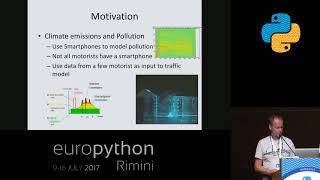
Modelling Pollution from Traffic, Using Smartphone Data and Python
Explore Python-based modeling of traffic pollution using smartphone data, combining traffic assignment, econometric models, and congestion analysis for urban environmental monitoring and mitigation.
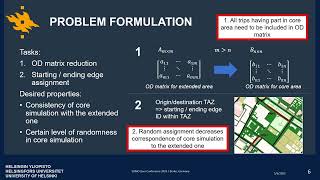
Simulation-Based Origin-Destination Matrix Reduction: A Case Study of Helsinki City Area
Explore traffic simulation optimization techniques through a Helsinki case study demonstrating efficient origin-destination matrix reduction methods for improved urban mobility analysis.
Simulation-Based Rescue Response Impact Assessment with rescuePY
Discover how rescuePY simulation suite enables comprehensive analysis of emergency response systems in evolving urban environments, focusing on rescue service performance and evacuation modeling capabilities.
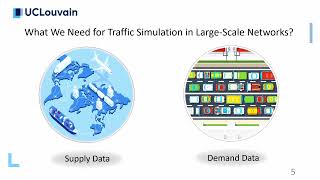
Development, Calibration, and Validation of a Large-Scale Traffic Simulation Model - Belgium Network
Discover how to develop, calibrate and validate large-scale traffic simulation models using a probabilistic travel demand approach, demonstrated through Belgium's road network implementation.
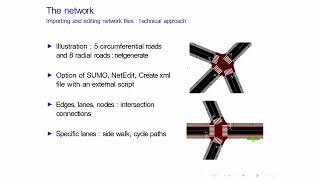
Evaluating the Benefits of Promoting Intermodality and Active Modes in Urban Transport - A Microsimulation Approach
Discover how microsimulation analyzes urban transport systems, demonstrating significant reductions in congestion and emissions through intermodal transportation and active mobility solutions in city planning.
Bus Priority Procedure for Signalized Intersections Based on Bus Occupancy and Delay
Explore an innovative bus prioritization framework for signalized intersections that uses occupancy and delay metrics to enhance public transport efficiency through advanced vehicle-to-infrastructure communication and simulation testing.
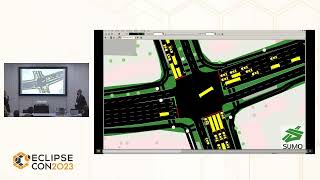
Create Detailed Traffic Models and Simulations with Open Source Tools and Open Data
Discover how to build digital twins for traffic systems using open-source tools like Eclipse SUMO and TAPAS, enabling data-driven decisions for urban mobility optimization and planning.
Seeing is Believing - Transportation Simulation and Research
Explore cutting-edge transportation research and simulation techniques at the Alabama Transportation Institute, focusing on human-centered innovations and international collaborative efforts.
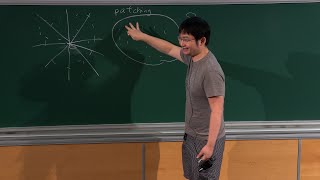
Euclidean Capacitated Vehicle Routing in Random Setting - A 1.55-Approximation Algorithm
Explore a 1.55-approximation algorithm for Euclidean capacitated vehicle routing in random settings, presented by Zipei Nie.
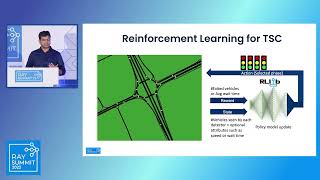
Gearing Up for FIFA 2022 Using RLlib-Powered Traffic Control
Optimize traffic control for FIFA 2022 using RLlib-powered multi-agent reinforcement learning, microsimulation, and Graph Convolutional Networks for congestion management in Qatar.
Open the Paths - Coordinating Cross-County Transportation Options: ST3's Hidden Imperative
Explore innovative strategies for coordinating cross-county transportation, focusing on ST3's hidden imperative and its impact on regional mobility and accessibility.
Amazon India Commute On-Demand Review
Explore innovative solutions for urban mobility challenges in India, focusing on Amazon's on-demand commute program and its impact on traffic congestion and employee satisfaction.
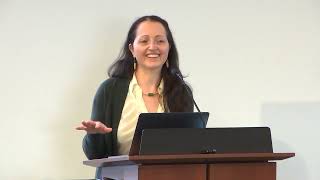
Tools for Equitable Transportation Planning with TDEI Infrastructure
Explore innovative tools for equitable transportation planning using TDEI Infrastructure. Learn how technology can enhance accessibility and promote inclusive urban mobility solutions.