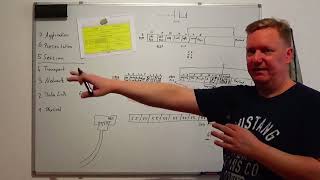
Anatomy of Network Packets: TCP - Lecture 8
Explore TCP packet structure and functionality, building on previous network protocol knowledge for a comprehensive understanding of data transmission.
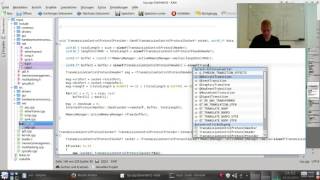
Write Your Own Operating System - Transmission Control Protocol (TCP) Implementation - Lecture 7
Implement TCP send-method and checksum for the operating system's TCP handler, enhancing network communication capabilities.
Digital Investigation: Ethernet, IP, TCP and UDP Protocols
Explore Ethernet, IP, TCP, and UDP protocols through hands-on Wireshark analysis. Learn network layers, addressing, headers, and potential vulnerabilities in digital investigations.
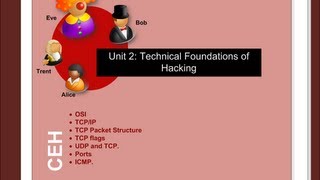
CeH Unit 2: Technical Foundations of Hacking
Explore technical foundations of hacking: OSI model, ARP, protocols, Ethernet, IP, TCP/UDP, security issues, and ICMP. Gain insights into network communication fundamentals.
Client Networking - TCP and UDP in Network Chat Programming - Episode 11
Learn to set up UDP client connections in Java, exploring TCP/UDP concepts, Datagram, DatagramSocket, and InetAddress usage for network chat programming.
TC BPF and UVETH Hook for Connected UDP/TCP
Explore tc BPF and uveth;hook techniques for optimizing connected UDP/TCP performance in Linux networking environments.
Down the Line - Evolving HTTP and Making Things QUIC
Explore HTTP evolution, QUIC protocol, and web performance optimization. Learn about latency reduction, header compression, and innovative transport layer solutions for faster, more efficient internet communication.
Analysis of AMD Hardware-Assisted Virtual IOMMU Implementation and Performance
Explore AMD's hardware-assisted vIOMMU implementation, its performance impact, and integration with QEMU and host drivers for enhanced DMA remapping and guest IOMMU support.
Large-Scale Deployment of Data Center TCP (DCTCP) - Challenges and Experiences
Deployment experiences of DCTCP in large-scale data centers, highlighting performance improvements, unexpected challenges, and open research questions in network congestion control.
Reverie: Low Pass Filter-Based Switch Buffer Sharing for Datacenters with RDMA and TCP Traffic
Innovative buffer-sharing scheme for datacenters, improving RDMA and TCP performance through unified admission control and low-pass filtering, enhancing burst absorption and flow completion times.
Network Manipulation on Video Games
Network manipulation techniques for video games, covering latency, protocols, input prediction, and privacy, with practical tips for optimizing gameplay and understanding network traffic.
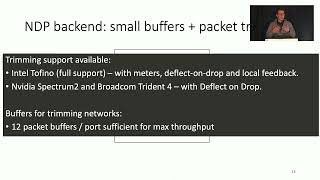
An Edge-Queued Datagram Service for All Datacenter Traffic
Edge-queued datagram service for datacenters moves queuing to sending hosts, enabling multiple protocols to coexist, improving performance, and facilitating future enhancements without modifying higher-layer stacks.
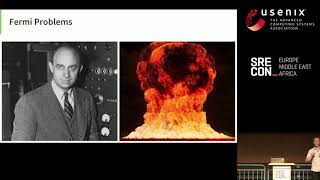
Advanced Napkin Math - Estimating System Performance from First Principles
Learn to quickly estimate system performance using base rates and napkin math, enabling informed decision-making in technical discussions and design processes without building systems first.
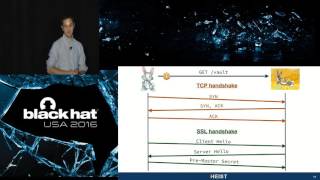
HEIST - HTTP Encrypted Information can be Stolen Through TCP-Windows
Unveils HEIST, a browser-based attack exploiting SSL/TLS vulnerabilities without network access. Demonstrates how to leak cross-origin response sizes, enabling compression-based attacks and sensitive information extraction from popular websites.
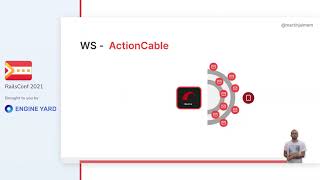
Using Rails to Communicate with the New York Stock Exchange
Learn to build scalable trading apps with Rails, managing complex APIs, TCP protocols, and RPC for high-frequency transactions with the New York Stock Exchange.

Connection-Oriented DNS to Improve Privacy and Security
Enhancing DNS privacy and security through TCP and TLS, addressing eavesdropping, spoofing, and DoS attacks while maintaining performance with careful implementation choices.
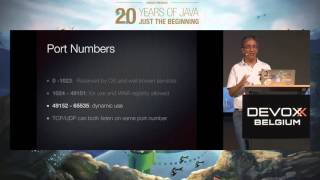
TCP? UDP? Que? - Fundamentals That Were Abstracted Away from Us
Dive into network fundamentals, exploring TCP, UDP, and custom protocols. Understand the benefits and trade-offs of different communication methods for better decision-making in software development.
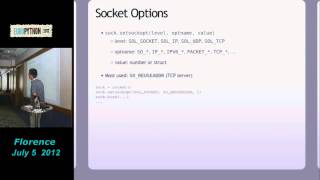
Using Sockets in Python
Learn to effectively use Python sockets for network programming. Covers UDP, TCP, hostname resolution, non-blocking sockets, and advanced techniques like greenlet-based networking and Twisted.
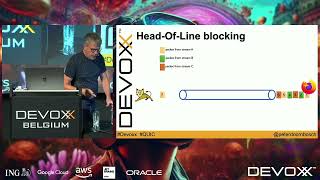
Explaining QUIC - The Protocol That Is Both Very Similar to and Very Different from TCP
Dive into QUIC, exploring its similarities and differences with TCP. Understand this innovative protocol's impact on network communication and performance optimization.
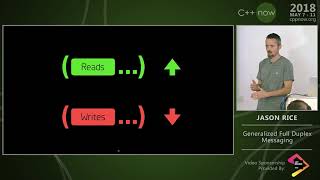
Generalized Full Duplex Messaging
Explore creating generic interfaces for full duplex messaging systems using Boost libraries and Nbdl. Learn to implement concrete solutions for various network protocols and manage object lifetimes in asynchronous operations.
BPF Host Network Resource Management
Exploring BPF-based framework for efficient network resource management, addressing limitations of traffic control subsystem and supporting both local and global allocations.