Capslock: Escaping Bad Dependencies
Analyze Go package imports with Capslock CLI tool to restrict permissions, thwart attack vectors, and enhance security by applying the principle of least privilege in third-party libraries.
Software Security as a Force of Nature
Explore effective principles and practices for sustaining systems resilience, drawing inspiration from nature, human adaptations, and engineering practices.

How to Prove the Safety of Your Software
Explore software safety through SBOMs: Learn to create, analyze, and distribute software bills of materials for enhanced security and transparency in your applications.

Supply Chain Attacks: Focusing on NPM Vulnerabilities - DevSecOps 2023
Explore supply chain attacks focusing on NPM, learn defensive strategies, and discover research findings on vulnerabilities in package ecosystems. Gain insights into detection tools and solutions.

Who Secures Our Code When an Army of Robots Is Writing It? - DevOps Security Challenges in AI-Driven Development
Explore challenges and solutions for securing AI-generated code, including paved roads, runtime protection, and security tool copilots. Learn about CodeModder, an open-source library for modern code modification.
A Guide to Responsible Data Collection in Open Source
Discover best practices for ethical usage data collection in open source projects, covering community engagement, privacy, compliance, and governance principles.

Security Observability 101 - Thinking Inside the Box
Explore runtime instrumentation for software security using Java Observability Toolkit. Learn to analyze defenses, identify vulnerabilities, create sandboxes, and enforce policies for harmonious Dev, Sec, and Ops collaboration.
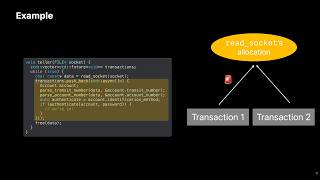
Security in C++ - Hardening Techniques From the Trenches
Discover practical memory safety mitigation techniques for C++ applications, including Standard Library hardening and typed memory allocation, with insights on implementing these security measures in production environments.

Java's Hidden Gems - Essential Tools and Libraries for Development
Discover lesser-known Java tools and libraries to enhance security, builds, architecture, and testing capabilities in this comprehensive overview of valuable development resources.
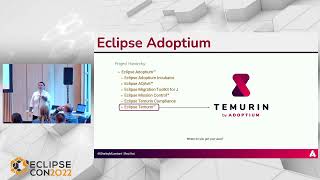
Understanding and Implementing Software Bill of Materials (SBOM) for Secure Development
Discover how Software Bill of Materials (SBOM) enhances software security by providing transparency into dependencies, ingredients, and supply chains, with practical examples from Eclipse Temurin.
Fuzzing Like a Security Engineer - ETHTaipei 2023
Master advanced fuzzing techniques and security engineering practices to identify vulnerabilities and strengthen code security through hands-on demonstrations and expert guidance.
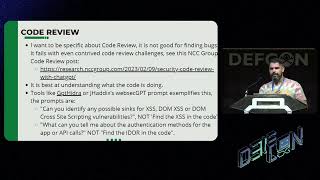
LLMs at the Forefront - Pioneering the Future of Fuzz Testing
Explore how Large Language Models revolutionize fuzz testing in cybersecurity, featuring FuzzForest tool demonstrations and practical applications for automated security assessments.
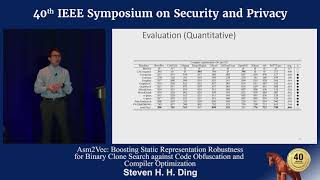
Asm2Vec - Boosting Static Representation Robustness for Binary Clone Search
Innovative assembly code representation learning model for robust binary clone search, addressing challenges in reverse engineering against code obfuscation and compiler optimization.
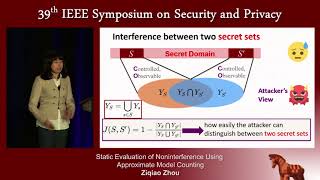
Static Evaluation of Noninterference Using Approximate Model Counting
Explore quantitative information flow and interference assessment in software security using approximate model counting, with applications to real-world scenarios like search engines and TCP.
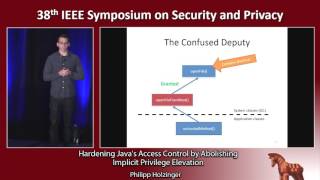
Hardening Java's Access Control by Abolishing Implicit Privilege Elevation
Explores Java's access control vulnerabilities, proposing explicit privilege elevation to enhance security. Demonstrates how removing shortcuts in the Java Class Library can prevent confused-deputy vulnerabilities without performance loss.

Choosing the Right Static Code Analyzers Based on Hard Data
Explore unbiased methods to assess static code analyzers' performance, learn about a new website presenting research results, and discover how to choose the right tools for your development pipeline.
Fuzz Testing in Black Box Systems - Merlion Approach
Explore advanced black box fuzzing techniques inspired by Singapore's iconic Merlion, enhancing software security testing skills and uncovering hidden vulnerabilities.
Finding and Exploiting Novel Flaws in Java Software
Explore techniques for discovering and exploiting vulnerabilities in Java applications, focusing on novel flaws and advanced security research methodologies.

Writing a Windows Kernel Driver with Rust
Explore Windows kernel driver development using Rust, covering full system control for protection or exploitation. Learn why and how to create kernel drivers for various applications.

Protect the Pipe - A Policy-based Approach for Securing CI/CD Pipelines
Explore a cloud-native security framework for CI/CD pipelines using in-toto, Kyverno, and sigstore. Learn to implement policy-based controls and address unique security challenges in modern application delivery.
Shrinking Software Attack Surface with WebAssembly and CNCF Wasmcloud
Explore WebAssembly's impact on software development, focusing on portability, security, and streamlined management across diverse environments using CNCF wasmCloud.