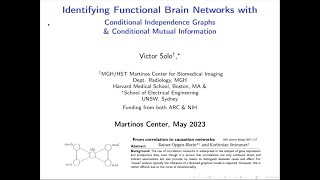
Identifying Functional Brain Networks with Conditional Independence Graphs
Explore advanced techniques for constructing functional brain networks using conditional independence graphs and partial correlation, addressing limitations of traditional correlation methods.
On the Relation between Neuronal Oscillations and Evoked Responses
Explore the intricate relationship between neuronal oscillations and evoked responses in the brain with insights from Dr. Vadim Nikulin's research at Max Planck Institute.
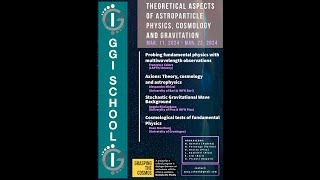
Stochastic Gravitational Wave Background - Lecture 5
Explore the intricacies of stochastic gravitational wave backgrounds in this advanced physics lecture, delving into theoretical concepts and current research developments.
Searches for Continuous Gravitational Waves: Methods and Results - Lecture 2
Explore methods and results for detecting continuous gravitational waves from sources like rapidly spinning neutron stars and exotic phenomena in our galaxy.
Searches for Continuous Gravitational Waves - Methods and Results - Lecture 3
Explore methods and results for detecting continuous gravitational waves from spinning neutron stars and exotic sources, advancing our understanding of the universe.
Searches for Continuous Gravitational Waves: Methods and Results - Lecture 4
Explore methods and results for detecting continuous gravitational waves from sources like rapidly spinning neutron stars and exotic objects, advancing our understanding of the universe.
Beam Steering with Galvos: Common Configurations and Their Uses
Explore galvanometer configurations, specifications, and integration for beam steering applications. Gain insights on system selection, best practices, and practical implementation techniques.
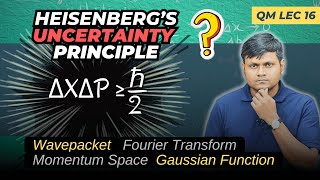
Uncertainty Principle: Wave Packet Approach and Fourier Transforms in Position/Momentum Space
Explore the Uncertainty Principle through wave packet analysis, Fourier transforms, and position-momentum space, unveiling quantum mechanics' fundamental constraints on particle properties.
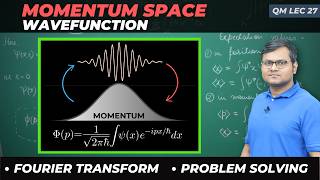
Wave Function in Momentum Space - Representation and Probability Densities
Explore wave function representation in momentum space, including probability densities and expectation values. Learn Fourier transforms and problem-solving techniques.
Bioacoustics and Machine Learning as Key Tools in Conservation
Explore how bioacoustics and machine learning revolutionize wildlife conservation, offering innovative solutions for monitoring and protecting endangered species.
Dynamics Near a Shear Flow with Coriolis Force
Explore the impact of Coriolis force on large-scale fluid dynamics, focusing on shear flows under beta-plane approximation and their unique spectral properties.
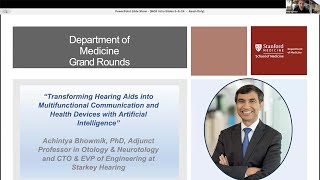
Transforming Hearing Aids Into Multifunctional Communication and Health Devices with Artificial Intelligence - 8 May 2024
Explore AI-powered advancements in hearing aid technology, transforming them into multifunctional communication and health devices for enhanced user experience.
Equivariant Scalar Fields for Molecular Docking with Fast Fourier Transforms
Explore machine learning-accelerated molecular docking using equivariant scalar fields and fast Fourier transforms for efficient drug discovery and virtual screening.
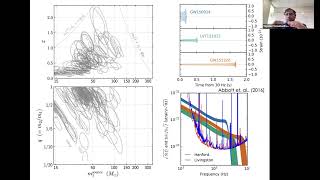
New Black Hole Mergers from a Search Pipeline for Gravitational Wave Signals with Higher-Order Harmonics
Explore new black hole mergers through gravitational wave signal analysis, featuring insights from Prof. Venumadhav and Dr. Wadekar on higher-order harmonics.
Principles of Visual Effects with VFX Graph - Episode 1
Explore VFX Graph fundamentals through hands-on projects like potions and falling leaves. Learn key components, sin waves, randomness, and texture as data to create stunning visual effects in Unity.
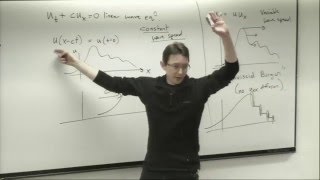
Solving PDEs in Matlab Using FFT
Learn to solve partial differential equations efficiently using Fast Fourier Transform in MATLAB, enhancing your engineering mathematics skills for advanced problem-solving.
Rewriting Scientific Computing Tools in Rust - Challenges and Lessons Learned
Exploring Rust's potential in scientific computing by rewriting linear algebra, complex functions, and FFT from Octave. Discusses challenges, benefits, and lessons learned in improving scientific tools.
Sensors, Servos, and Signals with Rust for IoT Development
Explore IoT with Rust: control servos, read sensors, and use protocols like SPI and I2C. Learn to create fault-tolerant embedded devices accessible from the cloud using Tessel microcontroller.
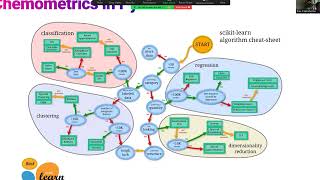
Chemotools - Integrating Chemometrics and Scikit-Learn for Spectral Data Analysis
Explore chemotools, a Python library unifying chemometrics and machine learning for spectral data analysis, streamlining model development and implementation in the scientific community.
Discriminative Training of Acoustic Models - From MPE to fMPE
Explore discriminative training techniques for acoustic models, focusing on MPE and fMPE approaches, with insights into feature-space transformation methods for speech recognition.
Serial Attached SCSI (SAS) 201: An Introduction to Enterprise Features
Explore advanced Serial Attached SCSI (SAS) features, including 24G SAS technology, enhanced bandwidth capabilities, error correction, and system-level management for improved storage performance and reliability.