
Scientific Problem-Solving with GPT-4 Vision - Mathematical Formula Recognition and Python Code Generation
Discover how GPT-4 Vision transforms complex mathematical problem-solving by converting formula images into executable Python code, streamlining scientific calculations and verification processes.
Packaging Scientific Software with Conda-Forge - IPAM at UCLA
Explore scientific software packaging using Conda-Forge with Jan Janssen from Los Alamos National Laboratory, focusing on co-design for exascale computing and hackathon applications.
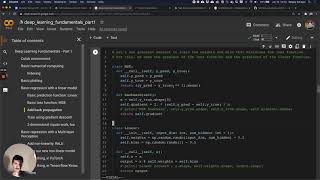
Coding a Neural Network - Full Stack Deep Learning - Spring 2021
Code a neural network from scratch using Google Colab, NumPy, PyTorch, and Keras. Learn linear regression and multi-layer perception models through hands-on implementation and visualization.

Moore's Law, Exponential Growth, and Extrapolation!
Explore Moore's Law, exponential growth in computing, and its impact on AI, scientific computing, and future technologies. Understand the implications for technological advancement.

Deep Learning for Scientific Computing - Two Stories on the Gap Between Theory & Practice - Ben Adcock
Explores deep learning in scientific computing, highlighting limitations and recent theoretical advancements in high-dimensional function approximation and inverse problems for imaging, aiming to bridge the gap between theory and practice.
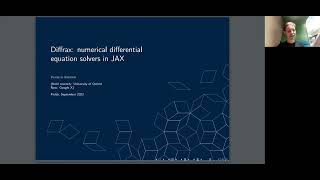
Diffrax - Numerical Differential Equation Solvers in JAX
Explore numerical differential equation solvers in JAX with Diffrax, covering implementation, features, and applications in machine learning and dynamical systems.
Optimizing GPU Performance - Case Study Using Chain Benchmark in LAMMPS
Explore GPU performance optimization techniques using the Chain Benchmark in LAMMPS, presented by Stan Moore from Sandia National Laboratories at IPAM's workshop on Exascale Co-design.
Scaling NumPy Applications from 1 CPU to Thousands of GPUs - IPAM at UCLA
Discover cuNumeric: a NumPy replacement enabling Python applications to scale across multiple nodes and leverage GPU acceleration for enhanced performance and dataset handling.
hls4ml: An Open-Source Co-Design Workflow for Scientific Low-Power Machine Learning Devices
Explore hls4ml, an open-source workflow for implementing machine learning algorithms on FPGAs and ASICs, enabling real-time processing for scientific applications and accelerating discoveries.
Kubernetes as a Substrate for ATLAS Compute
Exploring Kubernetes' potential for ATLAS experiment computing, including batch processing, GPU resource management, and interactive analysis clusters for high-energy physics research.
The Day We Deleted Production - Kubernetes Infrastructure Recovery at CERN
Explore CERN's Kubernetes infrastructure resilience: Learn how a major incident was managed with minimal impact, and discover strategies for high availability and rapid recovery in critical environments.
Kubernetes from Scratch for Neuroscientific Research
Explore how the Blue Brain Project implemented Kubernetes for neuroscientific research, detailing their journey, challenges, and solutions in building a tailored cluster setup for scientific organizations.
Introducing Chapel: A Programming Language for Productive Parallel Computing from Laptops to Supercomputers
Explore Chapel, a programming language for efficient parallel computing across devices. Learn key features and applications in aerodynamics, data science, and atmospheric research.
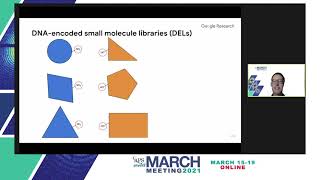
Frontiers of Computation: Machine Learning and Quantum Computing
Explore cutting-edge advancements in machine learning and quantum computing with leading experts, discussing their potential impact on scientific research and technological innovation.
Predicting Space Weather with Docker - Containerized Workflows at NOAA
Containerized workflow revolutionizes space weather prediction at NOAA, enhancing agility and collaboration between software teams and scientists through microservices architecture and Docker deployment.
Less Talking, More Learning - Avoiding Coordination in Parallel Machine Learning Algorithms
Strategies for scaling machine learning on parallel platforms, focusing on coordination-free algorithms to maximize computation time and discussing challenges in performance analysis.
Chameleon: Expanding Open-Source Ambari for HPC
Explore HPC-based big data platform management with Chameleon, an extension of Apache Ambari. Learn about Lustre filesystem integration, advanced YARN monitoring, and dynamic dashboards for streamlined operations.
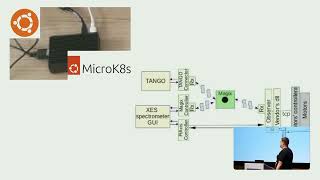
Harnessing the Power of Ubuntu and MicroK8s - Case Studies from SDSC and CFEL
Explore real-world applications of Ubuntu and MicroK8s in scientific research, including migration to Kubernetes and development of a portable X-Ray spectrometer control system.

Breaking Down Barriers to High-Performance Computing
Exploring initiatives to enhance Ubuntu for scientific computing and HPC, discussing open-source projects, promoting wider adoption, and addressing challenges in the HPC ecosystem.
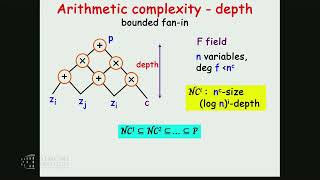
Faster Parallel Algorithms for Basic Linear Algebra Problems
Explore advanced parallel algorithms for fundamental linear algebra, enhancing computational efficiency in mathematical problem-solving.
Coded Matrix Computation: Numerical Stability, Partial Stragglers, and Sparse Input Matrices
Explore advanced techniques for high-dimensional matrix computations in distributed systems, addressing numerical stability, partial stragglers, and sparse input matrices.