GPT-PINN and TGPT-PINN: Advanced Physics-Informed Neural Networks for Parametric PDEs
Explore GPT-PINN and TGPT-PINN for efficient parametric PDE solutions. Learn meta-learning techniques to reduce training time and network complexity while maintaining accuracy across parameter domains.
Top 4 Python Libraries for Data Science
Explore four essential Python libraries for data science: NumPy, Pandas, Matplotlib, and Seaborn. Learn their key benefits and practical applications in fundamental data science concepts.
Towards Machine Intelligence Capable of Nobel-Caliber Science
Explore AI-driven scientific discovery, its challenges, and potential for Nobel-caliber breakthroughs. Learn about key AI/ML areas, recent progress, and human-machine collaboration in advancing scientific innovation.

Molly.jl - Molecular Dynamics in Julia
Explore Molly.jl for molecular dynamics simulations in Julia. Learn about its features, advantages, and applications in research, including differentiable molecular simulation and force field improvement.
Julia for Materials Modelling
Explore Julia's potential in materials modeling, covering its advantages, ecosystem, and applications in atomistic simulations and density functional theory.
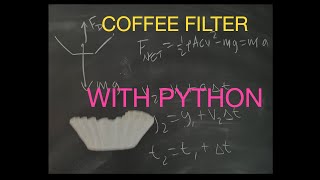
Very Simple Introduction to Numerical Calculations in Physics with Python
Learn to create numerical solutions in physics using Python, from basic coding to graphing and modifying code for practical applications.
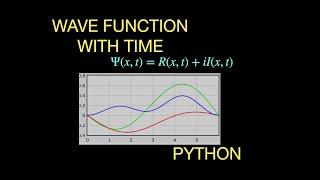
Solving the Time-Dependent Schrödinger Equation with Finite Difference Method in Python
Explore numerical solutions to the time-dependent Schrödinger equation using Python's finite difference method for 1D quantum systems.
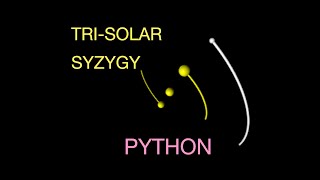
Modeling the Tri-Solar Syzygy with Python
Explore Python modeling of the Tri-Solar Syzygy from "The 3 Body Problem," simulating stable orbits and planetary positions in a three-star system.
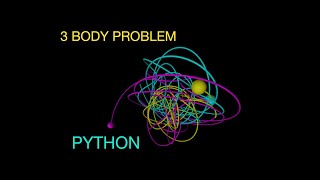
Calculate the Three-Body Problem Just Like the San-Ti
Explore the physics of the 3-body problem, its significance in "The Three-Body Problem" media, and learn computational methods to solve it.
LAMMPS Exercises - Part 1
Explore LAMMPS molecular dynamics software through hands-on exercises, enhancing your understanding of simulation techniques and computational modeling.
PINNs for Inverse Problems in Scientific Computing
Explore Physics-Informed Neural Networks (PINNs) and their application in solving inverse problems in scientific computing and engineering.
A New Vision and Role for the NIH Center for Information Technology (CIT)
Explore the evolving vision and role of NIH's Center for Information Technology in advancing genomic research and healthcare innovation.
Simplifying Scientific Python Package Installation and Usage in HPC Environments
Simplify scientific Python package installation in HPC environments with a new tool that reduces errors and enables sharing among users.
Taking HACC into the Exascale Era - New Code Capabilities and Challenges
Explore HACC's evolution for exascale systems, new capabilities, and performance optimization in cosmology simulations.
Exascale Computing Project Successes and Lessons Learned
Explore ECP successes and lessons learned, focusing on integration, as presented by Lori Diachin, project director, to the Industry and Agency Council upon completion of technical work.
Exascale Computing Project's Software Technology Accomplishments and Futures - Lecture
Explore Exascale Computing Project's software technology achievements and future directions with Mike Heroux, senior scientist at Sandia National Laboratories.
The Exascale Computing Era - Reflections on Progress and Challenges
Explore the dawn of exascale computing, focusing on the Frontier system, its applications, and the challenges overcome in developing exascale-capable software and technologies.
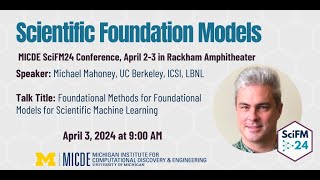
Foundational Methods for Foundation Models in Scientific Machine Learning - Lecture 6
Explore foundational methods for scientific machine learning models, addressing challenges in integrating data-driven ML with domain-driven scientific computing methodologies.
Programming Novel AI Accelerators for Scientific Computing - Part 2 - Tutorial 5
Explore advanced techniques for programming AI accelerators in scientific computing, focusing on optimization and performance enhancement.
Programming Novel AI Accelerators for Scientific Computing - Part 1 - Tutorial 5
Explore programming techniques for AI accelerators in scientific computing, focusing on novel approaches and optimization strategies.
The Missing Python Introduction for Scientists - Performance and Efficiency
Explore Python's internals, performance optimization, and essential scientific libraries. Learn to write efficient code and choose the right tools for scientific computing tasks.