Julia's Use in Nuclear Physics Data Analysis: A Case Study
Explore Julia's potential in nuclear physics data analysis, combining high performance with dynamic capabilities for efficient processing and visualization of large datasets.
Julia Community Reshapes Computation in Geosciences
Explore Julia's impact on geosciences: ecosystem tools, hardware acceleration, and collaborative initiatives revolutionizing Earth observation and software development in the field.
SpeedyWeather.jl - Reinventing Atmospheric Models
Innovative Julia-based atmospheric modeling tool offering interactive, user-friendly simulations for climate research, overcoming traditional Fortran constraints with flexible, extensible components.
StreamCache - Revisiting Page Cache for File Scanning on Fast Storage Devices
StreamCache: A new page cache system for fast storage devices, improving I/O performance through stream tracking, efficient reclaiming, and accelerated page allocation. Enhances scientific apps and large language model operations.

Simulating the Magnus Effect in Football Free Kicks Using SCILAB
Explore the physics behind curved football kicks through SCILAB simulation. Learn about Magnus effect, projectile motion, and programming to visualize unpredictable ball trajectories.
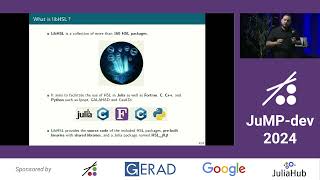
libHSL - The Ultimate Collection for Large-Scale Scientific Computation
Explore libHSL, a powerful Fortran package collection for scientific computation, now accessible in Julia through HSL.jl and Ipopt.jl with pre-built binaries.

Monte Carlo Pi Methods: Technical Editing - Lecture ME3256
Enhance technical writing skills for Monte Carlo pi methods. Learn effective editing techniques to improve clarity and precision in scientific reports.

ME3255 - Timing Function Calls and Comparing Numerical Results
Learn to time function calls and compare numerical results in ME3255, enhancing your computational skills for mechanical engineering applications.

Neuromancer: Differentiable Programming Library for Data-driven Modeling and Control
Explore NeuroMANCER, an open-source library for integrating machine learning with scientific computing, solving optimization problems, and creating differentiable models with physics-based constraints.
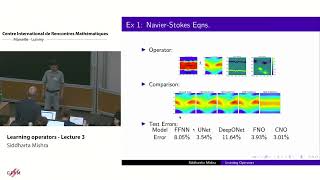
Learning Operators - Lecture 3
Explore learning operators for scientific machine learning, covering numerical experiments, generalization, and applications in inverse problems and imaging.
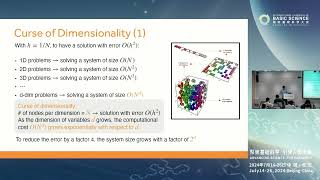
Solving High-Dimensional Partial Differential Equations Using Deep Learning
Explore deep learning algorithms for solving high-dimensional PDEs, overcoming dimensionality challenges in scientific computing applications.
How C++23 Changes the Way We Write Code
Explore key C++23 features like std::expected, std::mdspan, deducing this, and std::print, and their impact on everyday C++ programming and code simplification.
Secure Numerical Computing is Hard: Lessons from 10 Years of Open Data Science and the Long Road Ahead
Explore key security challenges and lessons learned from a decade of open data science, focusing on enterprise adoption of ML/AI technologies and emerging threats in numerical computing.
Manifold Denoising with Application to Electron Microscopy
Discover advanced manifold denoising techniques for electron microscopy image processing, focusing on Fourier-like basis construction and filtering methods to enhance two-dimensional image collections through mathematical analysis.

Kinetic Campaign: Speeding Up Scientific Data Analytics with Computational Storage
Discover how computational storage technologies and erasure coding enhance scientific data analytics performance, focusing on LANL's Campaign storage system and Seagate Kinetic Drives implementation.
Beyond the Computational Essay - Evolving Notebooks into Robust Computational Systems
Explore techniques for transforming computational essays into robust, ongoing narratives and systems, overcoming common challenges in the process.
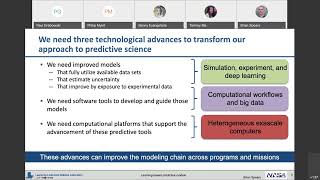
Cognitive Simulation: Combining Simulation and Experiment with Artificial Intelligence
Explore cognitive simulation techniques merging AI with experimental and simulation data for advanced scientific insights and predictive capabilities.
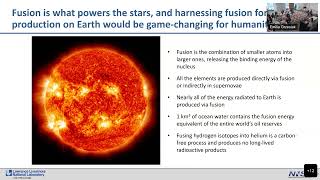
Machine Learning Applications in Scientific Problems with Sparse Data - Afternoon Address
Explore Dr. Kelli Humbird's career in data science, focusing on inertial confinement fusion and machine learning applications in scientific problems with sparse data.

ML for Solving PDEs: Neural Operators on Function Spaces
Explore AI advancements in scientific applications, including neural operators for weather and climate modeling, offering significant speedups and zero-shot generalization across function spaces.
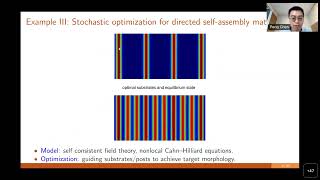
Derivative-Informed Neural Operators for Solving PDE-Governed Optimization Problems
Explore novel machine learning for solving optimization problems with PDEs, featuring derivative-informed neural operators for efficient, scalable solutions in high-dimensional parameter spaces.
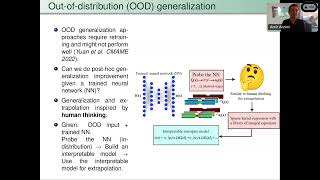
DDPS - A Flexible and Generalizable XAI Framework for Scientific Deep Learning
Explore a flexible XAI framework for scientific deep learning, enhancing interpretability and generalization in physics-based modeling through integral equations and sparse regression techniques.