Updates to Standard Library and Native DSL of ModelingToolkit - JuliaCon 2024
Explore updates to ModelingToolkit's standard library and new DSL for simplified model definition. Learn best practices, error interpretation, and how to contribute to the project.

ME3255 - Python Code Examples from Discussion
Learn Python coding techniques for mechanical engineering applications through practical examples and discussions.

Getting Started with Jupyter and Python - ME3255 Day 2
Explore Jupyter and Python fundamentals for scientific computing, covering basic syntax, data structures, and essential libraries for engineering applications.
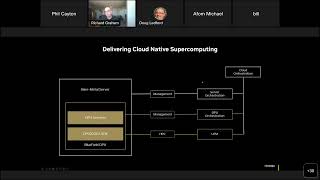
Accelerating Scientific Computing Workloads with InfiniBand DPUs
Discover how InfiniBand DPUs and In-Network Computing accelerate complex scientific workloads, boost performance, and enable faster research insights through advanced networking capabilities.
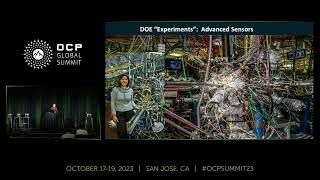
Modular Chiplet Opportunities for High-Performance Computing
Explore how chiplet-based specialized accelerators can revolutionize High-Performance Computing (HPC) systems to overcome Moore's Law limitations and deliver enhanced scientific computing performance.
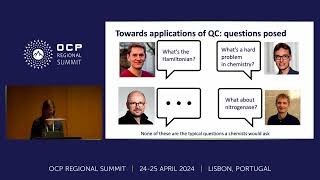
Quantum Computing for Life Science Simulations and Optimizations
Explore how quantum computing can revolutionize life science research through innovative approaches to problem-solving, accessibility, and cross-disciplinary collaboration.

JAX vs PyTorch 2 - Converting Stateful to Stateless Operations in Neural Networks
Explore functional programming in JAX through hands-on comparison with PyTorch 2, focusing on neural network implementation and stateless operations for gradient descent.
Approximating Type Stability in the Julia JIT
Explore an algorithm for approximating type stability in Julia's JIT compiler, enhancing performance in this dynamic scientific computing language.
Floating-Point TVPI Abstract Domain for Numerical Program Analysis
Explore an efficient numerical abstract domain for analyzing floating-point programs, supporting conditionals, loops, and elementary functions. Learn about TVPI-FP's innovative use of interval arithmetic in inequalities.
Decidable Subtyping of Existential Types for Julia
Explore Julia's subtyping challenges and a proposed solution for decidability in scientific computing, focusing on method dispatch and type annotations for generic libraries.
Deep Dive in Nx Backends - Lecture 1
Explore Nx Backends in Elixir, understanding their impact on performance and automatic differentiation. Learn about backend structure, runtime dispatching, and integration with Axon for deep learning.

Using Rust for Numerical Applications
Explore Rust's potential for numerical applications, covering optimization techniques, benchmarking, testing, and integration with Python for high-performance scientific computing.
Use of Mathematica in Studies of Structural Dynamics
Explore structural dynamics modules implemented for academic studies, advancing knowledge and leading to scientific publications.
Structured Arrays in Wolfram Language: Representation and Computation
Explore efficient representation and computation with structured arrays in Wolfram Language, focusing on matrices and their applications.
AI for Physical Models with Geometric Tools
Explore geometric tools for integrating AI into physical models, enhancing understanding and application of advanced modeling techniques.
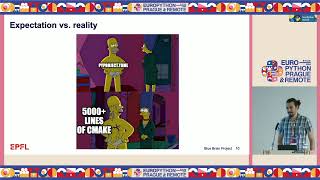
Insights and Experiences of Packaging Python Binary Extensions
Explore challenges and solutions for packaging Python binary extensions in scientific computing, focusing on portability and performance across diverse platforms.
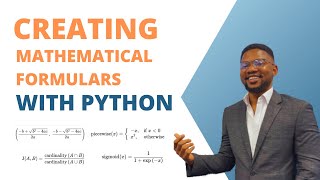
Creating Mathematical Formulas with Python
Effortlessly convert Python functions into beautifully formatted LaTeX equations using Google's Latexify. Learn basic to advanced usage, real-life examples, and limitations for academic papers and presentations.
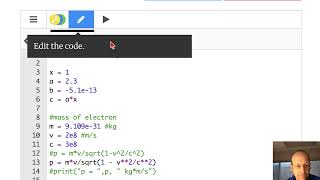
How to Use Python as Your Calculator in Physics Class
Harness Python's power as a versatile calculator for physics calculations, mastering vector operations and streamlining problem-solving.
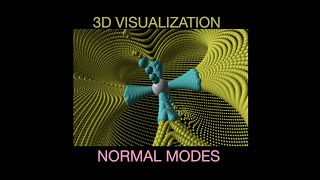
Artistic Visualization of 3D Normal Modes
Explore 3D representations of normal modes through artistic visualization using Python, enhancing understanding of complex physics concepts.
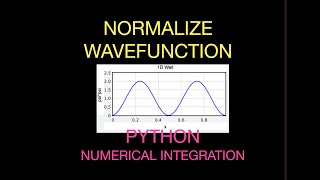
Quantum Python: Numerical Integration to Normalize a Wave Function
Explore numerical integration techniques to normalize wave functions in quantum mechanics using Python, enhancing understanding of computational approaches in physics.
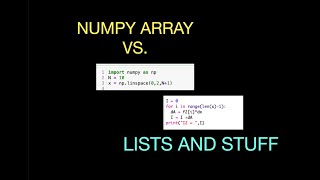
Python: Numpy Arrays vs. Lists
Explore numpy arrays and lists in Python, comparing their functionalities for physics calculations and data visualization through practical examples and coding exercises.