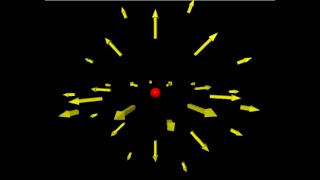
Creating a 3D Visualization of Electric Field Due to a Point Charge with Python
Create a 3D visualization of an electric field from a point charge using Web VPython, with step-by-step guidance and provided code.
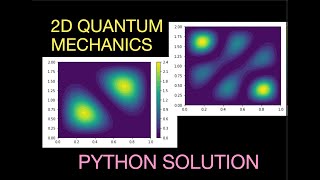
Solving 2D Quantum Mechanics Problems with Python
Explore Python techniques for solving 2D quantum mechanics problems with non-trivial potential, based on numerical methods and analytical solutions.
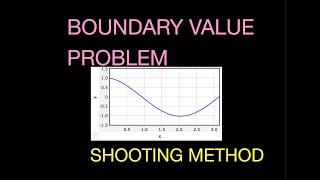
Solving a Boundary Value Problem with the Shooting Method and Python
Learn to solve boundary value problems using the shooting method and Python, with Euler method implementation and animated graph visualization.

Calculate Any Electric Field with Python
Explore Python-based calculations for electric fields from multiple charges. Master a versatile method applicable to various charge configurations.
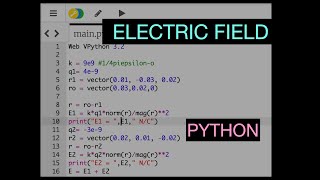
Calculate Electric Field Vectors with Python
Learn to calculate electric field vectors using Python, enhancing your computational physics skills and understanding of electromagnetism.
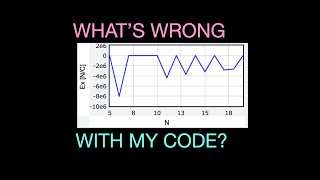
What's Wrong with My Physics Python Code? - Debugging Electric Field Calculations
Debug and optimize Python code for calculating electric fields, focusing on identifying and resolving errors in physics simulations.
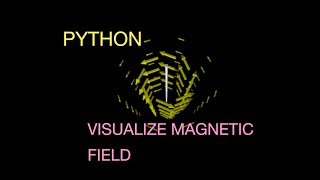
Building a Visual Model of the Magnetic Field with Python
Visualize magnetic fields around current-carrying wires using Python. Create interactive simulations to explore electromagnetic concepts.
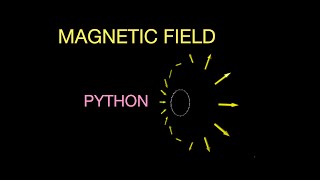
Visualizing the Magnetic Field of a Current Loop with Python
Visualize magnetic fields around current loops using Python. Learn to plot and scale vector fields for enhanced understanding.
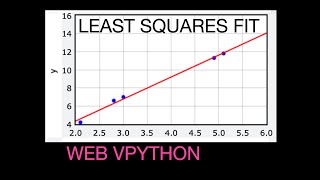
Least Squares Fit for Web VPython
Implement least squares fit in Web VPython to find the best fit line for data, enhancing your data analysis capabilities in this programming environment.
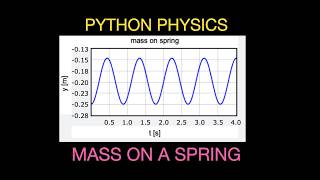
Python Physics: Hooke's Law and Modeling a Mass on a Spring
Explore Hooke's Law and model mass-spring systems using Python, enhancing your understanding of physics concepts through practical coding.
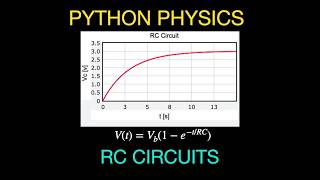
Python Physics: Modeling RC Circuits without Differential Equations
Model RC circuit voltage over time using Python, avoiding differential equations. Learn numerical calculations for practical circuit analysis.
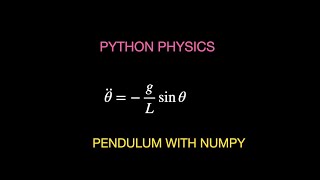
Python Physics: Modeling a Pendulum with Jupyter Notebooks
Model a pendulum's motion using Python and Jupyter Notebooks. Learn to apply Newton's second law in polar coordinates and visualize the results through practical coding exercises.
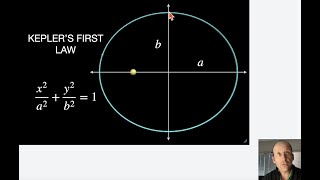
Modeling Kepler's First Law with Python
Model Kepler's first law of planetary motion using Python, demonstrating elliptical orbits through code implementation and visual plotting.
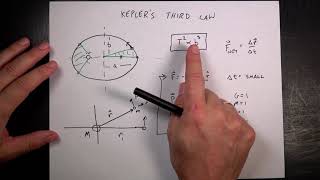
Demonstration of Kepler's Third Law Using Python
Explore Kepler's Third Law through Python modeling, calculating orbital periods and semi-major axes for various orbits to verify the law's validity.
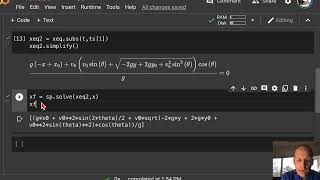
Solving Projectile Motion Problems with Python and SymPy
Explore projectile motion problem-solving using Python and SYMPY, focusing on range calculation and launch velocity determination.
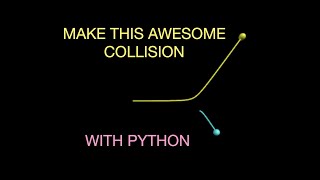
Conservation of Momentum in Python Collisions
Explore momentum conservation in collisions using Python modeling. Build and analyze a two-object collision simulation.
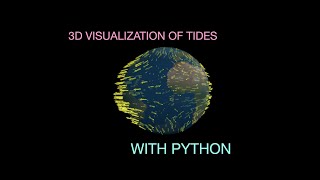
Visualizing Tides in 3D with Python
Explore 3D tide modeling using Python, combining calculation and visualization techniques for a comprehensive understanding of tidal patterns.
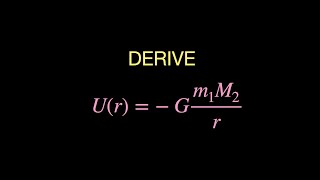
Derivation of the Gravitational Potential Energy - Plus Numerical Integrals with Python
Derive gravitational potential energy through work calculations and explore numerical integration using Python for practical applications.
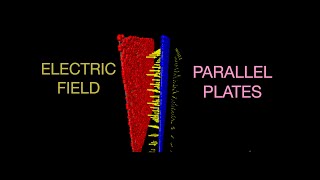
Modeling the Electric Field Due to Parallel Plates Using Python
Model electric fields between parallel plates using Python and 20,000 points, avoiding calculus for a clear visualization.
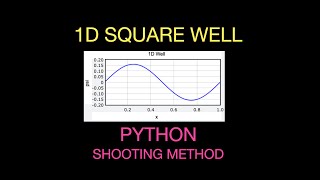
Quantum Mechanics: Using the Shooting Method and Python to Solve the 1D Square Well
Solve the 1D infinite square well numerically using Python and the shooting method, exploring an alternative approach to quantum mechanics problem-solving.
Double Slit Intensity Pattern with Python
Model the intensity pattern of two slits using Web VPython and explore phasors for finding intensity in this hands-on coding tutorial.