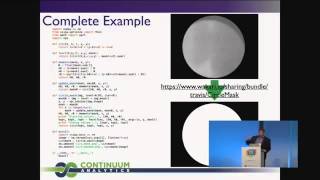
Python's Role in Big Data Analytics - Past, Present, and Future
Explore Python's evolution in big data analytics, from its scientific computing roots to its current role in unifying HPC and big data applications, with insights on future developments.

Event Discrete Simulation with SimPy
Explore event-discrete simulation using SimPy, learning key concepts and features through simple examples. Gain insights into modeling complex systems for analysis and optimization.
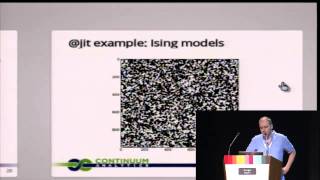
Numba - A JIT Compiler for Fast Numerical Code
Explore Numba, a JIT compiler for Python that accelerates numerical algorithms beyond Numpy capabilities, with CPU and GPU support. Learn its use cases, performance expectations, and inner workings.
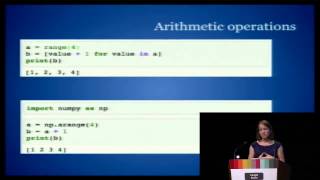
NumPy - Vectorize Your Brain
Learn essential NumPy idioms for efficient scientific computing in Python, covering array creation, broadcasting, universal functions, aggregations, slicing, and indexing to boost numerical computation speed.

Conda - Easier Installs and Simpler Builds
Explore Conda: a cross-platform package manager for Python and other languages. Learn installation, environment management, and package building for improved productivity.
Per Python ad Astra
Explore astrodynamics with poliastro, a Python library for computing orbital maneuvers and plotting trajectories. Learn about JIT compiling and the role of open source in space exploration.

High Performance Python on Intel Many-Core Architecture
Explore high-performance Python acceleration on Intel processors for scientific computing, data analytics, and machine learning, focusing on the latest Intel architectures and software tools.
PyPy Meets Python 3 and Numpy
Explore PyPy's advancements in supporting Python 3.x and scientific computing with Numpy, offering improved performance and expanded application domains for Python developers.

Scientific Computing Using Cython - Best of Both Worlds!
Explore Cython for scientific computing, combining Python-like syntax with C speed. Learn to build native extensions, use static typing, and integrate with C code for optimal performance.
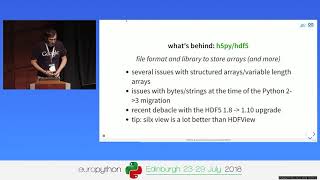
Python in Scientific Computing - What Works and What Doesn't
Evaluación de bibliotecas Python para cálculos científicos, enfocada en rendimiento, simplicidad, confiabilidad y portabilidad. Experiencias y lecciones aprendidas en la Fundación GEM.
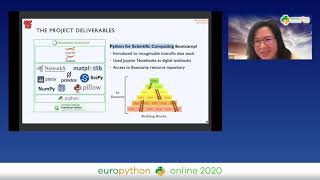
Accessible Python Education for Schoolgirls Using Avocados, Zombies, and Korean
Innovative Python education for young girls using engaging themes, resulting in increased interest and confidence in coding and scientific computing.
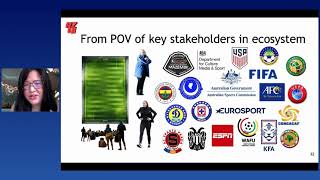
How Scientific Computing is Advancing the World of Football
Explore how Python's scientific computing and data science applications are revolutionizing football, from tactical analysis to player insights, with potential for wider accessibility and impact.
Rust for Python Data Engineers
Explore how Rust can enhance data engineering workflows, offering improved performance and safety. Learn about Rust's ecosystem for data processing, databases, and scientific computing to build scalable systems.
Implementation Challenges - From HPC to Containers in the Academy
Explore the transition from HPC to container computing in academia, addressing challenges, benefits, and solutions for scientific research infrastructure and user adoption.
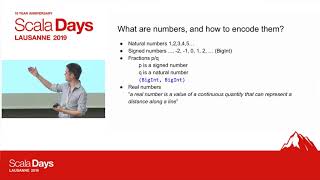
Pick Your Number Type With Spire
Explore Spire's versatile number types for Scala, enhancing numerical computations with precision and efficiency. Learn to choose the right type for your specific needs.

Rust, For Science!
Explore Rust's potential in scientific computing: its strengths, weaknesses, and areas for improvement. Learn about the language's applications in research and data science.
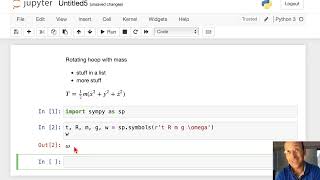
Using Python and SymPy to Solve a Mass on a Rotating Hoop Problem
Utilize Python and Sympy to solve complex physics problems, focusing on a mass rotating on a hoop using Lagrangian mechanics and differential equations.
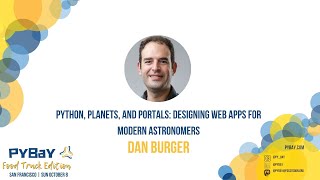
Python-based Web Applications for Modern Astronomy and Exoplanet Research
Discover how Python-powered web applications revolutionize exoplanet research, featuring Filtergraph's visualization tools and their impact on NASA missions and astronomical discoveries.
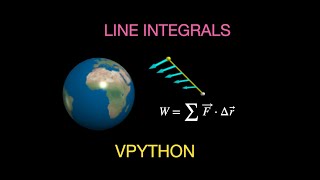
Python Physics: Numerical Line Integrals with Python
Explore numerical line integral calculations in Python for classical mechanics, breaking paths into short steps and comparing with analytical methods.
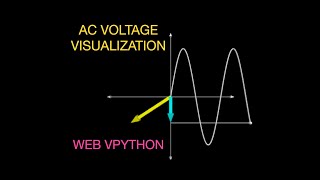
Python 3D Display of AC Voltage
Visualize AC voltage in 3D using Python. Create dynamic representations of electrical concepts with provided code for interactive learning and exploration.
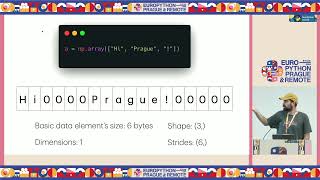
How We Sped Up NumPy's String Operations for NumPy 2.0
Explore performance improvements in NumPy 2.0's string operations, delving into ufunc internals, dtypes, and type promotion for a deeper understanding of the enhancements.