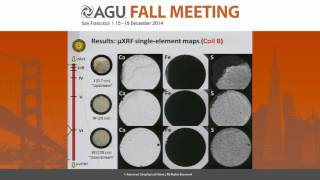
Effects of CO2-Induced Reaction on Transport Properties of Debonded Well Cement-Casing Interfaces
Explores CO₂-induced reactions on debonded well cement-casing interfaces through reactive flow-through experiments, examining permeability changes and microstructural effects for carbon storage applications.
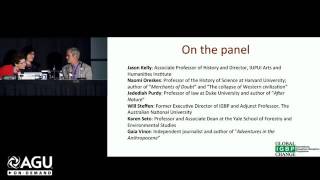
What's the Deal About the Anthropocene?
Explore the concept of the Anthropocene and its implications for Earth's geological history and future in this AGU Fall Meeting presentation, offering insights into human impact on the planet.
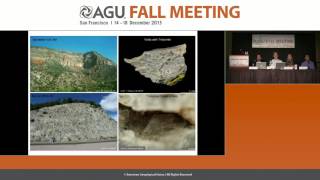
Latest Findings from NASA's Curiosity Mars Rover Mission - Fall 2015
NASA scientists discuss Curiosity rover's discovery of silica-rich rocks on Mount Sharp, comparing findings to other Martian sites and exploring implications for ancient wet environments on Mars.
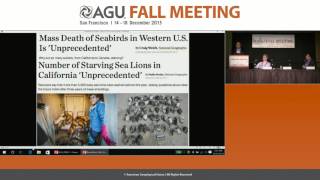
Ecosystem Impacts of Record Ocean Warming in the North Pacific - Fall 2015
Experts discuss "the blob," a warm water anomaly in the Northeast Pacific, its effects on marine ecosystems, unprecedented toxic algal blooms, and potential future impacts on ocean health and wildlife.
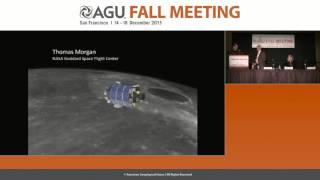
Fluctuations Within the Lunar Dust Cloud - LADEE Mission Findings
NASA researchers discuss observations from the LADEE mission, exploring the moon's exosphere and its interactions with the lunar surface, solar rays, and asteroids, providing insights for future planetary exploration.
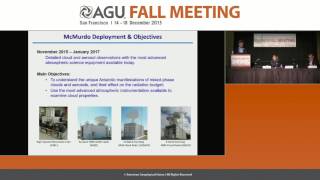
Comprehensive Meteorological Study of Antarctica - AWARE Project Overview
Comprehensive meteorological study of West Antarctica using advanced equipment to collect crucial data on climate change trends, cloud properties, and atmospheric conditions in this rapidly warming region.
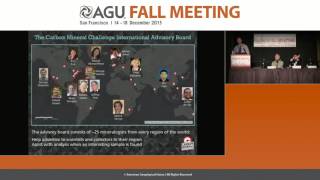
The Carbon Mineral Challenge: A Worldwide Hunt for New Carbon Minerals
Worldwide hunt for undiscovered carbon minerals engages amateur and professional mineralogists. Learn about carbon mineral evolution, potential discoveries, and how to participate in this unique international challenge.
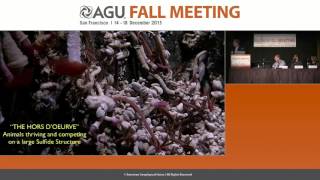
Real-Time Tracking of Underwater Volcanic Eruption at Axial Seamount - Discoveries and Insights
Scientists discuss real-time tracking of an underwater volcanic eruption, providing insights into submarine volcano-hydrothermal systems and showcasing the potential of remote monitoring in extreme deep-sea environments.
Changing Lake Temperatures on Six Continents - Global Study Findings
Global study reveals changing lake temperatures worldwide, discussing implications for freshwater supplies and ecosystems. Scientists present findings on warming rates, measurement methods, and impacts on wildlife and specific lakes.
New Science of Fog - Trends and Impacts on Coastal Ecosystems
Explore new research on Pacific Coast fog, including climate change impacts and ocean-to-land compound transfer, with insights from leading experts in atmospheric and marine sciences.
Future Himalayan Seismic Hazards - Lessons from the 2015 Gorkha Earthquake
Experts discuss the 2015 Gorkha earthquake's impact, future seismic risks in Nepal, and new findings on medieval quakes. Insights on predicting Himalayan landscape changes and regional hazards.
Alaska's Thawing Permafrost: Impacts and Future Projections
Experts discuss Alaska's thawing permafrost, unveiling new findings and projections. They explore impacts on ecology, infrastructure, and carbon release, introducing a permafrost forecast system.
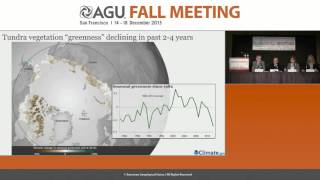
Arctic Report Card 2015 - Climate Change Impacts and Observations
Experts present the 10th Arctic Report Card, highlighting rapid warming, changes in temperatures, snow, sea ice, vegetation, and wildlife. Updates on fish, walruses, river discharge, and community monitoring included.
Impacts of Heat Stress on Densely Populated Regions - Fall Meeting 2015
Researchers discuss global heat stress impacts on health, infrastructure, and economy throughout the 21st century, estimating exposure and projecting severe consequences for many regions worldwide.
Plunging Below the Ionosphere - Observations from C/NOFS Satellite's Final Orbit
Groundbreaking observations from a decaying satellite reveal unexpected behavior in low-Earth orbit, advancing knowledge and improving satellite technology and re-entry predictions.
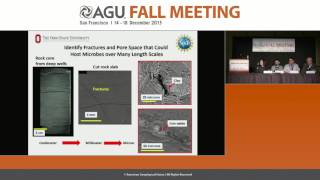
Methane from Hydraulic Fracturing - Microbial Origins and Impact
Researchers unveil the origin and habitat of bacteria in hydraulic fracturing wells, discussing their impact on methane production using genomic analysis, isotopic tracers, lab cultures, and computer models.
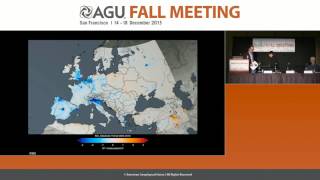
Global Air Quality - The Impacts of People and Cities
NASA scientists discuss a high-resolution global map of air quality, revealing how industrialization, economic activity, and civil unrest impact air pollution levels and their effects on human health and the environment from 2005 to 2014.
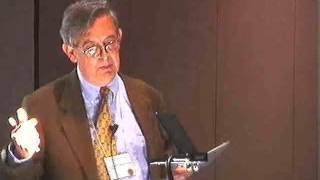
Hydrologic Sciences Tomorrow: Self-Organization in Ecohydrology - Langbein Lecture 2000
Explore self-organization in ecohydrology, focusing on soil moisture balance, vegetation's role, and climate impacts. Gain insights into modeling water deficit and methodologies in hydrologic sciences.
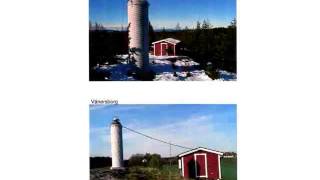
Glacial Isostatic Adjustment and Sea Level Change - Bowie Lecture 2000
Explore geophysical phenomena through James L. Davis's Bowie Lecture, covering topics like Fenno Scandia, tide gauges, GPS, sea level changes, and global ice melting patterns.
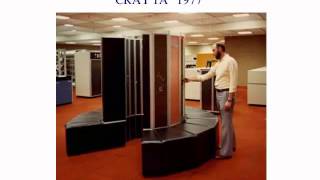
Ionospheric Physics and Space Weather Modeling - 2002 AGU Fall Meeting
Explore ionospheric physics and space weather in this historical AGU lecture, offering insights into atmospheric research and its implications for modern technology.
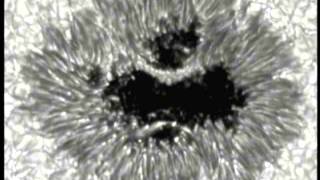
Solar Magnetic Fields and the Heliosphere - Hale Lecture 2001
Explore insights from the 2001 AGU Spring Meeting's Hale Lecture, delivered by Alan M. Title. Despite potential video quality issues due to age, this presentation offers valuable scientific perspectives.