Daly Lecture - Geochemistry and Planetary Evolution
Explore geophysical insights from Bernard J. Wood's Daly Lecture at the 2001 AGU Spring Meeting, offering valuable scientific perspectives despite potential video quality issues.
Climate Dynamics: Theory, Modeling, and Breakthroughs - 2017 Fall Meeting
Explore cutting-edge climate dynamics research with leading experts, covering theoretical advancements, modeling techniques, and breakthrough discoveries in atmospheric and oceanic sciences.
The Resilience and Vulnerability of Arctic and Boreal Ecosystems to Climate Change - 2017 Fall Meeting
Explore the impact of climate change on Arctic and boreal ecosystems through expert presentations on resilience, vulnerability, and environmental dynamics in these sensitive regions.
Emerging Sources of Scientific Data: Drones, CubeSats, and Citizen Science - 2017 Fall Meeting
Explore emerging scientific data sources like drones, CubeSats, and citizen science in this panel discussion on innovative data collection methods and their impact on Earth science research.
Why We Are Still In - 2017 Fall Meeting Special Keynote Panel
Panel discussion on climate action commitment featuring mayors and environmental leaders from the US and Mexico.
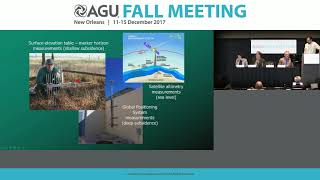
Subsidence and Land Loss in Coastal Louisiana - New Measurement Approaches
New approaches to measure and predict subsidence in coastal Louisiana, including a groundbreaking subsidence superstation in the Mississippi River Delta, providing unprecedented data resolution on land loss causes and implications.

The September 2017 Tehuantepec and Puebla Earthquakes in Mexico - Analysis and Early Warning Systems
Experts discuss the devastating 2017 Mexican earthquakes, analyzing their impact, early warning systems, and potential connections between the events. New insights on seismic activity in Mexico are presented.
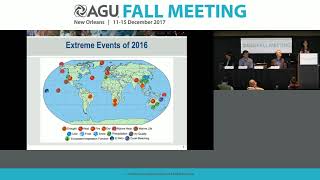
Explaining Extreme Weather Events of 2016 from a Climate Perspective
Climate scientists discuss new methods for attributing extreme weather events to natural and human causes, presenting 29 studies on various global phenomena from the Bulletin of the American Meteorological Society's annual collection.
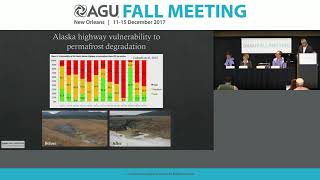
The Melting Cryosphere - Climate Change Effects on Earth's Frozen Regions
New research on shrinking glaciers, ice sheets, melting permafrost, and sea level rise due to climate change, presented by experts from various institutions.
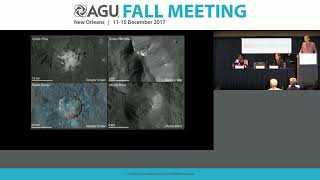
New Dawn Findings at Ceres - Bright Regions and Occator Crater
Explore NASA's Dawn mission findings on Ceres, including the discovery of over 300 bright patches and the intriguing Occator crater. Learn about the formation of surface features and their implications.
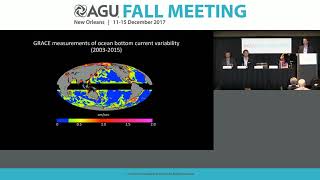
New NASA Eyes on Ice - Satellite Missions for Tracking Earth's Ice Changes
Preview of NASA's next-gen satellite missions GRACE and ICESat-2, exploring their advanced capabilities to track Earth's ice changes with unprecedented precision and diverse scientific applications.
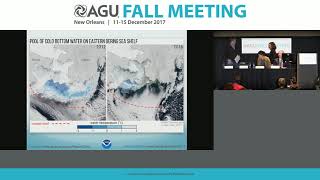
Arctic Report Card 2017 - Climate Change Impacts and Implications
Experts discuss the 2017 Arctic Report Card, highlighting rapid warming trends, environmental changes, and impacts on fisheries, wildlife, and global climate. Insights on air temperature, sea ice, and permafrost are shared.
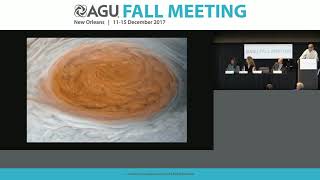
NASA's Juno Mission to Jupiter - Latest Findings and Discoveries
Latest findings from NASA's Juno mission to Jupiter, including insights on the Great Red Spot, radiation fields, and atmospheric dynamics. Experts discuss key discoveries from the spacecraft's first eight science passes.

Eclipse 2017 - Scientific Data Collection and Initial Results
Scientists share initial results from diverse studies conducted during the 2017 North American eclipse, covering solar physics, Earth science, and space biology using ground-based telescopes, high-altitude balloons, aircraft, and satellites.
Assessing Flood Risk in the U.S. - Climate Change Impact on Coastal and Inland Communities
Experts discuss new flood risk estimates, sea level rise impacts on infrastructure, and community relocation strategies in response to climate-driven flooding across the United States.
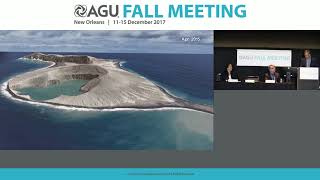
Evolution of a New Pacific Island - Satellite Observations and Insights
Satellite observations of a new Tongan island offer insights into island formation, longevity, and potential analogues for Mars features, providing unprecedented views of early island evolution.
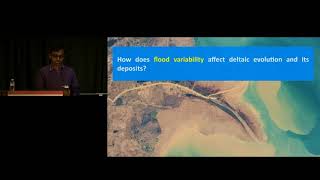
Variability in River Delta Mechanics and Deposits - 2015 Sharp Lecture
Insights into river delta mechanics, focusing on avulsions and their impact on delta formation. Explores backwater hydrodynamics, flood effects, and implications for delta management and stratigraphic interpretation.
Geology and Game of Thrones - Part 2
Explore how geological factors influence events and plot developments in the Game of Thrones series with special guest Preston Jacobs in this engaging webinar.
Geology and Game of Thrones - Part 1
Explore the geological aspects of Game of Thrones with Stanford scientist Miles Traer. Learn how pop culture can effectively communicate scientific concepts and discover the geologic history of Westeros.
Multi-scale Laboratory Experimentation in Hydrologic Sciences - Walter B. Langbein Lecture
Exploration of multi-scale laboratory experimentation in hydrology, discussing challenges and opportunities. Focuses on innovative approaches to studying subsurface environmental processes and advancing hydrologic sciences.
Disaster Resilience and Cosmic Exploration - Keynote Lectures
Renowned scientists Lucy Jones and Takaaki Kajita discuss disaster resilience, science communication, and cosmic exploration through neutrinos, gravitational waves, and gamma rays.