
Generative AI: Fine-Tuning LLM Models Crash Course
Comprehensive guide to fine-tuning LLMs using advanced techniques like QLORA and quantization, covering theoretical concepts and practical implementations with popular models like LLama2 and Google Gemma.
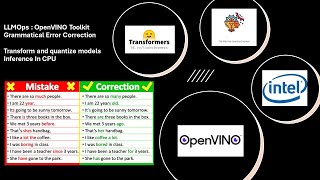
MLOps: OpenVino Quantized Pipeline for Grammatical Error Correction
Build a grammar error correction model using OpenVino, combining Roberta-based error detection and Flan-T5 correction, with quantization for efficient CPU inference.
Object Detection with Faster R-CNN in C# Using ONNX on CPU
Implement object detection using Faster R-CNN in C# with ONNX format on CPU, leveraging machine learning for efficient image analysis.
LLMOPs: Multimodal Prompting and Inference with Phi-3 Vision 128K Instruct on CPU - ONNX 4-Bit Quantization in C#
Explore multimodal prompting and CPU inference using Phi 3 Vision 128K Instruct, quantized to 4 bits in ONNX format, with C# implementation for efficient machine learning operations.
LLMOPs - Inference in CPU with Phi3 4k Instruct ONNX 4-bit Model Using C#
Explore CPU-based inference using 4-bit quantized Phi 3 4K Instruct in ONNX format with C#. Learn practical implementation for efficient machine learning deployment.
LLMOps: Using Nvidia TensorRT SDK for GPU Inference
Optimize GPU inference using Nvidia TensorRT SDK. Convert models, compare throughput, and explore batch sizes, data precision, and runtime options for enhanced performance.
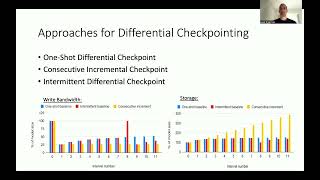
Check-N-Run - A Checkpointing System for Training Deep Learning Recommendation Models
Innovative checkpointing system for large ML models, reducing bandwidth and storage needs through differential checkpointing and quantization techniques without compromising training accuracy.
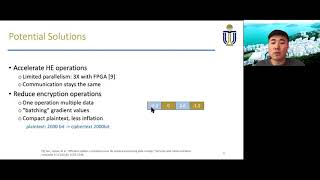
BatchCrypt - Efficient Homomorphic Encryption for Cross-Silo Federated Learning
Efficient homomorphic encryption system for cross-silo federated learning, reducing encryption and communication overhead while maintaining privacy and accuracy in collaborative machine learning.
Client Side Deep Learning Optimization with PyTorch
Explore real-time computer vision on mobile devices using PyTorch. Learn model porting, optimization techniques, and performance benchmarking for client-side deep learning applications.
Best Practices for Real-time Intelligent Video Analytics
Explore best practices for real-time intelligent video analytics, including transfer learning, data augmentation, and NVIDIA tools for efficient AI applications and high-performance inference.
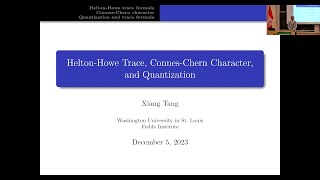
Helton-Howe Trace, Connes-Chern Character, and Quantization
Explore advanced mathematical concepts connecting Helton-Howe Trace, Connes-Chern Character, and Quantization in this insightful lecture by Xiang Tang from Washington University in St. Louis.
Deep Learning for Mobile Devices
Strategies for implementing efficient convolutional neural networks on mobile devices, covering model optimization, hardware considerations, and on-device training techniques.
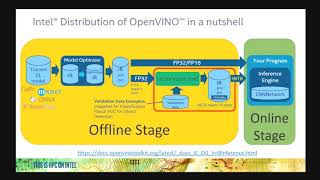
Accelerate Your Deep Learning Inferencing with the Intel DL Boost Technology
Explore Intel® DL Boost technology for efficient deep learning inference acceleration using low-precision INT8 and VNNI instructions on 2nd gen Intel Xeon Scalable processors.
Honey, I Shrunk the TinyML
Explore TinyML: train, convert, and run machine learning models on microcontrollers. Learn quantization, pruning techniques, and step-by-step integration for embedded AI applications.
Building a Mobile AI Platform at Facebook - F8 2019
Explore Facebook's approach to mobile AI, covering NLP, video, ASR, and content understanding. Learn about challenges, techniques, and optimizations for edge deployment.
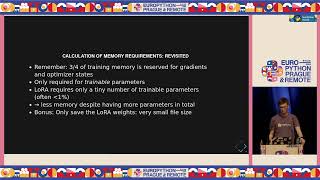
Fine-tuning Large Models on Local Hardware Using PEFT and Quantization
Explore Parameter-Efficient Fine-Tuning (PEFT) and quantization techniques to train large neural networks on modest hardware using the PEFT library and Hugging Face ecosystem.
MIDI Fundamentals and Software Instruments in Logic Pro - Part 8
Master MIDI fundamentals in Logic Pro, from controllers and software instruments to recording techniques, quantization, and musical typing - perfect for beginners exploring digital music production.
MIDI Quantization and Q Values in Logic Pro - Lesson 9
Master MIDI quantization techniques in Logic Pro, from basic Q values and shortcuts to advanced features like input quantization, strength adjustment, and swing settings for precise rhythm control.
MIDI Transform and Batch Processing in Logic Pro - Episode 63
Master MIDI transformation techniques in Logic Pro, from basic velocity adjustments to advanced controller conversions and note length quantization for enhanced music production workflow.

MIDI Quantization and Time Correction in Logic Pro 11 - Part 10
Master MIDI quantization techniques in Logic Pro, from basic time correction to advanced features like swing, strength adjustment, and note overlap handling for cleaner, more precise musical arrangements.
MIDI and Software Instruments in Logic Pro 11 - Lesson 9
Master MIDI fundamentals and software instruments in Logic Pro 11, from basic concepts to recording techniques, velocity control, and working with presets to create professional-quality music productions.