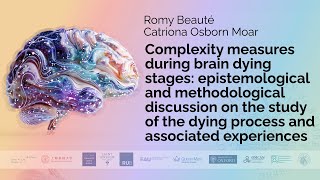
Complexity Measures During Brain Dying Stages: Epistemological and Methodological Discussion on the Dying Process and Associated Experiences
Explore brain activity complexity during death, examining EEG data analysis methods and their implications for understanding near-death experiences and consciousness in final moments.
Psychedelics and Empathy: Understanding MDMA's Role in Social Behavior and Mental Health Treatment
Explore groundbreaking research on MDMA and other psychedelics' potential in treating depression, anxiety, and PTSD, while understanding the neuroscience behind social behavior and brain reward circuits.
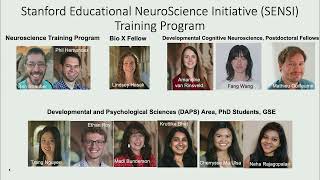
Connecting Education and Neuroscience in Understanding Functional Human Brain Development
Explore groundbreaking research connecting neuroscience and education, revealing key insights into functional brain development and learning processes.
How Psychedelics Alter Our Perception of Reality - Part 2
Explore the fascinating mechanisms behind psychedelics' ability to alter perception and consciousness, with insights from Stanford researcher Boris Heifets on their impact on brain function and reality.
How We Remember and Why We Forget - The Neuroscience of Memory
Discover the neuroscience behind memory formation, forgetting patterns, and practical techniques to enhance cognitive retention through expert insights from Stanford neuroscientist Anthony Wagner.
Neuroscience and AI - What Artificial Intelligence Teaches Us About the Brain and Vice Versa
Explore the fascinating intersection of neuroscience and AI with Stanford expert Surya Ganguli, examining how modern AI systems inform our understanding of biological intelligence and brain function.
Computation, Consciousness, and Teleology - Models of Consciousness
Explore the relationship between consciousness, computation, and teleology through the lens of physical systems implementation and mortal computation theory in neural processing.
The Common Thread: Simplifying the Study of Consciousness with Shared Experience, Shared Identity and Shared Information
Explore philosophical questions about consciousness, shared experiences, and personal identity through an information theory lens that bridges philosophy with neuroscience.
Towards a Mathematical Theory of Pre-Reflective Self-Consciousness: From Metamathematics to the Projective Consciousness Model
Explore mathematical approaches to modeling pre-reflective self-consciousness, examining theories from metamathematics to projective geometry and their implications for understanding subjective experience.

Homogeneous Spaces and Pre-reflective Self-consciousness in Agent Models
Delve into mathematical perspectives on pre-reflective self-consciousness through homogeneous spaces, group actions, and their implications for understanding agent-environment relationships and introspection.
Structuralism and Consciousness: The Two-Factor Interaction View
Explore the relationship between consciousness mechanisms and phenomenal experience structure through experimental designs and theoretical frameworks for testing consciousness theories.
Minimal Self-Consciousness as Perspectival Information
Explore the concept of Minimal Self-Consciousness through perspectival information and its role in self-location, examining how consciousness manifests without traditional spatial-temporal boundaries.
Structuralist Representationalism: A New Approach to Phenomenal Consciousness
Explore the intersection of consciousness and representation through structuralist theory, examining how neural states correspond to phenomenal experiences and quality spaces.
Measuring the Richness of Perception Through Free Reports - A Critical Analysis
Explore the relationship between conscious visual experience and verbal descriptions, examining how word choice reflects perceived richness in experimental psychology research.
How rCTM Answers Questions About Consciousness - A Robot with CTM Brain Model
Explore how the Conscious Turing Machine Robot (rCTM) model addresses fundamental questions about consciousness through a theoretical framework and formal machine modeling approach.
A Theory of Psychological Variables and Their Measurability Based on Relational Responding
Explore how psychological variables emerge through operant behavior and their relationship to fitness consequences, focusing on measurement theory and quantitative structures in behavioral science.
Finite Automata as a Tool for Modeling Psychological Phenomena
Explore how finite automata can effectively model psychological theories, focusing on stress and cognitive processes through clear mathematical frameworks and comparative analysis techniques.
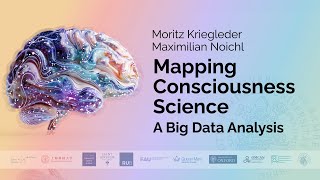
Mapping Consciousness Science: A Big Data Analysis
Explore the landscape of consciousness science through big data analysis of 60,000+ papers, revealing research clusters and interdisciplinary connections across psychology, philosophy, and computer science.
Overcoming Toxic Culture with Communication and Collaboration
Discover powerful profiling techniques and communication strategies to navigate workplace dynamics, identify different personas, and foster a healthier organizational culture through expert behavioral insights.

Using IR Skills to Help Recover from Grief - A PICERL Framework Approach
Discover how incident response frameworks parallel grief recovery stages, offering unique insights into managing personal loss and emotional healing processes.

Therapy's Role in Easing Anxiety and Decision-Making
Discover how therapy transforms anxiety management and decision-making through a personal journey spanning 7+ years, offering insights into navigating life's challenges with greater confidence.