Consciousness as a Coordination Mechanism
Exploring the hypothesis that consciousness arises from brain signal coordination, drawing parallels between neural traffic and road networks to understand global optimization patterns in brain activity.
Consciousness as a Coherence-Inducing Operator
Exploring consciousness as an operator that induces coherence in biological information processing, examining its properties, function, and potential for computational simulation.
Consciousness Is What It Is Like to Be an Online Compositional Learning System
Explores a hypothesis linking consciousness to online compositional learning, proposing a functional model that combines feature-binding with predictive processing to explain key aspects of conscious experience.
What Do Theories of Consciousness Predict About the Onset of Infant Consciousness?
Explores predictions of major consciousness theories on infant consciousness onset, examining higher-order, global workspace, integrated information, and recurrent processing theories.
How to Model Consciousness Processes in Categorical Process Theory
Explore modeling consciousness using ZXW calculus, a graphical language for quantum computing, to understand interactions between perceiving and perceived divisions in cognitive processes.
Thresholds, Noise and Response Bias - Insights from Blindsight
Explores perceptual decision-making, thresholds, and blindsight, challenging assumptions about visual awareness and highlighting the role of response criteria in conscious behavior.
Understanding Weak and Strong Artificial Consciousness
Explores the distinction between simulating and instantiating consciousness, using the free energy principle to analyze the difference between weak and strong artificial consciousness.
A Conscious Agent Model and the Physical World
Explores how consciousness may be fundamental, challenging traditional views of reality and perception through scientific findings and proposing a new framework for understanding the physical world.
Quantum Instrument Models in Cognitive Science
Explores quantum instrument models in cognitive science, explaining non-Bayesian belief updates in the "question order effect" while maintaining response replicability, challenging previous quantum approaches.
Model Templates for Minimal Models of Consciousness
Exploring model templates as a tool for analyzing consciousness theories, focusing on the free energy principle and its application across disciplines.
Consciousness and Free Will - A Physical Hypothesis for Distinguishing Humans from AI
Exploring a physical hypothesis for free will and consciousness based on quantum processes in the brain, distinguishing human cognition from AI through perception of parallel worlds.
Wishful Thinking About Consciousness
Explores three mathematical approaches to consciousness: quantum consciousness, IIT, and large-scale dynamic systems simulation. Analyzes strengths, weaknesses, and alignments to promote high-level dialogue on the hard problem.
Local Friendliness Violations - Experimental Metaphysics and the Nature of the Observer
Exploring quantum mechanics' challenge to local agency and objectivity through experimental metaphysics, with implications for understanding consciousness and the nature of observers.
Are Subjective Measures of Consciousness Reliable?
Exploring the reliability of subjective consciousness measures through introspection types and evaluating the Perceptual Awareness Scale.
Battling Your Biased Brain
Explore cognitive biases and their impact on decision-making, learning strategies to overcome mental pitfalls and enhance critical thinking skills.
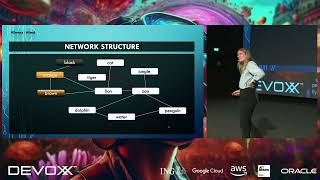
Wired! How Your Brain Learns New Programming Languages
Explore the cognitive processes behind learning programming languages, enhancing your ability to acquire new coding skills efficiently and effectively.

Embracing the Unknown
Explore four principles for thriving in uncertainty: curiosity, risk-taking, accepting change, and self-molding. Learn strategies to navigate unknown possibilities with courage and adaptability.
Creating Design Experiences
Explore the impact of spatial design on emotions and well-being, uncovering how psychology-based interventions shape our built environment and influence daily life.
Comfort Zone
Explore comfort zones' impact on personal and professional life, learning to leverage them for self-improvement and fostering inclusive tech communities.
What's New About Fake News
Explore the interplay of technology and psychology in the spread of misinformation, and discover potential solutions to combat fake news in the digital age.
Hi, I'm Dom, and I Have Depression!
Explore neurodiversity in tech teams through an interactive session. Learn about its impact, share ideas, and gain insights to foster understanding and inclusivity in the workplace.