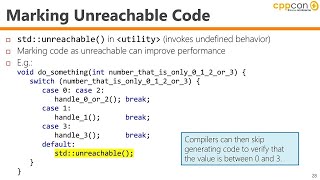
C++23: An Overview of New and Updated Features - Lecture
Explore C++23's new features and updates in core language and Standard Library, including explicit object parameters, if consteval, multidimensional subscripts, and more.
C++ Regular Types Revisited - Concepts and Applications in STL
Explore regular types in C++, their relation to STL constructs, and impact on everyday programming. Learn design principles, common pitfalls, and best practices for intuitive code.
Observing Tokio - Tools for Illuminating Asynchronous Rust Programs
Explore tools for illuminating Tokio's inner workings: Tracing crate, Tokio Metrics, Task Dumps, and Tokio Console. Gain insights into async Rust programs and troubleshoot effectively.
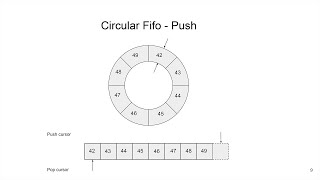
Single Producer Single Consumer Lock-free FIFO From the Ground Up - Lecture
Explore lock-free programming by constructing a Single Producer Single Consumer FIFO, optimizing performance and addressing cache coherency issues in modern C++.
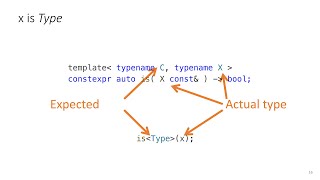
Advancing cppfront with Modern C++ - Refining the Implementation of is, as, and UFCS
Explore Modern C++ and cppfront's implementation of 'is', 'as', and UFCS. Learn about challenges, achievements, and future directions in refining these key functionalities.
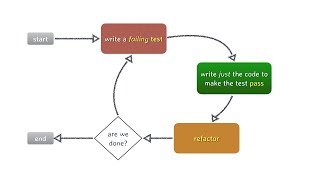
Back to Basics: Testing in C++ - Lecture
Explore effective C++ testing practices, from basics to best practices. Learn about test types, frameworks, and overcoming common challenges to improve code quality and reliability.
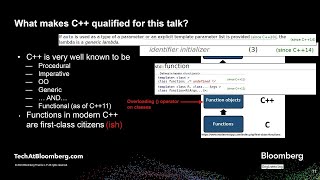
Monads in Modern C++ - Lecture
Demystify monads in C++ through theory and practical examples, exploring their increasing relevance in modern programming paradigms and real-world applications.
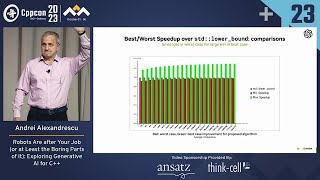
Robots Are After Your Job - Exploring Generative AI for C++ - CppCon 2023
Explore generative AI's impact on C++ programming, examining its potential and limitations through a novel look at binary search. Gain insights into the future of human-AI collaboration in coding.
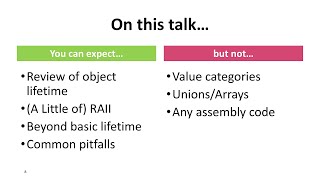
C++ Object Lifetime: From Start to Finish - CppCon 2023
Explore C++ object lifetime fundamentals, rules for extension, and pitfalls with temporary objects. Gain insights to write correct and efficient code, suitable for all skill levels.
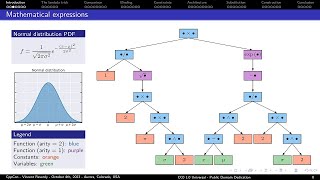
Symbolic Calculus for High-performance Computing From Scratch Using C++23
Explore symbolic calculus implementation in C++23 for high-performance computing. Learn techniques for compile-time derivatives, integrals, and optimized linear algebra computations.
How to Build Your First C++ Automated Refactoring Tool - Lecture
Learn to create C++ automated refactoring tools using Clang, scaling expert knowledge and ensuring best practices across large codebases. Discover practical applications for improving code quality efficiently.
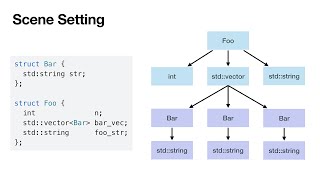
Object Introspection: A C++ Memory Profiler - Lecture
Explore a new open-source Linux technology for precise C++ object memory profiling, enabling efficiency improvements without code modification. Learn two approaches for object introspection with practical examples.
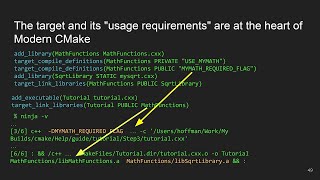
Libraries: A First Step Toward Standard C++ Dependency Management - 2023
Explore complexities of C++ libraries and progress towards standardized dependency management. Learn about metadata files for prebuilt libraries and a roadmap for defining C++ library standards.
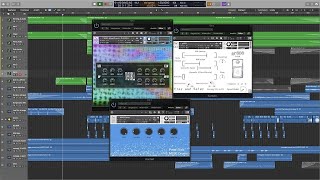
Exploration of Strongly-typed Units in C++ - A Case Study from Digital Audio
Explore strongly-typed units in C++ for digital audio processing. Learn to prevent API and math mistakes using user-defined types, conversion operators, and operator overloading. Examine the mp-units library proposal.
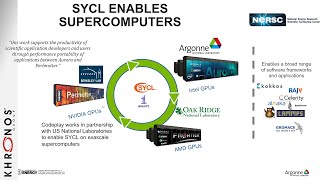
Concurrency TS2: Improved C++ Concurrency and Lock-free Programming - Lecture
Explore advanced C++ concurrency features in Concurrency TS2, including Synchronized Value, Safe Reclamation, Bytewise Atomic Memcpy, and Asymmetric Fence. Learn their applications in lock-free and low-latency programming.

Linkers, Loaders and Shared Libraries in Windows, Linux, and C++ - CppCon 2023
Explore linkers, loaders, and shared libraries in Windows and Linux. Gain insights into binary layouts, symbol visibility, and C++ build differences across platforms.
Noexcept? Enabling Testing of Contract Checks in C++ - Lecture
Explore the complexities of noexcept in C++ function contracts, its impact on testing, and potential alternatives for better integration with contract checking in C++26.
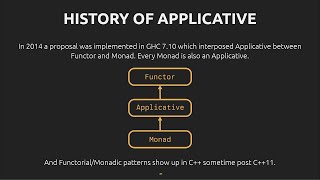
Applicative - The Forgotten C++ Functional Pattern
Explore the powerful applicative pattern in C++, learning its uses in optionals, ranges, futures, and more. Gain insights to write simpler, composable code beyond monads and functors.
Back to Basics: Initialization in C++ - Lecture
Explore C++ initialization methods, their nuances, and best practices. Learn to choose appropriate forms for clearer, more robust code in various contexts, including template scenarios.
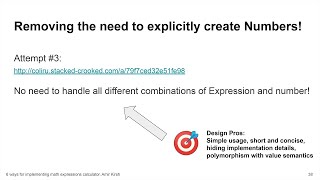
Six Ways for Implementing Math Expressions Calculator in C++ - CppCon 2023
Explore six implementation approaches for a math expression calculator in C++, comparing runtime and static polymorphism, smart pointers, templates, and C++20 concepts.
A Common Package Specification: Getting Build Tools to Talk to Each Other - Lessons Learned
Explore lessons from implementing a Common Package Specification for C/C++. Learn about challenges, solutions, and the potential for improved interoperability between build systems and package managers.