OCAML Tutorial
Comprehensive guide to OCaml programming, covering syntax, functions, data structures, modules, and practical applications. Suitable for beginners to advanced learners seeking in-depth understanding of OCaml.
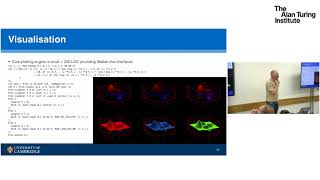
The Design of Functional Numerical Software - Dr. Richard Mortier, University of Cambridge
Explore functional numerical software with Owl, an OCaml library for scientific computing. Learn about its architecture, features, and applications in CPU, GPU, and browser environments.
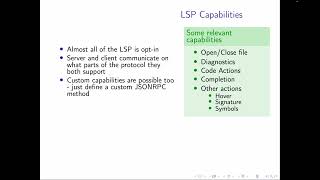
Writing a Language Server in OCaml for Emacs - Fun and Profit
Explore writing a language server in OCaml for Emacs, covering LSP basics, implementation tips, and integration with Emacs for enhanced coding experience and security analysis.

FoundationDB as a Storage Engine for Irmin
Explore Irmin's integration with FoundationDB as a storage engine, highlighting benefits, implementation challenges, and potential applications in distributed database systems.

Melocoton - A Program Logic for Verified Interoperability Between OCaml and C
Explore Melocoton, a groundbreaking program logic for verifying interactions between OCaml and C components through OCaml's foreign function interface, featuring a formal semantics and Coq mechanization.
Targeted Static Analysis for OCaml C Stubs - Eliminating Gremlins from the Code
Explore a static analyzer for OCaml C bindings, addressing safety issues and aiding migration to OCaml 5. Learn about tools and techniques to improve code reliability.
Mostly Automated Proof Repair for Verified Libraries
Explore automated proof repair for higher-order imperative functions, combining dynamic program alignment, enumerative invariant synthesis, and proof-driven testing to maintain verified software efficiently.
Formally Verified Samplers from Probabilistic Programs with Loops and Conditioning
Explore Zar: a verified compiler for discrete probabilistic programs, transforming cpGCL to executable samplers. Learn about choice-fix trees, interaction trees, and sampling equidistribution theorem.
Point-Free or Die - Tacit Programming in Haskell and Beyond
Explore tacit programming in functional languages, its benefits, drawbacks, and applications. Learn eta-reduction, develop intuition, and examine its use in libraries and specialized languages.
Safe and Secure Drivers in High-Level Languages
Explore writing PCIe drivers in modern languages like Rust and Go, focusing on safety, security, and performance. Learn techniques for user-space implementation and hardware isolation.
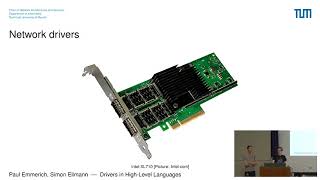
Treiber in High-Level Programmiersprachen
Netzwerktreiber-Implementierung in verschiedenen Hochsprachen: Vergleich von Sicherheitsfeatures, Performance und Komplexität für Intel 10 Gbit/s Karten in Rust, Go, OCaml, Haskell, C#, Python und Swift.
Leaving Legacy Behind - Deutsche Übersetzung
Reduzierung des CO2-Fußabdrucks von Netzwerkdiensten durch MirageOS-Unikernels: Minimalistischer Ansatz für sichere Services mit OCaml, kleinen Bibliotheken und geringerem Ressourcenverbrauch.
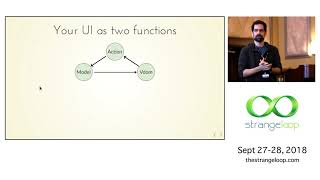
Data Driven UIs, Incrementally
Explore efficient data-driven UI development using Incremental, an OCaml library for dynamic computations. Learn techniques for building responsive applications that handle large data streams in real-time.
Simple Functional Effects with Tag Unions
Explore functional effects using tag unions in programming languages like Roc and OCaml. Learn about high-performance effect systems, mixing I/O operations, and enforcing compile-time guarantees.
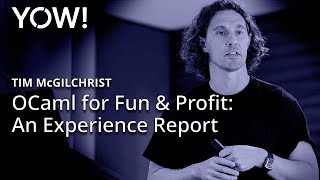
OCaml for Fun & Profit - An Experience Report
Explore OCaml's practical applications in real-world systems, covering engineering design, trade-offs, innovation budgeting, and non-technical aspects crucial for project success. Gain insights from hands-on experience in OCaml development.
Hardware Implementation of OCaml Using a Synchronous Functional Language
Explore Éclat, a functional language for hardware applications, and its implementation of an OCaml virtual machine on FPGAs, showcasing real-time interaction and customizable runtime.
Osiris: An Iris-Based Program Logic for OCaml
Explore Osiris, an Iris-based program logic for OCaml, enabling code verification using Separation Logic. Learn about its features, limitations, and future development plans.
Owi: An Interpreter and Toolkit for WebAssembly in OCaml
Explore Owi, an OCaml-based interpreter and toolkit for WebAssembly. Learn about its architecture, features, and advantages for experimentation and symbolic manipulations of Wasm code.
Building a Lock-Free STM for OCaml - OCaML'23
Explore lock-free software transactional memory in OCaml with kcas library. Learn about composable transactions, modular blocking, and lock-free data structures for efficient concurrent programming.
Buck2 for OCaml Users and Developers
Explore Buck2's advantages for OCaml development, including its benefits over alternatives like Dune or Bazel, and learn how to leverage it effectively.
Efficient OCaml Compilation with Flambda 2
Explore Flambda 2's IR and optimization pass for OCaml, focusing on inlining techniques and engineering constraints for efficient compilation of large codebases.