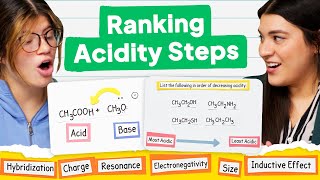
Ranking Acidity, Using pKa, and Drawing Arrows in Acid-Base Reactions
Learn to rank acids using pKa, draw curved arrows in acid-base reactions, and predict equilibrium favorability. Master key factors influencing acidity and apply concepts through practice problems.
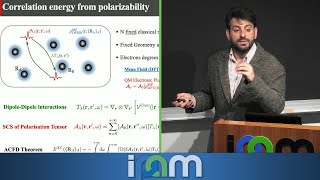
Second-Quantization of Many-Body Dispersion Formalism - Modeling of Million Atom Systems
Explore second-quantization of many-body dispersion formalism for modeling large-scale systems, enhancing computational efficiency and enabling analysis of interactions with surrounding environments.

Hydrothermal Fluids, Nebular Vapors and Silicate Melts Through Mineral Analysis
Explore mineral thermochemistry's insights into geological processes, from hydrothermal fluids in Ag-Pb-Zn ores to primordial solar nebula condensation and fassaitic pyroxenes in Ca-Al-rich inclusions.
Substances, Elements, Compounds & Mixtures - Physical Chemistry
Comprehensive overview of physical chemistry concepts, including substances, elements, compounds, mixtures, and states of matter. Ideal for MCAT, DAT, and NEET exam preparation.
Toy Chemistry - Three Bonds
Explore a computational model of chemical bonding, examining bond formation probabilities and their impact on molecular structures.
Classical Quantum Chemistry and QIS Applications - Part I
Explore quantum chemistry fundamentals and their applications in quantum information science with Prof. Anna Krylov in this comprehensive lecture from IPAM's Winter School.
Classical Quantum Chemistry and QIS Applications - Part 2
Explore advanced quantum chemistry concepts and their applications in quantum information science, focusing on cutting-edge research and theoretical frameworks.
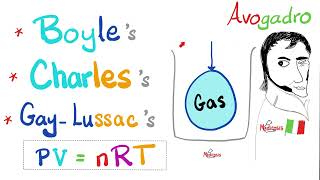
Gas Laws: Boyle's, Charles', Gay-Lussac's, and Avogadro's Laws - Ideal Gas Equation and Gas Density
Comprehensive overview of gas laws, including Boyle's, Charles', Gay-Lussac's, and Avogadro's laws, as well as the ideal gas equation and gas density calculations. Essential for chemistry exams and understanding gas behavior.
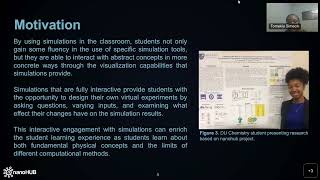
Introduction to Computational Chemistry Using the NUITNS Simulation Toolkit in nanoHUB
Explore computational chemistry using NUITNS toolkit on nanoHUB. Learn to integrate simulations in undergraduate chemistry courses and analyze nanodiamonds through hands-on demonstrations and practical applications.
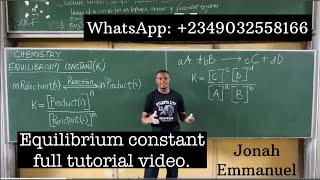
Chemical Equilibrium and Equilibrium Constant - Full Tutorial
Explore chemical equilibrium and equilibrium constant concepts in-depth, covering key definitions and applications for JAMB and WAEC chemistry exams.
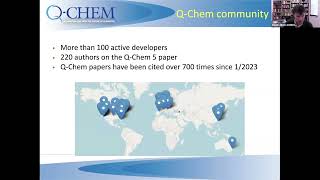
Q-Chem: An Engine for Innovation - 2024 Virtual Winter School in Computational Chemistry
Explore recent developments and new features in Q-Chem code with Martin Head-Gordon from UC Berkeley, highlighting advancements in computational chemistry software.
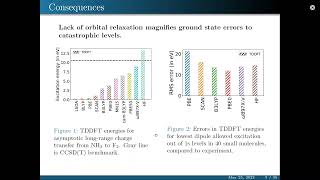
OO-DFT for Core-level Excitations and Applications to Molecular Symmetry Breaking - 2023 Besley Award
Advances in OO-DFT for modeling core-level excitations, focusing on SGM method and spin contamination. Applications to transient X-ray absorption spectroscopy, including Jahn-Teller distortion and symmetry breaking in molecular cations.
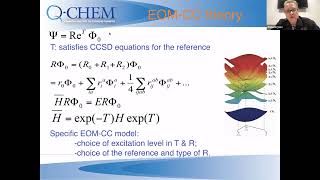
Coupled Cluster Methods for Excited States to Model Spectroscopy - 2023 VWSCC Session 09
Explore excited state equation of motion coupled cluster methods for modeling spectroscopy with Prof. Anna Krylov. Learn advanced techniques for computational chemistry applications.
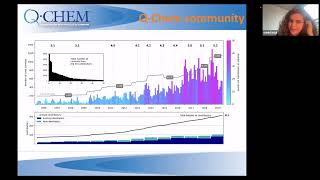
Introduction to Q-Chem Software Package - Session 1
Explore Q-Chem software: features, community, and applications in computational chemistry. Learn about ground state methods, excited states, and molecular dynamics simulations.

Introduction to Coupled Cluster EOM Exercises - 2023 Virtual Winter School in Computational Chemistry
Introduction to coupled cluster exercises, guiding participants through practical applications of concepts from the previous lecture on coupled cluster calculations.
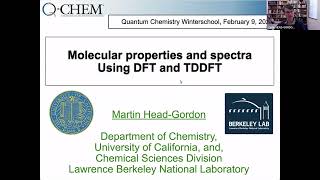
Molecular Properties and Spectra Using DFT and TDDFT - Session 6
Explore DFT and TDDFT applications in molecular properties and spectra with Prof. Martin Head-Gordon. Covers first/second-order properties and excited states, with accompanying lab exercise.
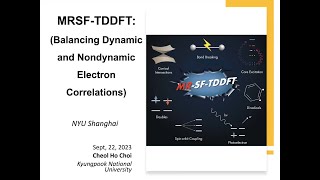
MRSF-TDDFT - Balancing Dynamic and NonDynamic Electron Correlations
Explore advanced quantum chemistry techniques for balancing dynamic and non-dynamic electron correlations in MRSF-TDDFT calculations.
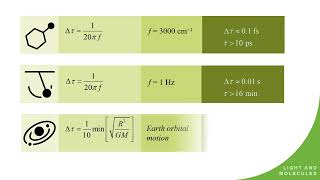
Nonadiabatic Dynamics in the Long Timescale - The Next Challenge in Computational Photochemistry
Explore nonadiabatic dynamics in long timescales and its impact on computational photochemistry. Gain insights into cutting-edge research challenges and potential solutions.
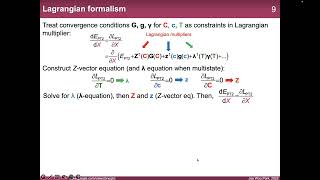
Multireference Quantum Chemistry for Exploring Potential Energy Surfaces
Explore potential energy surfaces using advanced multireference quantum chemistry techniques. Gain insights into complex molecular systems and their behavior.
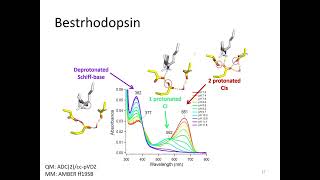
Probing Photochemistry in Protein Environment: QM/MM Study on Rhodopsins
Explore photochemistry in proteins through QM/MM studies on Rhodopsins, uncovering molecular mechanisms and protein-chromophore interactions.
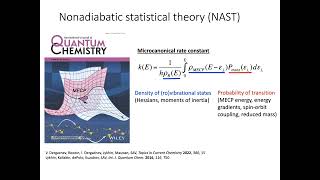
NAST: Nonadiabatic Statistical Theory Package for Predicting Kinetics of Spin-Dependent Processes
Explore nonadiabatic statistical theory for predicting spin-dependent process kinetics, comparing methods and examining real-world applications like ISC and surface reactions.