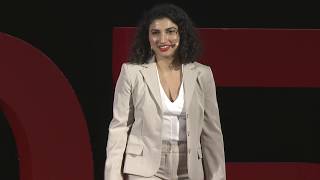
Cracking the Code - Neuronal Networks in the Brain
Explore cutting-edge techniques for studying biological neural networks, their efficient encoding solutions, and how they inspire AI algorithms for learning and navigation. Discover similarities between artificial and live brain behavior.
Free Energy Minimisation for Perception as Inference
Explores predictive processing theory and free energy principle in perception, comparing Helmholtz machine and message passing approaches to neural inference and consciousness.
Informational Models of the Phenomenon of Consciousness and the Mechanistic Project
Exploring informational models of consciousness, their methodological contributions, and limitations in guiding mechanistic research. Critiques panpsychist interpretations and discusses quantitative recharacterizations.
Information Structures and Consciousness
Exploring brain dynamics through evolving informational structures, linking to consciousness theories and providing insights into disorders of consciousness with high-precision classification.
Insights from the Conscious Turing Machine - A Machine Model for Consciousness
Explore a substrate-independent model of consciousness inspired by Turing's computation model and Baars' Global Workspace theory, offering insights into conscious experiences across animals and machines.
Consciousness Meets AI for a New Paradigm
Exploring connections between consciousness and AI, combining theories like Global Workspace Theory with deep learning to develop a new paradigm for general-purpose intelligence and brain-to-brain communication.
Consciousness - Coherence of Modalities
Explores a coherence-based theory of consciousness, proposing structured nets and dynamic mappings as key elements. Discusses data structures, neural codes, and links to mathematical concepts.
A Theoretical Computer Science Approach to Consciousness and AGI
Explore a theoretical computer science approach to consciousness and AGI through the Conscious Turing Machine model, offering insights into processor utilization and problem-solving.
Holographic Quantum Theory of Consciousness
Explore the quantum nature of consciousness, its connection to brainwaves and Schumann Resonances, and how quantum information theory can illuminate neuroscience and human experience.
Consciousness as a Coordination Mechanism
Exploring the hypothesis that consciousness arises from brain signal coordination, drawing parallels between neural traffic and road networks to understand global optimization patterns in brain activity.
Thresholds, Noise and Response Bias - Insights from Blindsight
Explores perceptual decision-making, thresholds, and blindsight, challenging assumptions about visual awareness and highlighting the role of response criteria in conscious behavior.
Discovery of a Peri-Somatic Physical Effect Related to Consciousness
Groundbreaking research on a quantum physical effect potentially linked to consciousness, using a novel photoelectronic device to measure light wave interference near the body during different states.
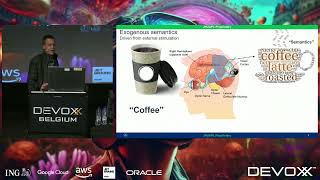
Explainable AI Analysis Visualization - Applications from Brain Computer Interfaces to ChatGPT
Explore cutting-edge applications of explainable AI, from brain-computer interfaces to ChatGPT, with a focus on analysis and visualization techniques.
Power of Brain Chemistry in Storytelling
Explore how hormones and neurotransmitters shape narratives, offering a unique perspective on the intersection of science and storytelling through personal anecdotes and experiences.
Explainable AI Analysis & Visualization - Applications from Brain Computer Interfaces to ChatGPT
Explore explainable AI analysis and visualization techniques, from brain-computer interfaces to ChatGPT, enhancing understanding of AI decision-making processes and applications.
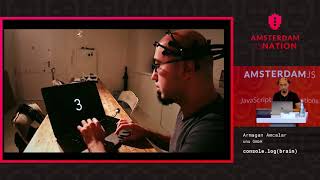
Console.log - Brain
Explore brain-computer interfaces with JavaScript, from signal processing to neural networks. Live demo showcases EEG headset integration, Electron, Node.js, and Vue.js for mind-controlled interactions.
What It Means to Be Human
Explore the future of human augmentation and its impact on humanity with experts discussing neuroscience, optimization, and directed evolution.
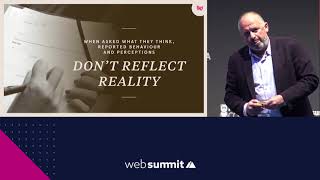
Behavioural Economics and Cognitive Neuroscience as Tools in Effective Branding
Explore how behavioral economics and cognitive neuroscience challenge traditional branding, revealing new paradigms for building memorable brands that drive consumer decisions.
Timeshifting - Jet Lag Is History
Discover how to quickly adjust your circadian rhythm and avoid jet lag with insights from a former NASA astronaut and circadian neuroscientist from Harvard Medical School.

Brainwaves for Hackers 2.0
Explore EEG experiments using Neurosky Mindwave, integrating with IPython Notebook and Raspberry Pi. Learn about brain waves, IoT applications, and data analysis techniques for real-time brainwave monitoring.
Brainwaves for Hackers 3.0
Explore brain secrets using Python and EEG devices. Interactive Jupyter experiments demonstrate evoked response potentials and neurofeedback training for hands-on brain wave analysis.