
Psychedelics for Mental Health - Exploring New Frontiers in Treatment
Exploring psychedelic drugs' potential to revolutionize mental health treatment, Dr. Ellenbroek shares research findings and discusses the promising future of this emerging field in neuroscience.
Behavior and Brain Repair in Stroke Recovery
Explore cutting-edge research on stroke recovery, brain repair, and innovative approaches presented by Dr. John Krakauer at the SKSI 2023 Conference.
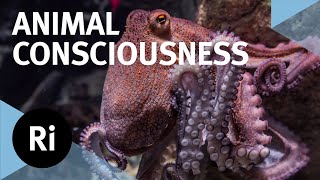
The Hidden World of Animal Consciousness - With David Peña-Guzmán
Explore animal consciousness through dreams, examining scientific research and philosophical theories. Discover implications for animal cognition, ethics, and rights in this thought-provoking presentation.

Data Needed to Drive Conceptual Advances About Learning
Exploring data needs for advancing learning theories, bridging timescales from milliseconds to weeks in neurobiology. Discusses mechanisms of synaptic plasticity and associative learning across molecular, cellular, and circuit levels.

Unleashing Your Brain's Potential - Science, Lifestyle, and Longevity
Discover evidence-based strategies to enhance cognitive abilities, prevent decline, and optimize brain health. Learn practical tools for improving memory, focus, and overall mental well-being from neurological experts.

The Spike - How Your Brain Uses Electrical Impulses to Communicate
Explore how electrical impulses in the brain enable communication between billions of neurons, guiding our actions and senses. Delve into the mysteries of neural spikes with neuroscientist Mark Humphries.
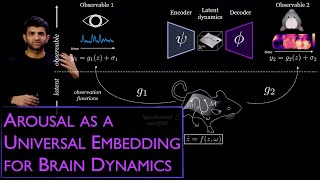
Arousal as a Universal Embedding for Spatiotemporal Brain Dynamics
Exploring how arousal dynamics can reconstruct and model diverse brain measurements, integrating neuronal, metabolic, and behavioral data into a unified framework for understanding brain-wide physiology.

Connectome-Based Modeling in the Fly
Explore connectome-based modeling in flies, revolutionizing neural circuit understanding and its link to behavior, presented by Larry Abbott at UCLA's IPAM workshop.
Neuroimaging Markers for the Role of Dopamine in Reward Learning Development Through Adolescence
Explore neuroimaging markers revealing dopamine's role in adolescent reward learning development. Gain insights into brain function and behavior through cutting-edge research.
BrainMap: An Epigenetic Mechanism for Differential Maturation of Neural Systems Involved in Socio-Emotional Development
Explore epigenetic mechanisms influencing neural system maturation and socio-emotional development. Gain insights into cutting-edge research on brain development and behavior.

Neural Mechanisms of Intelligence - Part 1
Explore neural mechanisms of intelligence in animals, uncovering algorithms behind cognitive processes. Gain insights into measuring and understanding non-linguistic forms of intelligence.
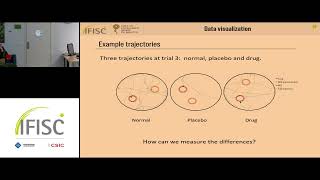
Spatial Memory in Rats Under Non-Life-Threatening Conditions
Explore rat spatial memory in non-threatening environments, examining cognitive processes and behavioral patterns through innovative experimental approaches.
Neurosymbolic Programming - An Emerging Subarea of AI
Explore neurosymbolic programming's fusion of deep learning and program synthesis, discovering how it enhances AI robustness, interpretability, and efficiency through symbolic and neural approaches.
Networks, Cocaine, and Fruit Flies: Studying Addiction Through Social Behavior Analysis
Explore groundbreaking research on cocaine addiction through fruit fly behavior analysis, revealing crucial insights into neurological patterns and social interactions via network-based measurements.
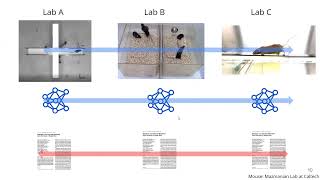
AI for Scientists: Accelerating Discovery through Knowledge, Data and Learning
Explore AI-driven scientific discovery, integrating machine learning with expert knowledge to automate data analysis and accelerate research across diverse domains.
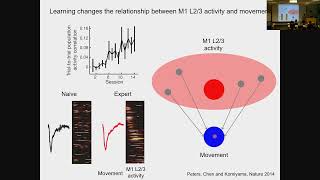
Motor Cortex Circuits for Motor Control and Learning
Explore motor cortex circuits' role in control and learning. Gain insights from UCSD expert Dr. Takaki Komiyama on neural mechanisms underlying movement.
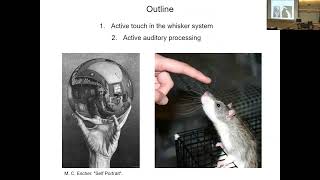
Perception in Action: Neural Circuits for Active Auditory and Tactile Decision-making
Explore neural circuits for active auditory and tactile decision-making in perception, presented by Dr. Chris Rodgers from Emory University.

Why We Don’t All See the Same World | Vivien Puppa Kocsis | TEDxAthens
What we see may feel objective, but our brains constantly interpret and reshape visual information. Vivien Puppa Kocsis explores how the brain processes visual signals and why people can perceive the same image, situation, or environment in completely different ways. Understanding perception can ch

Il colore è oggettivo o è soggettivo? | Alice Plutino | TEDxVerbania
Spesso pensiamo al colore come a qualcosa di stabile, oggettivo, universale. Eppure, dietro ogni sfumatura si nasconde un dialogo continuo tra il mondo e chi lo osserva. Il colore non è solo una proprietà della luce o dei materiali, ma una forma di linguaggio condiviso che ci permette di dare signi

Understanding the Adolescent Brain | Aditi Panchagnula | TEDxValley Christian High School
Adolescents can make better decisions and avoid impulsive actions by understanding and strengthening response inhibition through habits like proper sleep, nutrition, and focus training. Aditi Panchagnula is a fifteen-year-old high school sophomore with a keen interest in genetic medicine, neuroscien

Über das Entstehen und Vergehen von Gedanken | Werner Gruber | TEDxGraz
In diesem Talk zeigt Werner Gruber wie unser Denken tatsächlich funktioniert: nicht logisch-linear, sondern über Synchronisation, Muster und Selbstorganisation. Anhand von Äpfeln, Katzen, Glühwürmchen und Neuronen macht er sichtbar, wie Bedeutung entsteht und warum Wahrnehmung immer Konstruktion ist