
The Human Brain - Spring 2019
Explore the human brain's perceptual and cognitive abilities, their neural implementation, and cutting-edge research methods in cognitive neuroscience through lectures and discussions.
Neuropsychopharmacology of Psychedelic Drugs - Grand Rounds
Explore the neuropsychopharmacology of psychedelic drugs with Dr. Frederick S. Barrett in this Johns Hopkins Psychiatry Grand Rounds presentation, offering insights into cutting-edge research.
Cognitive Neuroscience
Explore cognitive neuroscience, brain structure, and core cognitive processes like perception, attention, and memory in this comprehensive overview.

How the Brain Creates Culture - Mind Brain Behavior Distinguished Lecture
Explore how observing others shapes our knowledge, behavior, and culture through implicit learning and social interaction, with insights from neuroscience and psychology.

Depression and Emotion in Adolescents - Experts in Emotion Series with Ian Gotlib
Explore depression and emotion in adolescents with Dr. Ian Gotlib. Learn about core research themes, future discoveries, and advice for entering the field of emotion studies.

Introduction to Basic Cognitive Processes
The approach adopted in this course will look at human behavior at large as made up of many component mental processes such as sensation, perception, attention, memory, language, imagery, decision making, problem solving, emotion and others.
Devil or Angel - Genetic Conflicts in Brain and Behavior
Explore genetic conflicts in the brain, self-defeating behaviors, and evolutionary clashes between maternal and paternal genes influencing decision-making and behavioral patterns.
What Can Neurology Learn from Functional Neurological Disorder - Clinical, Neurobiological and Programmatic Insights
Explore clinical, neurobiological, and programmatic insights into Functional Neurological Disorder and its implications for neurology.
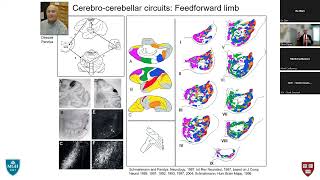
Cerebellar Function and Neuropsychiatry - November 16, 2023
Explore cerebellar function's role in neuropsychiatry, delving into its impact on cognitive and emotional processes beyond motor control.

Biology
Explore diverse biological topics from genome annotation to animal sentience with expert insights on evolution, neuroscience, genetics, and more. Gain a comprehensive understanding of cutting-edge research in various fields of biology.
The Purpose of Human Memory - Why We Forget to Remember
Dr. Sabo feltárja az emberi memória megbízhatatlan természetét, bemutatva, hogyan torzulhatnak vagy akár kitalálódhatnak emlékeink, és miért szükséges a felejtés az emlékezéshez.

Cyberworld Meets Cognitive Neuroscience and Public Policy
Explore the intersection of cybersecurity, neuroscience, and policy, examining challenges in information warfare, cyber defense, and collaborative governance across local to international levels.
From Smartphones to Smoking: What Neuroscience Reveals About How We Get Hooked
Explore the science behind addictive behaviors and learn effective strategies for breaking harmful habits, based on insights from neuroscience and mindfulness research.

Basic Models of Animal Cognition - Part 3
Explore diverse cognitive strategies in animals for problem-solving, from navigation to social relationships. Learn scientific methods for measuring animal cognition in field and lab settings.

The Neuroscience of Addiction
Neuroscientist Marc Lewis challenges the disease model of addiction, offering a developmental perspective and exploring neuroplasticity as a path to recovery.

Basic Models of Animal Cognition - Part 2
Explore diverse cognitive strategies in animals for problem-solving, from navigation to social relationships. Learn scientific methods for measuring animal intelligence in various settings.
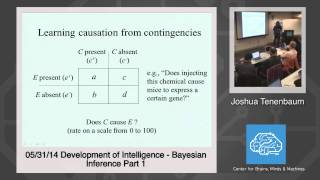
Development of Intelligence - Josh Tenenbaum: Bayesian Inference
Explore Bayesian inference and cognitive neuroscience with Josh Tenenbaum, delving into AI challenges, scene understanding, and advanced mathematical concepts for intelligence development.
What Makes a Memory Come Alive? - With Jon Simons
Explore the neuroscience behind vivid memories, their importance to our identity, and the brain regions involved in remembering. Discover how memory affects reality perception and its implications for mental health.
Karl Friston – Deep Inference
Karl Friston explores the connection between perceptual inference and decision-making in cognitive neuroscience, examining whether these seemingly different processes share underlying information theoretic principles.
The Parahippocampal Place Area Studied with fMRI
Explores the parahippocampal place area's role in scene recognition using fMRI, discussing methodological considerations and replication in cognitive neuroscience research.
How Can We Study the Human Mind and Brain? - Marr's Levels of Analysis
Explore Marr's levels of analysis for studying the human mind and brain, focusing on computational theory and its application to color vision and other cognitive processes.