
Art as Medicine - The Science Behind Arts and Health
Explore the scientific evidence behind art's impact on health and well-being, and learn how integrating arts into healthcare can lead to innovative treatments and improved outcomes.
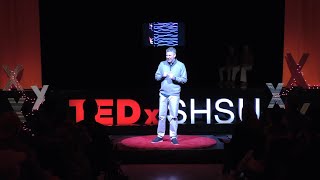
Science Worth Dancing About - Exploring Dance's Impact on Brain Development
Exploring the intersection of dance and neuroscience: how choreography enhances brain development, featuring live performance and real-time brain activity analysis of dancers.

Why Singing is Good for You
Explore the science behind singing's profound benefits for physical and mental health, and its positive impact on individuals and communities.
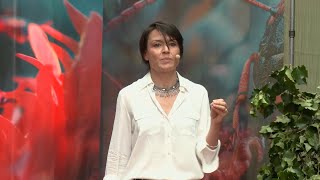
The Power of Architecture and Its Impact on Human Wellbeing
Discover how neuroscience and architecture intersect to create spaces that enhance human well-being, social interactions, and cognitive function through innovative design principles.
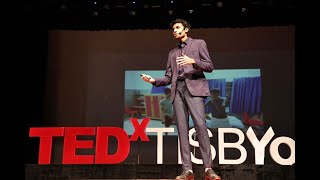
Why You Should Sleep - A Teenager's Perspective on Sleep Deprivation and Solutions
Explore the importance of sleep for teenagers, learn about the Somnia app, and discover how cardiac coherence can improve sleep patterns and overall well-being.
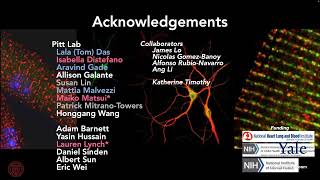
Lessons From the Heart - New Insights Into Physiology From Ion Channelopathies
Explore groundbreaking research on cardiac ion channelopathies and their impact on heart physiology, offering new perspectives on cardiovascular disease mechanisms and treatments.
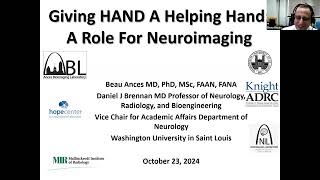
Giving HAND a Helping Hand - A Role for Neuroimaging
Discover how neuroimaging advances our understanding of HIV-associated neurocognitive disorders (HAND) through cutting-edge research and clinical applications presented by a leading neurological expert.
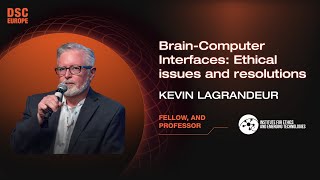
Brain-Computer Interfaces - Ethical Issues and Resolutions
Explore the ethical challenges and solutions surrounding AI-enhanced brain-computer interfaces, focusing on experimental psychiatric treatments and corporate responsibility in neurotechnology development.

Mechanical Responses of Axons - Understanding Non-linear Viscoelastic Properties and Stretch Responses
Explore the unique mechanical properties of axonal structures, including their viscoelastic responses, contractility, and growth patterns within neuronal cells and their biological significance.
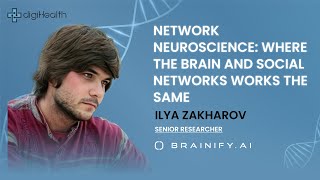
Network Neuroscience - Where the Brain and Social Networks Work the Same
Explore fascinating parallels between neural networks and social interactions, discovering how billions of neurons mirror human communication patterns in network neuroscience.
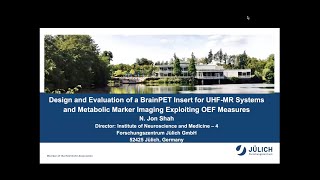
Design and Evaluation of a BrainPET Insert for UHF-MR Systems and Metabolic Marker Imaging Exploiting OEF Measures
Explore advanced neuroimaging techniques through BrainPET insert design for ultra-high-field MR systems and metabolic marker imaging, focusing on OEF measurements and their clinical applications.
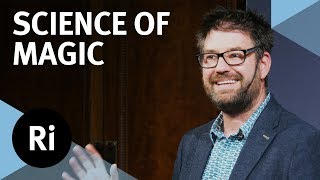
The Neuroscience of Magic - With Gustav Kuhn
Explore the fascinating intersection of neuroscience and magic as Gustav Kuhn demonstrates how our brains can be tricked by misdirection and optical illusions, revealing insights into perception and cognition.

How Your Brain Maps the World - With John O'Keefe
Nobel laureate John O'Keefe explores the neuroscience behind spatial orientation, discussing how the brain creates internal maps and GPS-like systems for navigation and understanding our environment.
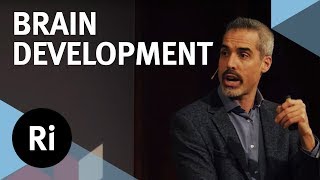
How the Wiring of Our Brains Shapes Who We Are - With Kevin Mitchell
Explore how brain wiring shapes individual differences in personality, intelligence, and behavior. Discover the interplay between genetics, development, and experience in forming our unique selves.
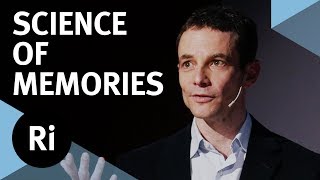
What Makes a Memory Come Alive? - With Jon Simons
Explore the neuroscience behind vivid memories, their importance to our identity, and the brain regions involved in remembering. Discover how memory affects reality perception and its implications for mental health.

How Your Brain Organizes Information
Explore cognitive maps and how the brain organizes information for flexible behavior. Learn about hippocampal neurons, non-spatial mapping, graph theory, latent spaces, and factorized representations in neuroscience.
Karl Friston – Deep Inference
Karl Friston explores the connection between perceptual inference and decision-making in cognitive neuroscience, examining whether these seemingly different processes share underlying information theoretic principles.
Stuart Hameroff - Anesthetic Action on Quantum Terahertz Oscillations in Microtubules
Explore quantum oscillations in microtubules and their role in consciousness, including anesthetic effects and the Orch OR theory, with insights from Stuart Hameroff.
Chasing Memories
Exploring synaptic dynamics in memory formation, focusing on competitive mechanisms that lead to long-term memory emergence in neural networks and their implications for understanding human memory.
Synergistic Workspace for Consciousness Revealed by Integrated Information Decomp
Exploring brain's information processing architecture and its role in consciousness through integrated information decomposition, revealing a synergistic global workspace crucial for conscious experience.
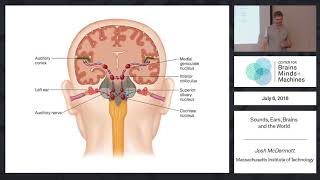
Sound, Ears, Brains and the World
Explore auditory processing, sound perception, and the brain's ability to distinguish multiple sound sources. Learn about computational modeling and the "Cocktail Party problem" in this insightful lecture by MIT Professor Josh McDermott.