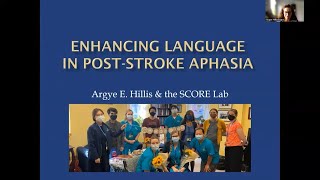
Language Recovery in the Early Period After Stroke
Explore language recovery strategies post-stroke with insights on early intervention, innovative approaches, and cutting-edge research for improved rehabilitation outcomes.

Concepts in Brain Repair - Stroke Recovery and Innovations
Explore cutting-edge concepts in brain repair and stroke recovery with leading expert Dr. John W. Krakauer. Gain insights into innovative approaches and the latest scientific advancements.
Developmental Science Insights for Artificial General Intelligence Creation
Explore how insights from infant development studies inform AI research, focusing on evaluating AI systems using tools from developmental psychology to advance AGI creation.
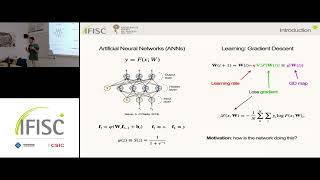
Artificial Neural Networks Through the Lens of Dynamical Systems Theory
Explore artificial neural networks from a dynamical systems perspective, gaining insights into their behavior and properties.
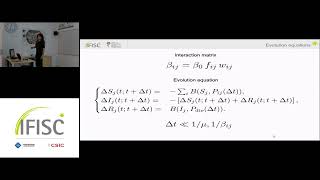
Epidemiological Approach to Tau Propagation in Alzheimer's Disease
Explore an epidemiological perspective on tau protein propagation in Alzheimer's, uncovering insights into disease progression and potential interventions.
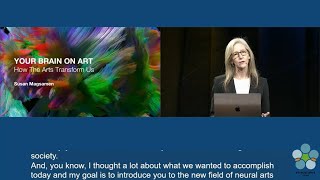
Neuroaesthetics: The Science of Arts and Aesthetic Experiences
Explore neuroaesthetics: how arts and aesthetic experiences impact brain, body, health, and well-being. Discover groundbreaking research and practical applications in this emerging field.
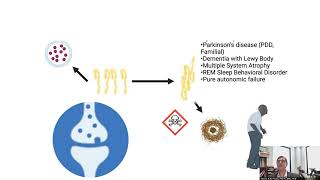
Improving Research Translation in Dementia: Humanized Mouse Models, Cognition and Imaging
Explore advancements in dementia research using humanized mouse models, cognitive assessments, and imaging techniques. Gain insights into translational approaches for understanding pathology and developing effective treatments.
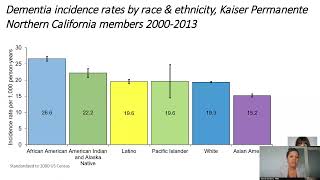
Health Equity in ADRD Research for the Black Community
Explore health equity in Alzheimer's research for Black Americans, examining unique risk factors and best practices for understanding cognitive decline within this population.

The Neuroscience of Addiction
Neuroscientist Marc Lewis challenges the disease model of addiction, offering a developmental perspective and exploring neuroplasticity as a path to recovery.
Beyond Limits - Innovating Against Cerebral Palsy
Inspiring journey of innovation and resilience: Abdelrahman Omran shares how he developed a brain-controlled wheelchair, overcoming challenges of cerebral palsy to make a global impact.
Attention and Presencing - Cultivating Conscious Connection with the World
Explore the concept of attention as a cognitive act shaping our experiences and connection with the world. Learn how attention influences our accomplishments and ways to overcome attention poverty.
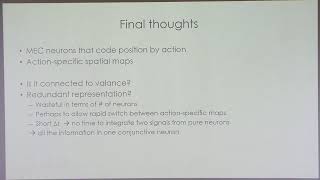
Understanding Lower-Level Intelligence from AI, Psychology, and Neuroscience Perspectives
Explore lower-level intelligence through AI, psychology, and neuroscience perspectives with Gily Ginosar's insightful presentation.
The Platonic Representation Hypothesis - Understanding Lower-Level Intelligence
Explore the concept of Platonic representation in AI, psychology, and neuroscience, examining its implications for understanding lower-level intelligence across disciplines.
Robot Learning: Inspiration from Child Development
Explore how insights from child development can enhance robot learning, bridging AI, psychology, and neuroscience perspectives.
Pathway to Robot Intelligence: Learning Complex Sensorimotor Skills
Explore a framework for learning complex, generalizable sensorimotor skills in robotics, bridging the gap between language processing and reliable task execution.
Approximations and Workarounds in Intuitive Physics and Imagination
Explores computational models and behavioral studies of human intuitive physics, examining approximations and limitations in mental simulations for everyday object interactions.
Combining Innate Concepts with Learning to Perceive the World
Explore how innate concepts and learning processes interact to shape our perception of the world, drawing insights from AI, psychology, and neuroscience perspectives.
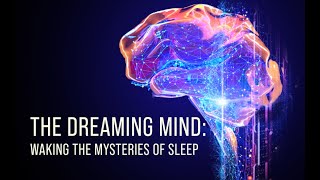
The Dreaming Mind - Waking the Mysteries of Sleep
Explore the science of dreams with experts discussing their origins, meanings, and potential applications in problem-solving, creativity, and understanding consciousness.

Resolving Anxiety and Trauma Through the Nervous System
Explore nervous system regulation to heal trauma, reduce anxiety, and restore vitality. Learn practical wisdom for unfreezing and strengthening your nervous system to access joy, confidence, and creativity.
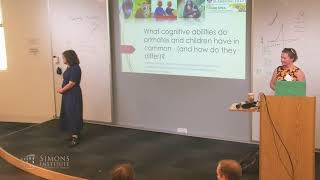
Empowerment Gain as Causal Learning
Explore how AI, psychology, and neuroscience perspectives contribute to understanding lower-level intelligence, with insights from Alison Gopnik of UC Berkeley.
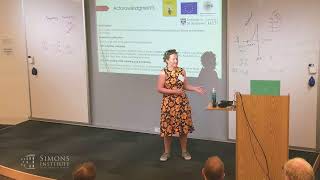
Human and Primate Intelligence Comparison - Learning, Abstraction, and Cognition
Explore comparative intelligence between humans and primates, examining learning, abstraction, intuitive physics, and executive functions through comparable research methods.