Artificial Chemical Intelligence: AI for Chemistry and Chemistry for AI
Explore the integration of AI with chemistry, focusing on trustworthy frameworks for molecular discovery. Learn about innovative approaches to predict mechanisms and overcome challenges in computational chemistry.
MACE: Higher Order Equivariant Message Passing Neural Networks for Fast and Accurate Force Fields
Explore higher-order equivariant message passing neural networks for fast, accurate force fields in computational chemistry. Learn about MACE's innovative approach using four-body messages to enhance efficiency and accuracy.
Accelerating Cryptic Pocket Discovery with Deep Learning
Explore deep learning techniques for accelerating cryptic pocket discovery in protein structures, focusing on simulation, key degrees of freedom, and tools like PocketMiner and AlphaFold.
Machine Learning for Multi-Scale Molecular Simulation and Design
Explore multi-scale molecular simulation techniques using machine learning for accelerated MD simulations and MOF design, focusing on coarse-grained modeling and graph neural networks.

Equivariant Flow Matching for Deep Generative Models in Physics
Explore equivariant flow matching for efficient, simulation-free training of equivariant CNFs in physics and drug discovery, improving sampling efficiency and scalability for many-particle systems.
Predicting Equilibrium Distributions for Molecular Systems with Deep Learning
Explore deep learning techniques for predicting equilibrium distributions in molecular systems, focusing on the novel Distributional Graphormer framework and its applications in various molecular tasks.

Is Distance Matrix Enough for Geometric Deep Learning?
Explore geometric deep learning limitations and k-DisGNNs' potential in capturing high-order geometric information, unifying models, and achieving universal function approximation for geometric graphs.

Learning Local Equivariant Representations for Large-Scale Atomistic Dynamics
Explore Allegro, a local equivariant deep learning interatomic potential for efficient, accurate, and scalable atomistic dynamics simulations, including applications in biomolecular systems.

Designing Losses for Data-Free Training of Normalizing Flows on Boltzmann Distributions
Explore advanced techniques for training normalizing flows on Boltzmann distributions without data, addressing mode collapse and optimizing high-dimensional distributions in molecular configuration generation.

A JavaScript Framework for Computational Simulations
Explore a JavaScript framework for creating interactive scientific simulations in the browser, focusing on performance and extensibility for educational physics applications.
Deep Learning for Protein Structure Prediction
Explore deep learning techniques for predicting protein structures, from traditional methods to AlphaFold's advancements. Gain insights into molecular dynamics, homology modeling, and cutting-edge AI approaches in structural biology.
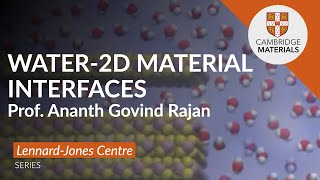
Probing Water-2D Material Interfaces: Quantum and Classical Simulations on Defective and Rough Surfaces
Explore quantum and classical simulations of water-2D material interfaces, focusing on defects and roughness in hexagonal boron nitride. Gain insights into wettability, slip length, and interfacial properties for desalination and sensing applications.
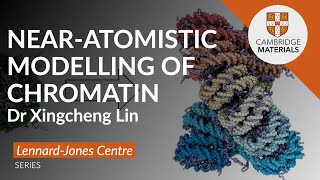
Near-atomistic Modeling of Chromatin - Insights into Structure and Dynamics
Explore near-atomistic modeling of chromatin structure, folding pathways, and sol-gel transitions. Gain insights into genome organization and chromatin behavior under various conditions.
Exploring Chemical Reactions Through Automation and Machine Learning
Explore efficient strategies for generating machine learned potentials to study reaction mechanisms in gas-phase and solution, achieving ab initio accuracy with minimal computational investment.

Ab Initio Charge Transport of Ionic Fluids: Invariance Principles and Topological Invariants
Explore ab initio charge transport in ionic fluids, combining invariance principles and topological quantization to redefine oxidation numbers and electrical conductivity calculations.

Solvated Electron: First Principles and Machine Learning Approaches
Explore advanced modeling of solvated electrons using machine learning, overcoming challenges in accuracy and efficiency to study structure, dynamics, and properties across temperatures.
Force-Free Identification of Minimum-Energy Pathways and Transition States Using Quantum Monte Carlo Methods
Explore force-free quantum Monte Carlo methods for identifying minimum-energy pathways and transition states in chemical reactions and material transformations.

Can Microscopes Make Decisions? - Event-Triggered Microscopy
Explore event-triggered microscopy, a breakthrough in real-time decision-making microscopes, and its impact on capturing critical molecular events with unprecedented precision in biological observation.
A Coarse-Grained Molecular Dynamics Study of Damage Localization During the Fracture of Double Polymer Networks
Explore molecular dynamics of damage localization in double polymer networks, focusing on mechanisms behind increased toughness and the interplay between load sharing and damage propagation.
Leveraging Latent Representations for Predictive Physics-Based Modeling
Explore advanced techniques for leveraging latent representations in predictive physics-based modeling, focusing on surrogate models, inverse problems, and transfer learning for complex PDEs.

Accessing the Nanoscale with MINFLUX Light Microscopy
Explore MINFLUX, a groundbreaking light microscopy technique achieving nanometer-scale precision in superresolution imaging and single-molecule tracking, revolutionizing cellular observations.