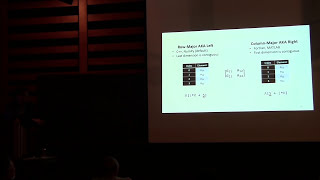
Multidimensional Array References for the C++ Standard Library
Explore array_ref, a proposed C++ standard library feature for efficient multidimensional arrays. Learn its design, capabilities, and applications in scientific computing and cross-language interoperability.
Exceptional Performance
Explore the impact of exceptions on C++ performance, examining hardware architecture, memory hierarchy, and optimization techniques to understand when exceptions might enhance performance.

RaftLib - Simpler Parallel Programming
Explore RaftLib, a C++ library simplifying parallel programming for heterogeneous multicore processors. Learn to write efficient code for complex hardware without extensive low-level knowledge.
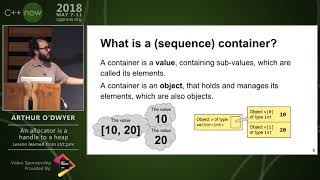
An Allocator Is a Handle to a Heap
Explore C++17's std::pmr framework, allocator concepts, and memory resource management. Learn about lightweight allocators, rebinding, and non-standard examples for efficient heap handling in C++.
If I Had My 'Druthers - A Proposal for Improving the Containers in C++2x
Proposal for refactoring C++ standard containers, addressing weaknesses, and suggesting improvements. Covers naming, design, implementation, and API enhancements for C++2x, emphasizing user needs and modern practices.
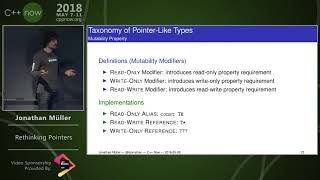
Rethinking Pointers
Comprehensive analysis of pointer-like types in C++, exploring their properties, use cases, and best practices for choosing the right pointer type in different situations.
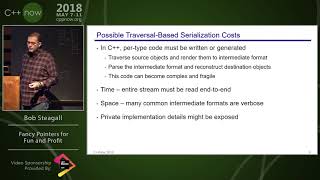
Fancy Pointers for Fun and Profit
Explore fancy pointers in C++, their implementation, and applications in shared memory databases, private heaps, and object persistence. Learn addressing models and storage strategies for synthetic pointers.

Modern C++ in Embedded Systems
Explore modern C++ in embedded systems, covering decision-making, tool support, language features, and practical applications for bare-metal and small-OS projects.
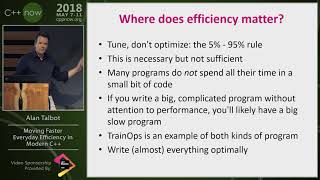
Moving Faster - Everyday Efficiency in Modern C++
Explore modern C++ efficiency techniques, from value semantics to container choice, for writing performant code that meets user expectations in everyday programming scenarios.
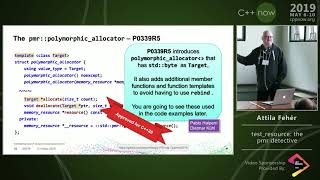
Test Resource - The PMR Detective
Explore pmr::test_resource for detecting memory allocation bugs in C++. Learn to diagnose and fix issues like leaks, overruns, and exception-safety failures using real-world examples.

The C++ Rvalue Lifetime Disaster
Explores rvalue reference lifetime issues in C++, discussing const& binding and temporary lifetime extension problems, with proposed solutions for safer memory management in generic code.

How to - Colony
Dive deep into the mechanics of the colony container, exploring its implementation details, performance optimizations, and potential applications in C++ programming.

Code Analysis
Explore C++ static analyzers, Core Guidelines enforcement, and "Simplify C++" trends. Discuss various code checks, from catching dangling pointers to enforcing style guidelines, and consider gamifying static analysis.
The Performance Price of Dynamic Memory in C++
Explore performance impacts of dynamic memory in C++, covering allocation costs, memory access patterns, and cache-aware design principles with practical examples and solutions.
The Challenges of Implementing the C Standard Library in C++
Explore the innovative approach of implementing C standard library in C++, focusing on modern practices, performance optimization, and overcoming challenges without assembly language.
Writing Python Bindings for C++ Libraries for Performance and Ease of Use
Learn to create Python bindings for C++ libraries, enhancing performance and usability. Explore memory management, data conversion, multi-threading, and API design for seamless integration.
Why Is Python Slow?
Explore Python's performance, comparing it to other languages, and learn optimization techniques and future improvements for faster execution.
How to Succeed with Python Across the Enterprise
Discover how Bloomberg successfully integrated Python across its enterprise, focusing on community-driven initiatives, technical support, and cultural shifts to promote widespread adoption.
How Memory Profilers Work
Explore memory profilers in Python: types, allocation patterns, and effective usage for optimizing large-scale applications and diagnosing memory issues.
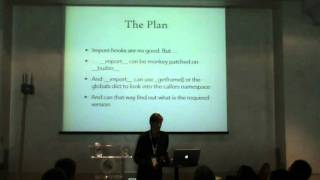
Years of Bad Ideas
Explore unconventional Python techniques, from spiking to interpreter warfare, in this talk on experimental programming ideas and their potential pitfalls.
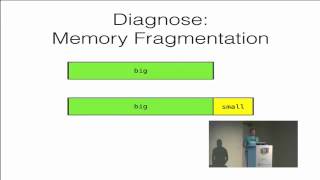
Fun with cPython Memory Allocator
Explore cPython memory allocation, debugging techniques, and tools like guppy. Learn to identify and solve memory leaks and fragmentation issues in Python programs.