
Cgroup2 Resource Control Strategies with Resctl-Demo
Explore cgroup2 resource control strategies using resctl-demo, an interactive tool for managing workload distribution and improving system reliability and utilization.
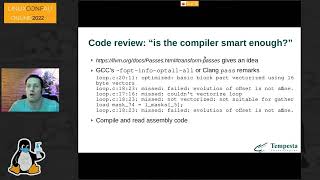
What C and C++ Can Do and When Do You Need Assembly
Explore compiler optimizations, hardware extensions, and Assembly language to achieve maximum code efficiency beyond standard C and C++ capabilities.

Memory Management with MMTk - Lessons Learned from Replacing Ruby's Garbage Collector
Explore MMTk, a runtime-agnostic garbage collection framework, and its integration into Ruby's interpreter. Learn about optimizing memory management in programming languages and the challenges of implementing advanced GC algorithms.
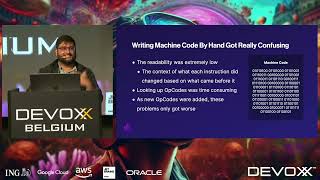
The JVM vs WebAssembly - An In Depth Comparative Analysis
Comparative analysis of JVM and WebAssembly, exploring their architectures, performance, and use cases to understand their strengths and limitations in modern software development.

Demystifying Memory Leaks in JavaScript
Explore Node.js internals, profilers, and garbage collection to identify and fix memory leaks, ensuring safer, faster, and more efficient JavaScript applications.

Chasing Performance Phantoms
Explore hidden performance culprits in code and learn techniques to detect and eliminate them, focusing on VM pauses, garbage collection, and ecosystem factors.

Reinventing the Web Browser for Modern Computers
Explore the future of web browsing with Mozilla's Mark Mayo as he discusses performance optimization, memory management, and API innovations for a better browsing experience.
std - shared_ptr - T
Explore std::shared_ptr's intricacies, from RAII and resource ownership to thread safety, custom deleters, and allocators. Gain insights into C++ smart pointers and memory management best practices.

Local - Arena Memory Allocator
Explore efficient memory management with John Lakos as he delves into local ("arena") memory allocators, optimizing performance and resource utilization in software development.

Striving for Ultimate Low Latency
Explore techniques for achieving ultra-low latency in C++ programming, focusing on high-frequency trading and market data processing. Learn optimization strategies and pitfalls to avoid.
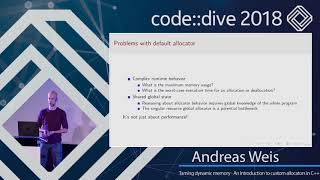
Taming Dynamic Memory - An Introduction to Custom Allocators in C++
Explore custom C++ allocators for enhanced memory management, covering techniques like pooling and monotonic allocation, alignment challenges, and integration with modern codebases.
Multitype Pool - Fixed Type Allocation
Explore fixed-type allocation techniques to optimize memory management, reduce fragmentation, and enhance performance through stricter guarantees in modern allocators.
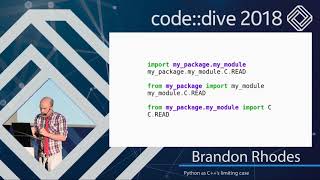
Python as C++’s Limiting Case
Explore Python's memory model as an extension of C++ conventions, examining language design trade-offs, performance considerations, and evolving programming paradigms.
Black-box Performance Analysis
Explore end-user experience and performance analysis techniques for software design, focusing on blackbox methods, memory leaks, and practical strategies for system engineers.

Beyond std - vector
Explore advanced C++ vector implementations, their features, performance, and use cases. Learn about static, small, and random vectors for optimized memory management.

What C and C++ Developers Can Learn from Rust
Explore how Rust's ownership model, memory safety features, and modern practices can enhance C/C++ development, improving code reliability and efficiency.
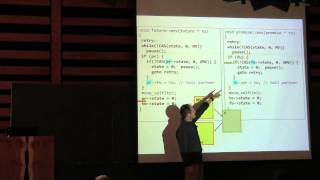
Non-Allocating std - future - promise
Explore lock-free techniques for implementing std::future/promise without allocation, addressing challenges of shared state and object lifetime in C++. Interactive session for hands-on learning.
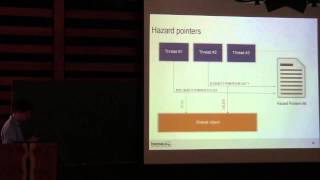
Scaling with C++11
Techniques for building hyperscalable software: design principles, multithreading patterns, memory management, and asynchronous I/O in C++11 for maximizing parallel execution and reducing inter-thread dependencies.

0xBADC0DE
Explore common coding pitfalls, anti-patterns, and strategies for dealing with problematic C++ code. Learn to prevent and address issues in software development.
The Future of Accelerator Programming in C++
Explore the evolving landscape of accelerator programming in C++, covering hardware models, vendor approaches, memory management, and advanced techniques for optimizing parallel computations.
Debugging Using an Exact Recording of a Program's Execution
Explore advanced debugging techniques using Undo's Live Recorder for Linux C++ apps. Learn to create, analyze, and compare execution recordings for efficient problem-solving and collaborative debugging.