
Four Basic Combinatorial Counting Problems in Data Structures - Math Foundations 162
Explores four fundamental combinatorial counting problems for lists, ordered sets, sets, and multisets, providing insights into mathematical data structures and their enumeration.
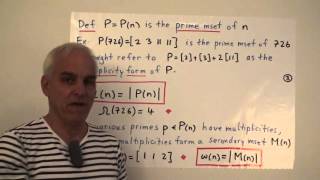
Unique Factorization, Primes and Multisets in Number Theory - Math Foundations 160
Explore elementary number theory through multisets, examining unique factorization, primes, and integral msets. Learn how prime msets connect to fractions and other number theory concepts.
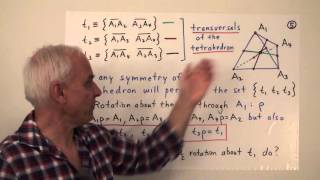
Canonical Structures Inside the Platonic Solids - Tetrahedron Symmetry - Lecture 49
Explore the hidden symmetries within the tetrahedron, uncovering a surprising three-fold structure and its connection to group theory in this insightful mathematical journey.
Teaching Connections Between Algebra and Geometry - Part 2
Exploring connections between algebra and geometry, including Cartesian geometry, conics, projective geometry, triangle geometry, and rational trigonometry for a fresh approach to math education.
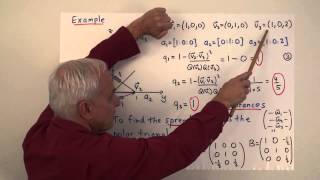
Applications of Rational Spherical Trigonometry - Universal Hyperbolic Geometry Lecture 43
Exploring rational spherical trigonometry through a specific spherical triangle example, demonstrating its connection to hyperbolic geometry and three-dimensional space.
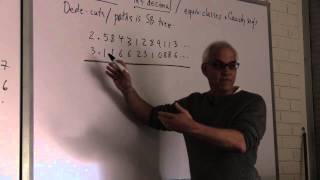
A Socratic Look at Logical Weaknesses in Modern Pure Mathematics
Exploring logical weaknesses in pure mathematics, focusing on continuum, analysis, and set theory. Challenges conventional understanding of limits and introduces computational thinking perspectives.
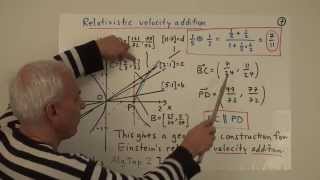
Relativistic Velocity and Core Circles in Rational Geometry - Lecture 4
Exploring relativistic velocity and core circles in rational geometry, extending Paul Miller's protractor concept to projective quadrance and comparing Euclidean and relativistic geometries.
Computability and Problems with Set Theory - Math History
Explores historical controversies in set theory, Gödel's incompleteness theorems, Zermelo-Fraenkel axioms, and Turing's computability concepts, challenging traditional views on infinite sets in mathematics.
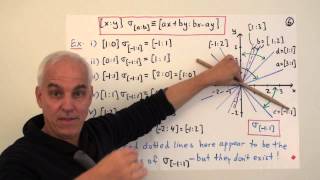
Isometry Groups of the Projective Line - Rational Geometry Math Foundations 138
Explore isometry groups of the projective line, focusing on rotations and reflections. Learn about symmetry, group theory, and their algebraic relationships in a concrete, accessible way.
Matrices, Determinants, and the Birth of Linear Algebra - A Historical Perspective
Explore the historical development of matrices and determinants, from ancient Chinese mathematics to modern linear algebra, featuring key contributors and their groundbreaking concepts.
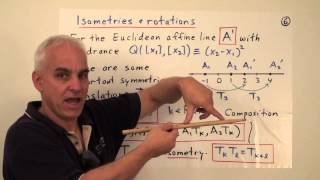
Algebraic Structure on the Euclidean Projective Line - Rational Geometry Math Foundations 137
Explores algebraic structure on the Euclidean projective line, covering projective formulas, isometries, rotations, and their compositions. Connects to chaos theory and complex number multiplication.
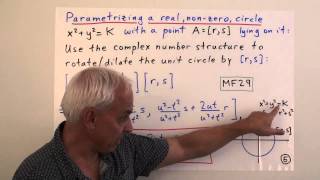
The Projective Line, Circles and the CQQ Theorem - Part 2
Explores advanced geometry concepts including general circles, complex numbers, and the Cyclic Quadrilateral Quadrea theorem, emphasizing projective parametrization and transformations in the complex plane.
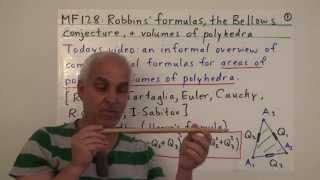
Robbins' Formulas, Bellows Conjecture, and Polyhedra Volumes - Rational Geometry Math Foundations 128
Explore modern developments in polygon area formulas, cyclic pentagon theories, and 3D generalizations of Heron's formula. Discover connections between quadrances, polyhedra volumes, and algebraic geometry.
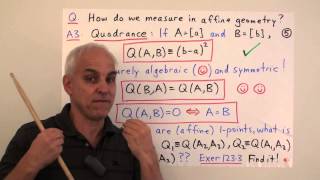
Affine One-Dimensional Geometry and the Triple Quad Formula - Math Foundations 123
Explore the Triple Quad Formula, a fundamental theorem in mathematics, through affine geometry. Learn its derivation, significance, and applications in measuring point separation and collinearity.
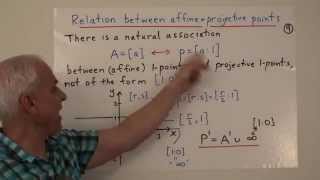
Mathematical Space and Basic Duality in Geometry - Rational Geometry Math Foundations 122
Exploring fundamental concepts of mathematical space, including the duality between affine and projective views, Cartesian geometry, and the relationship between affine and projective lines.
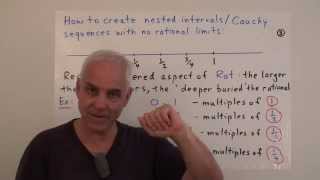
Axiomatics and the Least Upper Bound Property in Real Numbers - Math Foundations 121
Explores flaws in axiomatics for real numbers, examines rational number structure, and introduces the least upper bound property, challenging conventional mathematical foundations.
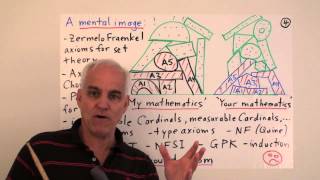
Axiomatics and the Least Upper Bound Property in Real Numbers - Math Foundations 120
Explores the shifting meaning of axioms in mathematics and its impact on real number theory, challenging traditional views on mathematical foundations.
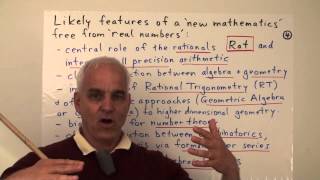
Mathematics without Real Numbers - Rethinking Foundations
Exploring the future of mathematics without real numbers, emphasizing finite and concrete approaches. Challenges traditional concepts of infinity and limits, proposing a revolutionary shift in mathematical thinking.
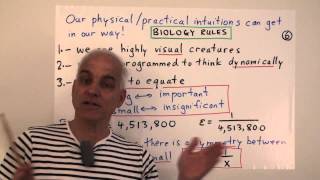
The Continuum, Zeno's Paradox, and the Price We Pay for Coordinates - Math Foundations 117
Exploring the continuum, Zeno's paradoxes, and the shift from geometry to arithmetic in mathematics, challenging our intuitions and biological constraints.
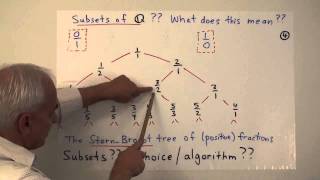
Difficulties with Dedekind Cuts - Real Numbers and Limits in Mathematics
Explores challenges in Dedekind's approach to real numbers, questioning the effectiveness of cuts in establishing a logical foundation for real number theory and arithmetic.
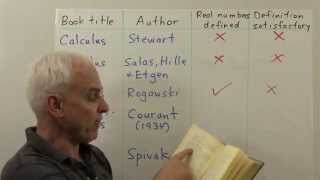
The Mostly Absent Theory of Real Numbers - Math Foundations 115
Explores flaws in standard treatments of real numbers in calculus and analysis textbooks, challenging conventional thinking and advocating for a more rigorous mathematical foundation.