
The Conceptual Framework of Urban Scaling - 2014
Explore the theoretical foundations of urban scaling, examining how cities grow and evolve over time through complex systems analysis and mathematical modeling.
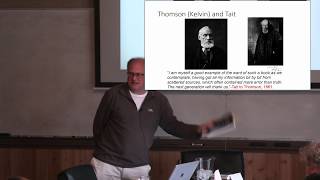
Mandelbrot, 1/f Noise, and The Mind's Eye in Complexity Science
Exploring Mandelbrot's contributions to 1/f noise, long-range dependence, and fractional models. Discusses the impact of cognitive diversity on scientific progress and the importance of visual thinking in mathematics.

Male Mate Choice and Female Ornamentation - A Mathematical Model
Explores mathematical model challenging assumptions about male mate choice and female ornamentation in polygynous species, revealing weak sexual selection on female traits despite common inferences.
Using Buckingham's Π Theorem for Dimensionless Similarity Parameters in Macroecology
Explore dimensionless similarity parameters in macroecology using Buckingham's Π theorem, presented by Sandra Chapman from the University of Warwick.
Technological Requirements for Sustaining Socio-ecosystems with Hyper-dense Humans
Exploring ecological theory to analyze human societies' energy use and density compared to other mammals, and modeling sustainable conditions for hyper-dense populations through green technologies.

Gene-Culture Co-Inheritance of Behavioral Traits: A Price Equation Approach
Explores gene-culture co-inheritance of behavioral traits using a Price equation model, examining how cultural selection can overcome genetic selection and modify genetic selection pressures for complex phenotypes like altruism.

The Statue in the Stone: How Dynamical Systems Discover Environmental Patterns
Explores how complex systems adapt to environmental patterns, favoring stable configurations that match external forces. Illustrates with toy models and swarm-robotics experiment.
On the Shape of Epidemics
Explore the patterns and dynamics of epidemic spread, examining factors that influence their shape and progression through populations.
Models of Identity Signaling
Explore mathematical models of identity signaling, examining their impact on cooperation, conflict, and social learning in complex human behavior and communication strategies.
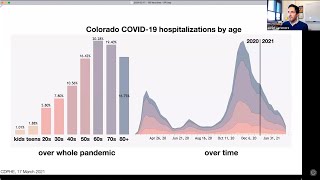
Vaccination Strategies - Prioritization, Dose Sparing, and Decisions Under Uncertainty and Inequity
Explore vaccination strategies for COVID-19, including prioritization and dose-sparing, considering uncertainties in variants, human behavior, and global inequities through mathematical models.
Loss of Self-Organization in Earth's Climate
Análisis de cambios en la autorregulación del clima terrestre mediante herramientas de sistemas complejos, comparando datos de temperatura global con el modelo Daisyworld.
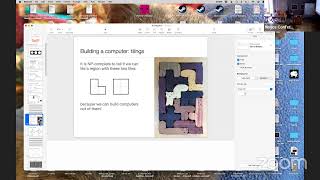
The Dynamics of Computation and the Computational Power of Dynamics
Explore the intersection of computation and dynamics, examining computational models, physical systems, and mathematical concepts to understand the nature of computation and its manifestation in various forms.
Community Detection and Data Topology in Network Science
Exploring network science and mathematical approaches to uncover hidden structures in complex data. Discusses community detection, data topology, and applications in social networks and opinion dynamics.

Fluctuations in Complex Network-coupled Oscillators
Explore the dynamics of network-coupled oscillators, examining fluctuations and their impact on complex systems behavior and stability.
Evolution of Multicellularity in the Ancestors of Animals - Hydrodynamic Performance and Selective Factors
Explore how choanoflagellates provide insights into the evolution of multicellularity in animal ancestors, examining hydrodynamic performance and selective factors affecting colony formation and survival.
Free of Scale - Structural Balance
Explore the concept of structural balance in complex systems and its implications for understanding social networks, organizational dynamics, and decision-making processes.
The Thermodynamics of Communication - Exploring Energy and Information Limits
Exploring the fundamental relationship between energy, information, and matter in communication processes. Discusses nonlinear dynamics of communication channels and their implications for collective intelligence and limits to human knowledge.
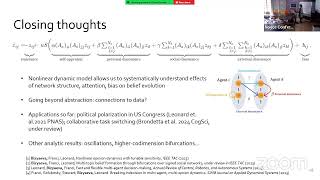
Nonlinear Dynamics of Beliefs over Social Networks
Explore how social networks, internal biases, and belief systems shape group dynamics and decision-making in complex social environments.
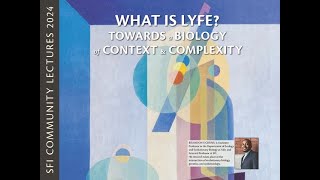
What is Lyfe? Towards a Biology of Context and Complexity
Exploring a multidimensional view of biology beyond genomics, emphasizing history, context, environment, and narrative to reframe our understanding of life and its complexities.

Astrophysics & Cosmology
Explore the wonders of the universe through comprehensive lectures on celestial bodies, cosmic phenomena, and the origins and evolution of our cosmos.
The Law of the Few
Explore how a small group of influencers shape information flow in social networks, using mathematical models and experiments to explain this phenomenon and its economic implications.