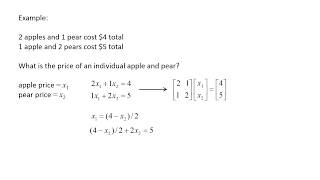
Numerical Modeling
Learn to solve linear and nonlinear algebraic equations using various numerical methods and MATLAB, including Gaussian elimination, Newton-Raphson, and secant methods for practical engineering applications.
Spacecraft Charging - Hazard Causes, Hazard Effects, Hazard Controls
Explore spacecraft charging hazards, effects, and controls in various space environments. Learn about ISS charging measurements, modeling, and management strategies applicable to future human spaceflight beyond LEO.
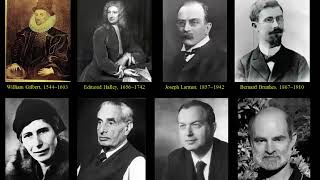
Planetary Dynamos
Explore planetary magnetic fields, their generation through internal dynamos, and the mathematical models used to study these phenomena in various celestial bodies.
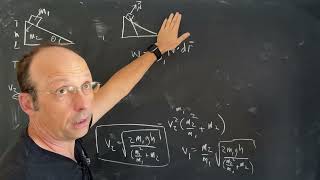
Physics Problem: Block Sliding Down a Movable Wedge - Classical Mechanics Series
Solve a complex physics problem involving a block sliding down a movable wedge, with a bonus Python numerical model for practical application.
Finite Element Modeling of Magnetic Fields in Julia
Explore finite element modeling of magnetic fields using Julia in this TU Delft master course. Implement mathematical models and collaborate on real-world projects with industry partners.
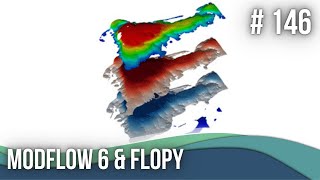
MODFLOW 6 and FloPy
Learn to create and analyze groundwater models using MODFLOW 6 and FloPy in Python. Covers model setup, visualization, water balance, pathlines, and transient simulations.
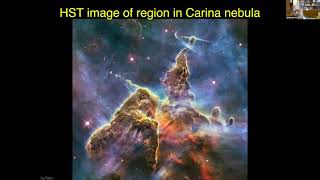
Astrophysical Fluid Dynamics - James Stone
Explore astrophysical fluid dynamics with Prof. James Stone, covering mathematical models, numerical methods, and future research in this fascinating field of study.
130 Years of Natural & Anthropogenic Modifications of the Venice Lagoon - Evolution of Tidal Meanders
Explores tidal meander evolution in Venice Lagoon over 130 years, examining hydrodynamic changes, morphology, and sediment transport using diverse data and modeling techniques.
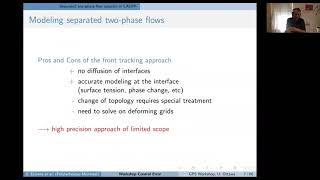
Combined Arbitrary Lagrangian-Eulerian Approach and Adaptive Remeshing Technique for the Finite
Explore advanced numerical methods combining ALE approach and adaptive remeshing for finite element simulations, enhancing accuracy and efficiency in complex engineering problems.
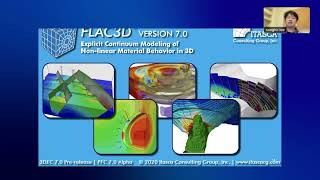
LAGHOST: Development of Lagrangian High-Order Solver for Tectonics
Explore LAGHOST, a Lagrangian high-order solver for tectonic simulations. Learn about its features, benchmarks, and applications in modeling geological processes like normal fault evolution.
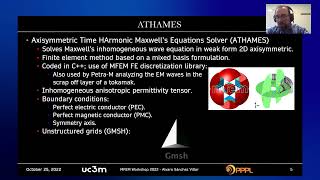
MFEM Application to EM-Wave Simulation in ECR Space Plasma Thrusters
Explore EM-wave simulation in ECR space plasma thrusters using MFEM. Learn about Maxwell equations, cold-plasma approximation, and finite element discretization for space propulsion applications.
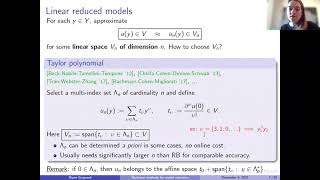
Nonlinear Reduced Models for Parametric/Random PDEs
Explore efficient techniques for constructing reduced models of parametric/random PDEs, focusing on error estimation, library construction, and practical applications in thermal systems and state estimation.

Numerical Modelling of Earthquake Ground Motion
Explore advanced discontinuous Galerkin methods for modeling seismic wave propagation in complex geological domains, addressing challenges in geometry representation and solution accuracy.
Numerical Approaches to Modelling Curved Surfaces
Explore numerical methods for modeling curved surfaces, focusing on applications in physics and biology.
Developing New Fast Tools for Assessing Coastal Compound Flood Hazards
Explore fast, open-source tools for assessing coastal flood hazards, including wave-driven effects and compound flooding on large scales.
Simulating Accretion in the Inner Cavity of Circumbinary Disks - Philipp Moesta
Explore simulation techniques for accretion in circumbinary disk inner cavities, focusing on modeling eccentricity, cavity dynamics, and potential shock emission in binary systems.
Stellar Mass Binaries in AGN - Hui Li - Barry Mc Kernan
Explore stellar mass binaries in AGN, their formation, evolution, and interactions with circumbinary gas. Gain insights into numerical modeling and observational signatures of these systems.
Exploring Autogenic and Allogenic Processes in Lobyte3D
Explore autogenic and allogenic processes in deep-water fan systems using Lobyte3D, a stratigraphic forward model, to investigate signal recording and extraction in sedimentary strata.
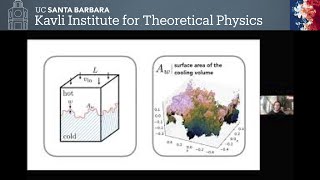
What Does It Mean to Resolve Multiphase Gas - Drummond Fielding
Explore multiphase gas resolution in astrophysics, covering numerical experiments, simulations, and turbulence. Gain insights into fluid dynamics across various cosmic environments and scales.
Water Quality Modelling: Fate and Transport of Pathogens - Part 2
Explore advanced numerical modeling techniques for investigating pathogen fate and transport in urban waterways, their potential health impacts, and calibration methods for water quality models.
Connecting Different Scales in Binary Systems - Discussion
Explore binary systems across cosmic scales, from stars to supermassive black holes. Discover how circumbinary gas influences these systems and learn about cutting-edge observational and numerical techniques.