
The Entropy of Obfuscated Code
Explore code obfuscation techniques, entropy analysis, and malware detection methods. Learn about information theory and its applications in cybersecurity and malware analysis.
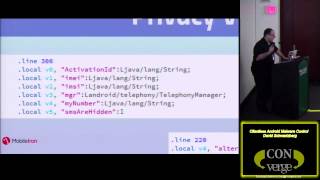
Clientless Android Malware Control
Explore clientless Android malware control techniques, understanding potential threats and defense strategies for mobile device security.
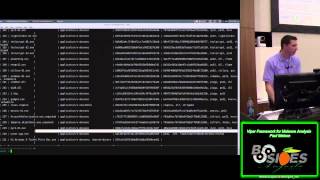
Viper Framework for Malware Analysis
Explore the Viper Framework for efficient malware analysis, learning techniques to identify and analyze malicious software effectively.

Lessons Learned from Analyzing Terabytes of Malware
Insights from analyzing vast amounts of malware data, covering detection techniques, threat intelligence, and cybersecurity best practices for defending against evolving threats.

A Survey of Powershell Enabled Malware
Survey of PowerShell-enabled malware: techniques, tools, and defenses against threats like macros, registry entries, and file manipulation. Explores real-world examples and prevention strategies.
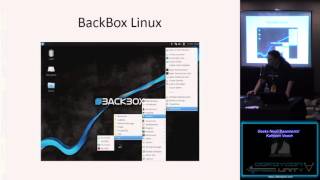
Stable33 Geeks Need Basements - Kathleen Veach
Explore setting up a virtual lab for cybersecurity testing and malware analysis using free resources and various Linux distributions.

Stable37 Malware is Hard - Let's Go Shopping
Explore the challenges of malware analysis and learn innovative techniques for investigating and understanding complex malicious software.
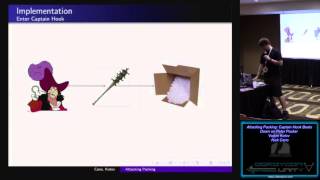
The 3 Way Attacking Packing - Captain Hook Beats Down on Peter Packer
Explore advanced packing techniques for malware, including heatbased and injection paste packers, with live demonstrations and troubleshooting tips.
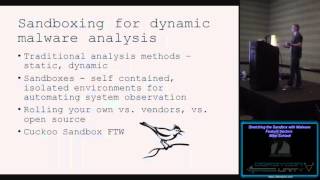
Break Me20 Stretching the Sandbox with Malware Feature Vectors
Explore malware analysis techniques using feature vectors and sandbox environments to enhance threat detection and classification capabilities.

Losing Battles Winning Wars - Active Defense Rebooted
Explore active defense strategies to improve cybersecurity, focusing on asset management, threat intelligence, and automated responses to enhance overall security posture and resilience.
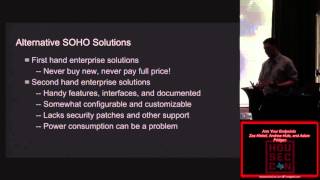
Arm Your Endpoints
Learn to build a secure network infrastructure using virtualization, open-source tools, and cost-effective hardware alternatives. Explore device placement, budgeting, and security testing for robust endpoint protection.
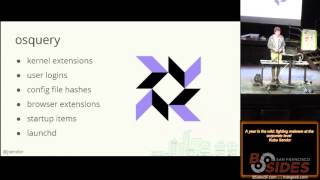
A Year in the Wild Fighting Malware at the Corporate Level
Insights from a year of corporate malware defense, covering detection, automated response, analysis techniques, and remediation strategies across various platforms and attack vectors.

Sucker Punching Malware - A Case Study in Using Bad Malware Design Against Attackers
Explore techniques for exploiting vulnerabilities in malware design to counter attackers, featuring a real-world case study and practical defense strategies.

At the Mountains of Malware
Explore the depths of malware analysis with expert insights, techniques, and strategies for identifying and combating digital threats in this comprehensive cybersecurity presentation.
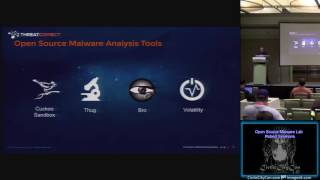
Open Source Malware Lab
Learn to build and use an open-source malware analysis lab with tools like Cuckoo Sandbox, Thug, Bro, and Volatility Framework for effective threat detection and analysis.

Automating Malware Analysis for Threat Intelligence
Explore automated malware analysis techniques for threat intelligence, including kill chain concepts, Python coding, and C2 clustering to enhance cybersecurity defenses.
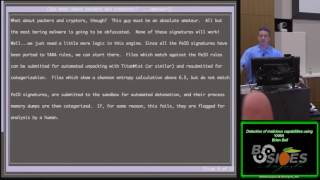
Detection of Malicious Capabilities Using YARA
Explore YARA for malware detection, covering heuristics, memory analysis, and comparison with other frameworks. Learn to create effective rules for identifying malicious capabilities.
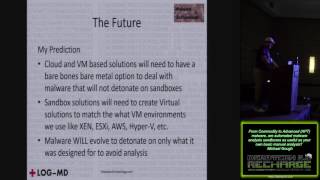
From Commodity to Advanced APT Malware - Are Automated Malware Analysis Sandboxes as Useful as You Think?
Explore the effectiveness of automated malware analysis sandboxes in detecting various threats, from common to advanced APT malware, and compare their utility to human analysis.
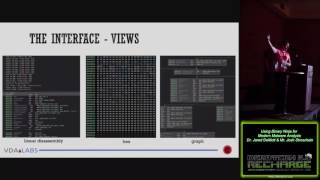
Using Binary Ninja for Modern Malware Analysis
Explore modern malware analysis using Binary Ninja. Learn interface, features, and practical implementation for effective reverse engineering and threat analysis.

Reverse Engineering All the Malware and Why You Should Stop
Explore efficient malware analysis techniques, automation tools, and dynamic instrumentation methods to enhance reverse engineering skills and streamline the process.
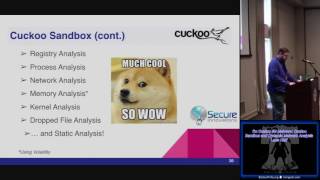
Cuckoo for Malware - Cuckoo Sandbox and Dynamic Malware Analysis
Explore dynamic malware analysis using Cuckoo Sandbox, covering setup, features, and practical applications for effective threat detection and analysis.