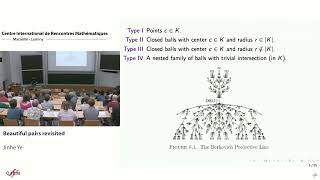
Beautiful Pairs Revisited
Explore the concept of beautiful pairs in model theory, revisiting key ideas and applications in valued fields.
Mechanising Gödel-Löb Provability Logic in HOL Light
Explore the mechanisation of Gödel–Löb Provability Logic in HOL Light, delving into formal proofs and theorem verification techniques for modal logic systems.
From HoTT to HOTT - Exploring Homotopy Type Theory
Explore the evolution from Homotopy Type Theory (HoTT) to Higher-Order Type Theory (HOTT) in this insightful lecture by Michael Shulman.
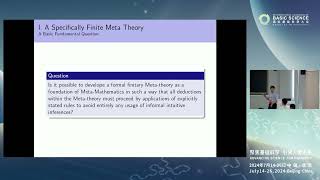
On A Finitary Formal Meta-theory of Meta-mathematics - ICBS 2024
Explore a finitary formal meta-theory of meta-mathematics, merging Cantor, Frege, and Zermelo's ideas. Examine formal deductions, predicative definitions, and finitary methods in set theory and logic.
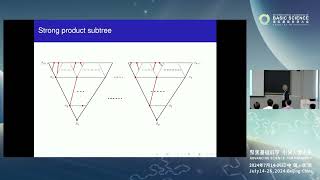
Infinitary Combinatorics and Finitary Arithmetic
Explore recent developments in characterizing Ramsey-type combinatorial principles within reverse mathematics, focusing on proof-theoretic strength analysis.
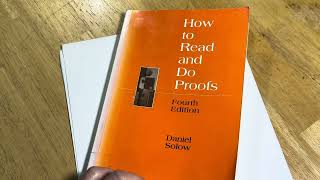
Epic Math Proof Writing Book - How to Read and Do Proofs
Learn to write clear and effective mathematical proofs with Daniel Solow's comprehensive guide "How to Read and Do Proofs", covering essential techniques for logical reasoning and argumentation.
Sonic Pi - Live Coding as a Tool for Next-Gen Education
Explore Sonic Pi, a free code-based music creation tool, for education and professional use. Learn core computer science concepts through live coding beats and synth riffs.
How Logic and Structure Can Be Used to Enhance Creativity
Discover how logic and structure can enhance creativity, debunking the myth of 'creative types' and providing practical tools to boost your creative thinking capacity.
LLM Reasoning Limitations: Understanding Linear Order and Logical Hallucinations
Delve into groundbreaking research from Stanford and DeepMind revealing LLMs' limitations in causal reasoning, premise ordering, and mathematical logic, highlighting key challenges in AI development.
Algorithmic Verification - Session Preview at POPL 2023
Explore algorithmic verification techniques and their applications in program analysis, presented by expert Umang Mathur at POPL 2023's innovative session preview track.
Type Theory Session Preview - POPL 2023
Explore type theory fundamentals and recent advancements in this expert-led session preview for POPL 2023, enhancing accessibility of upcoming talks.
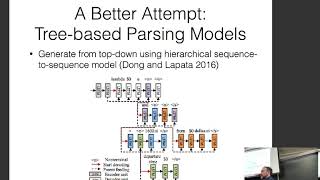
Neural Nets for NLP 2018 - Neural Semantic Parsing
Explore neural semantic parsing techniques, including tree-based models, code generation, weakly supervised learning, and various meaning representations. Learn about graph structures and neural approaches to semantic role labeling.
Proof Mining in Bounded Arithmetic
Explore proof mining in bounded arithmetic, focusing on computational content, complexity classes, and applications in mathematical logic and theoretical computer science.
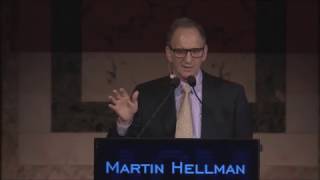
Cybersecurity, Nuclear Security, and Illogical Logic - Keynote by Martin Hellman
Martin Hellman explores cybersecurity, nuclear security, and logical paradoxes, drawing connections between cryptography, national security, and mathematical logic while reflecting on his career and the broader implications of technology.
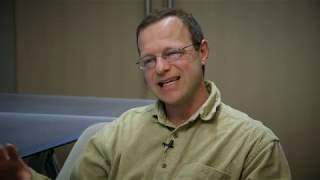
Model Checking and Temporal Logic - E. Allen Emerson's Turing Award Lecture
Explore E. Allen Emerson's journey to the Turing Award, from early influences to groundbreaking work in model checking and temporal logic in computer science verification.

Cryptography and Public Key Encryption - Martin Hellman Interview
Explore Martin Hellman's life, from ancestry to groundbreaking cryptography research, early retirement, and personal growth, in this in-depth interview with the Turing Award recipient.
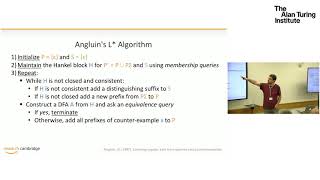
Learning Automata with Hankel Matrices - Borja Balle, Amazon Research Cambridge
Explore a unified framework for learning automata using Hankel matrices, covering query learning, spectral learning, and matrix completion algorithms with practical applications.
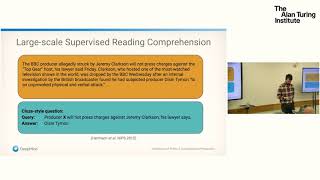
Recurrent Neural Networks and Models of Computation - Edward Grefenstette, DeepMind
Exploring recurrent neural networks and memory-enhanced architectures, analyzing their computational capabilities and efficiency in relation to traditional models of computation.
Alan Turing and the Other Theory of Computing and Can a Machine Be Conscious?
Explore Turing's lesser-known 1948 paper on numerical computation and its impact on complexity theory. Discover how it unifies two major traditions in computational theory.
Deep Learning with Neural Networks and TensorFlow Introduction
Introduction to deep learning with neural networks, covering theory, models, optimization, and TensorFlow. Explore biologically-inspired machine learning techniques and their evolution in the field of artificial intelligence.
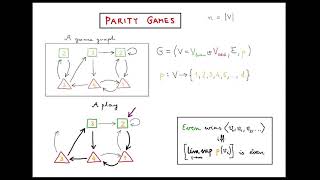
Games: From Logic and Automata to Algorithms
Explore the intersection of logic, automata, and algorithms through game theory, focusing on theoretical foundations and computational applications.