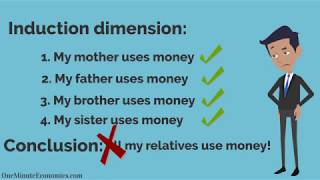
Logic and Economic Thinking - Reasoning
Explore logical reasoning, economic concepts, and critical thinking skills through concise explanations of fallacies, biases, investment strategies, and financial theories.
Verbal Reasoning for NTA-UGC NET
Comprehensive verbal reasoning preparation for NTA-UGC NET Paper 1, covering key concepts, practice questions, and exam strategies to enhance logical thinking skills.

UGC NET-JRF - Logical Reasoning
You will learn about types of definitions, squares of opposition, inductive and deductive reasoning, types of arguments, deductive argument, means of knowledge, syllogism, strategies, and much more.
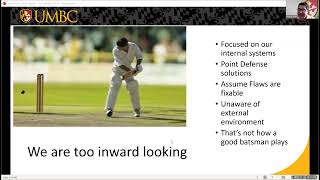
AI and Cybersecurity - The Twain Shall Meet
Explore AI's role in cybersecurity, focusing on advanced persistent threats, intrusion detection systems, and vulnerability analysis using ontologies and reasoning techniques.
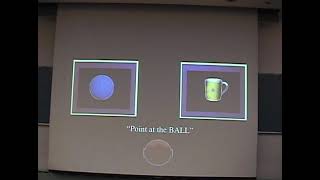
A Synthesis of Logical Reasoning and Word Learning Abilities in Children and Adults - 2007
Explore the connection between word learning and logical reasoning in young children, challenging prevailing views on language acquisition and cognitive development.
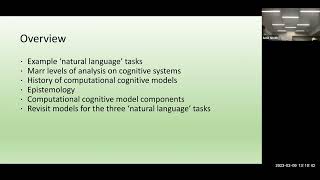
Introduction to Cognitive Science - Part 1 - Lecture 11
Explore cognitive science fundamentals, including natural language tasks, reasoning, and knowledge representation, with insights on large language models and behavioral experiments.
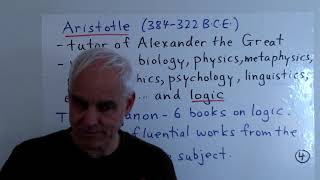
A Brief History of Logic: Aristotle and Deduction - Math Foundations 251
Explore Aristotle's foundational work in logic, including syllogisms, logical forms, and deductive reasoning, tracing its development from ancient Greece to its lasting impact on modern philosophy.
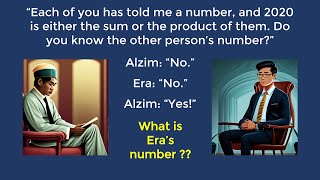
Impossible Logic Puzzle from Indonesia - Solving a Complex Number Mystery
Challenging Indonesian logic puzzle explores complex number relationships through sum and product clues, testing advanced problem-solving skills and mathematical reasoning.
Essential JavaScript Debugging Tools for the Modern Detective
Explore advanced JavaScript debugging techniques beyond console.log, including breakpoints, snippets, and source-map configurations, to enhance your problem-solving skills and code efficiency.
Logical Reasoning: Syllogistic Logic - Part 1
Explore probabilistic and defeasible deductive reasoning, delving into the fundamentals of syllogistic logic for enhanced logical analysis skills.
What is Science? The Method and Nature of Scientific Truth - Part 2
Explore the scientific method and nature of truth, delving into fundamental concepts that shape our understanding of scientific inquiry and knowledge.

Logical Reasoning: Syllogism Logic, Truth and Validity - Lecture 12
Explore syllogistic logic, distinguishing between valid and invalid reasoning to enhance critical thinking and argument analysis skills.
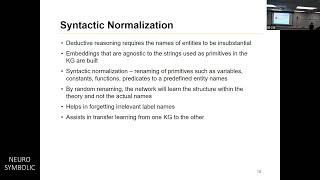
Deductive Reasoning for Cross-Knowledge Graph Entailment - Part 1
Explore deductive reasoning for cross-knowledge graph entailment, covering inference types, embedding methods, memory networks, and model architecture for AI and machine learning applications.

Logical Reasoning: Syllogistic Logic - Part 2
Explore syllogistic logic, focusing on valid and invalid reasoning patterns to enhance critical thinking and argument analysis skills.