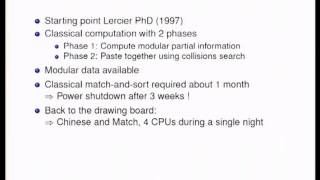
A Tutorial on High Performance Computing Applied to Cryptanalysis
Learn high-performance computing techniques for cryptanalysis, covering key steps from concept to implementation, with insights on scaling computations and optimizing algorithms for cryptographic challenges.
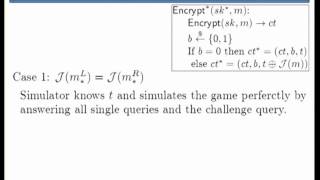
Property Preserving Symmetric Encryption
Explore property preserving symmetric encryption, its security definitions, and constructions using pairings in composite order groups. Learn about new directions in this cryptographic field.
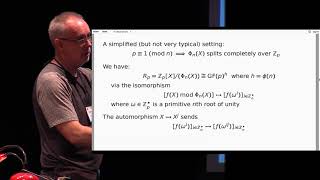
Faster Homomorphic Linear Transformations in HElib
Explore advanced techniques for optimizing homomorphic linear transformations in HElib, enhancing efficiency in encrypted computations.
C++ and Linear Algebra
Explore the proposal for adding linear algebra support to C++'s standard library, discussing its importance, requirements, and potential applications in geometry and color manipulation.
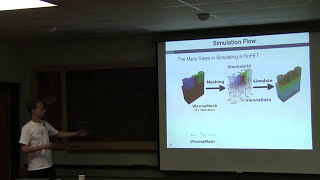
A Discussion of Selected Vienna-Libraries for Computational Science
Explore Vienna-Libraries for computational science: ViennaCL, ViennaGrid, ViennaData, ViennaMath, and ViennaFEM. Learn how C++ can better meet scientific computing needs.
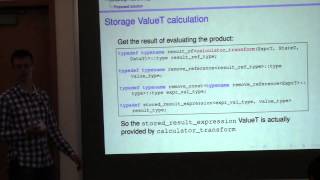
Building Finite-Element Matrix Expressions with Boost Proto and the Eigen Library
Learn to integrate Eigen with Boost Proto for finite-element matrix expressions, including user-defined functions and external libraries in domain-specific languages.
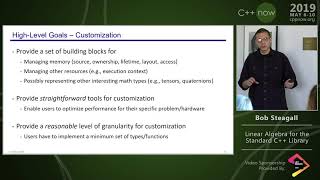
Linear Algebra for the Standard C++ Library
Exploring a proposal to add linear algebra components to the C++ standard library, covering design, rationale, and implementation details for matrices, vectors, and related operations.
STL Algorithms as Expressions
Explore advanced C++ techniques using Expression Templates for flexible algorithm customization, enhancing STL range algorithms and generic programming beyond traditional approaches.
Taking Static Type-safety to the Next Level - Physical Units for Matrices
Explore advanced C++ techniques for implementing physical unit types in matrix operations, enhancing type safety and error prevention in robotics, graphics, and automated driving applications.

C++ Compile-Time Sparse Matrices for Linear Algebra and Tracking Applications
Explore compile-time sparse matrices in C++ for efficient linear algebra and tracking applications, optimizing memory usage and performance through advanced type system techniques.
Vectorize Using Linear Algebra and NumPy to Make Your Python Code Fast
Learn to optimize Python code using linear algebra and NumPy vectorization techniques. Discover how to replace inefficient loops with fast NumPy operations, significantly improving performance while maintaining readability.
Query Embeddings - Web Scale Search Powered by Deep Learning and Python
Explore query embeddings in web-scale search using deep learning and Python. Learn about unsupervised techniques, vector representations, and efficient retrieval systems for improved search engine performance.
From Linear Algebra to Machine Learning
Explore the mathematical foundations of machine learning, from linear algebra to optimization, with practical Python implementations using NumPy, SciPy, and TensorFlow.
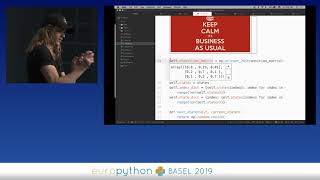
How to Read Code
Discover techniques for effectively reading and understanding code, enhancing your ability to write better software and become a more proficient programmer.

Coding Deep Learning
Explore deep learning fundamentals, including matrix algebra and calculus, and get practical tips for using frameworks like Keras, PyTorch, and TensorFlow in this informative session.
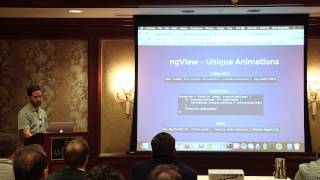
Animating Angular
Explore Angular animation techniques, from basic CSS transitions to advanced JavaScript sequences, enhancing your web applications with dynamic and engaging user interfaces.
Welcome to 3D - An Introduction to WebGL Introductions
Explore 3D rendering concepts, WebGL basics, and essential terminology. Learn about rendering methods, shaders, materials, and mathematical foundations for better understanding 3D graphics.
Empowering the Quantum Revolution with Q#
Explore quantum computing's revolutionary potential and learn to develop quantum solutions using Microsoft's Quantum Development Kit and Q# programming language.
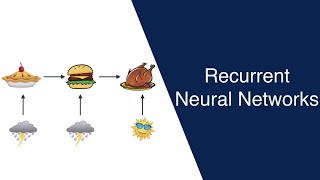
A Friendly Introduction to Recurrent Neural Networks
Explore how computers predict and generate sequences using Recurrent Neural Networks. Learn about vectors, neural networks, and practical applications in cooking, weather, and more.

TensorFlow Tutorial - Tensor Basics
Comprehensive guide to essential tensor operations in TensorFlow 2.0, covering initialization, casting, math operations, indexing, and reshaping. Builds foundation for neural network development.
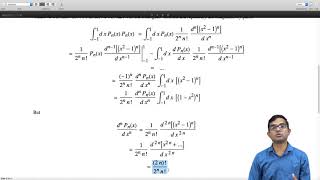
Legendre Polynomials: Rodrigues Formula, Orthogonality, and Normalization Integral - Lecture 48
Explore Legendre polynomials, including Rodrigues formula, orthogonality, and normalization integral, to enhance your mathematical understanding.