Predicting Single-Cell Perturbation Responses for Unseen Drugs
Explore single-cell perturbation response prediction for novel drugs using an encoder-decoder architecture and transfer learning, enhancing drug discovery efficiency through in-silico hypothesis generation.
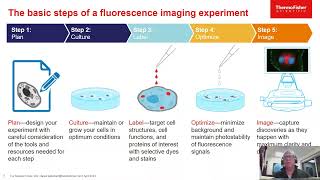
Practical Considerations for Fluorescent Cell Staining and Microscopy in Cancer Cell Biology
Explore fluorescence microscopy techniques for cancer research, covering cell staining, imaging methods, and applications in drug discovery and mechanism studies for 2D and 3D models.
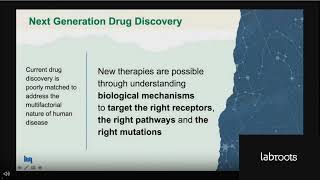
Enabling High-throughput Biology with New Technologies for Synthetic Construct Sequencing
Explore new methods and technologies accelerating sequence-based screening of plasmids for discovery, research, and biotechnology. Learn about ExpressPlex technology and its integration with rolling-circle amplification in OCTOPUS v3.0.
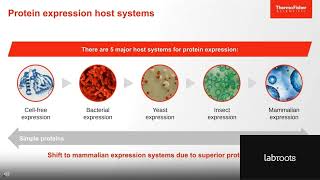
Concept-to-Commercialization: Thermo Fisher's Unique Approach to Rapidly Advancing Antibody and Protein Therapeutics
Discover Thermo Fisher's innovative approach to accelerate antibody and protein therapeutics development, from gene optimization to first-in-human trials, through an integrated workflow.
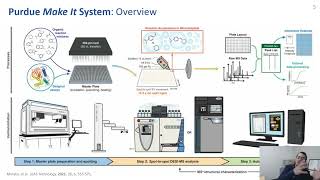
High-throughput Desorption Electrospray Ionization Mass Spectrometry for Reaction Screening, Nano-scale Synthesis and Bioanalysis
Explore high-throughput DESI-MS for drug discovery, including reaction screening, nano-scale synthesis, and bioanalysis. Learn innovative techniques for faster compound library synthesis and bioactivity assessment.
Cell Validation and Drug-Induced Liver Injury Using a Human Liver Microphysiological System
Explore predictive human liver models for drug development using microphysiological systems. Learn about cell validation and drug-induced liver injury assessment to improve preclinical testing accuracy.
Making Your Research Translatable: The Example of RENACER
Explore translational research strategies through RENACER example, enhancing impact of scientific discoveries in clinical settings.
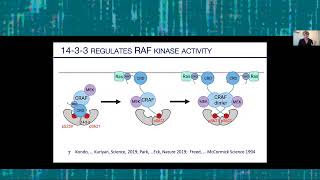
Modulating Cancer Networks with Molecular Glues
Explore molecular glues targeting 14-3-3 protein interactions to modulate MAPK pathway and C-RAF activity in cancer networks. Gain insights into innovative approaches for potential cancer therapies.

How Genetics Can Help Untangle Institutionalized Health Inequity
Explore how genetic research can address health inequities, focusing on case studies involving racial disparities in medical diagnoses and treatment decisions.

The Future of Chemistry - Self-Driving Laboratories and AI-Driven Discovery
Explore self-driving laboratories revolutionizing scientific discovery through AI and automation. Learn about cutting-edge applications, key elements, and opportunities in chemistry, materials science, and biotechnology.

Stability-Aware Boltzmann Estimator Training of Neural Network Interatomic Potentials
Explore advanced neural network interatomic potentials for molecular dynamics simulations using Stability-Aware Boltzmann Estimator Training to enhance stability and accuracy across various systems and architectures.
Combinatorial Perturbation Prediction Using Causally-Inspired Neural Networks
Explore PDGRAPHER, a novel graph neural network model for phenotype-driven drug discovery. Learn how it predicts perturbagens to reverse disease effects, offering faster and more efficient therapeutic target identification.
HyperPCM: Robust Task-Conditioned Modeling of Drug-Target Interactions
Explore HyperPCM, a robust method for predicting drug-target interactions using hypernetworks. Learn about its state-of-the-art performance on benchmarks and excellence in zero-shot inference for unseen protein targets.

MFBind - A Multi-Fidelity Approach for Evaluating Drugs in Generative Modeling
Explore MFBind, a multi-fidelity approach integrating docking and binding free energy simulations for improved drug discovery generative modeling. Learn its advantages over current methods.

Evaluating Retrosynthesis with Syntheseus and Retro-Fallback
Explore advancements in synthesis planning evaluation through syntheseus and retro-fallback, enhancing molecule discovery with probabilistic uncertainty and new search algorithms.
Removing Biases from Molecular Representations via Information Maximization
Explore InfoCORE, an innovative approach to remove batch effects in drug screening data, enhancing molecular representations for improved property prediction and molecule-phenotype retrieval.
Equivariant Scalar Fields for Molecular Docking with Fast Fourier Transforms
Explore machine learning-accelerated molecular docking using equivariant scalar fields and fast Fourier transforms for efficient drug discovery and virtual screening.
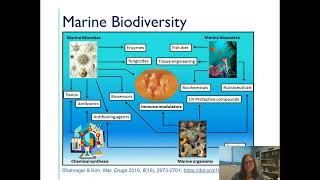
Preclinical Evaluation of Marine Natural Products for Neuroscience Drug Discovery
Explore marine natural products' potential in neuroscience drug discovery. Learn about manzamines, their biological activity, and applications in treating neurological disorders from expert Dr. Marsha Pierce.
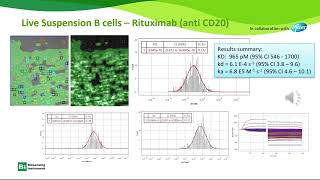
Cell-based SPR Microscopy Application in Drug Discovery
Explore SPR microscopy's role in drug discovery, focusing on label-free, real-time measurements of small molecule binding to GPCRs. Learn about pH-dependent studies and limitations of GPR4 antagonists.
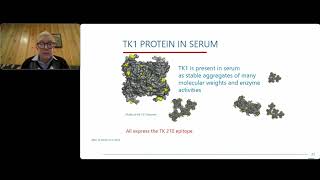
Proliferation Biomarkers in Drug Discovery and Development - The Immunoassay of Thymidine Kinase 1
Explore the role of proliferation biomarkers in drug discovery, focusing on Thymidine Kinase 1 immunoassay for monitoring cell proliferation in tumors and its potential in therapeutic response assessment.
Current Landscape and Future Directions of Multi-specific Antibodies
Explore advancements in multi-specific antibodies, their applications in disease treatment, and challenges in development. Gain insights into preclinical research and future directions of this promising therapy.