
History of Science - CrashCourse
In 46 episodes, Hank Green teaches you the history of science! This course is based on the 2nd and 3rd edition of Science & Technology in World History by McClellan & Dorn.
Deep Learning and Diabetic Retinopathy by Rajiv Raman
Explore deep learning applications in diabetic retinopathy detection, enhancing early diagnosis and treatment of this sight-threatening condition through advanced image analysis techniques.
Artificial Intelligence in OBGYN Ultrasound by Suresh Seshadri
Explore AI applications in OBGYN ultrasound imaging, focusing on advanced techniques for improved diagnosis and patient care in obstetrics and gynecology.
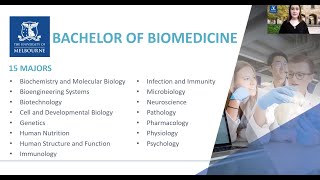
Biomedicine and Beyond: A Student’s Perspective
Graduates share insights on studying Biomedicine, discussing subjects, career paths, research opportunities, and valuable tips for prospective students in this informative panel discussion.
Using Computation to Drive the Self-Assembly of Complex Structures
Explore computational approaches for driving self-assembly of complex structures, unlocking new possibilities in materials science and nanotechnology.

Genetic Diversity in Cell Line Models and CRISPR Experimental Tools - Equity in Biomedicine
Explore genetic diversity's impact on cell line models and CRISPR tools. Learn how increasing diversity enhances scientific insights and translational benefits for equitable biomedical research.
Hypertension Burden and Interventions - Public Health Approach by Prabhdeep Kaur
Explore public health strategies for managing hypertension, including burden assessment and effective interventions. Learn about population-level approaches to prevent and control high blood pressure.
Prediction of Survival Analysis for Cancer Patients
Explore survival analysis prediction for cancer patients using machine learning techniques. Learn to harness computational methods for improved patient outcome forecasting and healthcare decision-making.

Obstetric Risk Assessment - The Need for ML-AI
Explore the potential of machine learning and AI in improving obstetric risk assessment, enhancing patient care and outcomes in maternal health.
Automating Bone Age Assessment from Pediatric Xrays
Learn to automate bone age assessment from pediatric X-rays using machine learning techniques. Explore practical applications in healthcare for more efficient and accurate diagnoses.
Cancer Diagnostics - Opportunities and Challenges by Sudha Sundar
Explore opportunities and challenges in cancer diagnostics, focusing on innovative approaches and potential advancements in early detection and personalized treatment strategies.
Survival Analysis of Cancer Patients Using Machine Learning Technique by Shakuntala Baichoo
Explore machine learning techniques for survival analysis of cancer patients, focusing on predicting outcomes and analyzing clinical data to enhance patient care and treatment strategies.
Translational Applications of Black Bear Research for Ischemic Protection of Organs
Discover how black bears' hibernation mechanisms could revolutionize organ preservation and protection during medical procedures, drawing insights from groundbreaking research in ischemic protection.
Artificial Intelligence in Medical Imaging for Precision Medicine by Vaanathi Sundaresan
Explore AI applications in medical imaging for precision medicine, covering deep learning techniques, image analysis, and their impact on diagnosis and treatment planning.
Lung Disease and AI Applications - From Cough Sounds to CT Scan by Anurag Agrawal
Explore AI applications in lung disease diagnosis, from analyzing cough sounds to interpreting CT scans. Learn how machine learning enhances detection and treatment of respiratory conditions.
Cause of Obesity, Diabetes & CVD Epidemic by Ponnusamy Saravanan
Explores the role of Gestational Diabetes Mellitus in obesity, diabetes, and cardiovascular disease epidemics, discussing its causes, impacts, and potential interventions.
The Healthy Life Trajectories Initiative - Implementation, Challenges and Future
Exploring the Healthy Life Trajectories Initiative's implementation, challenges, and future prospects, focusing on improving health outcomes through data-driven approaches and collaborative research.

ML for Microbial Genomics by Janani Ravi
Explore machine learning applications in microbial genomics, focusing on data analysis techniques and their relevance to understanding microbial genetic structures and functions.
Gestational Diabetes - Cause for the Epidemic of Diabetes by Ponnusamy Saravanan
Explore the link between gestational diabetes and the diabetes epidemic, examining causes, impacts, and potential interventions to address this growing health concern.
Retinal Imaging in Neurodegenerative Diseases by Dilraj Grewal
Explore retinal imaging techniques for detecting neurodegenerative diseases. Learn about advanced imaging methods and their potential in early diagnosis and monitoring of neurological conditions.

AI in Healthcare - The Next Frontier
Exploring AI's potential to revolutionize healthcare, from enhancing diagnostics to automating tasks. Discusses advancements, ethical challenges, and the future of AI in biomedicine.