What's New in Dynatrace - Release 1.286
Explore Dynatrace v1.286 updates: K8s changes, new DQL functions, improved log/metric exploration, unified services enhancements, and Grail security data upgrades.
Unlocking Kubernetes Insights - Diagnosing Health with Dynatrace and External Agents
Explore Kubernetes health diagnostics using Dynatrace and external agents. Learn to collect logs, compare agents, monitor critical data, and implement autoscaling rules for confident cluster operation.
Dynatrace Product Updates - April 2023 (Versions 263 and 264)
Explore Dynatrace's latest features in v263 and v264, including AppSec updates, DQL commands, UI improvements, and K8s enhancements. Learn about new monitoring capabilities and product developments.

OpenObservability Without Boundaries with Dynatrace
Explore OpenObservability with Dynatrace: ingest data from various sources, connect logs, metrics, and traces, analyze with DQL and notebooks, and automate tasks through workflows.
Leveraging Davis AI for System Analysis and Optimization
Leverage Davis AI for proactive system analysis and optimization. Learn how to use context-sensitive AI to identify and resolve potential issues before they impact your critical services.
Kubernetes Scaling - Predictive Insights and Automation with Dynatrace
Leverage Dynatrace's Davis® AI to forecast resource needs and automate pod scaling in Kubernetes. Learn about quota setting, scaling types, and integrating predictive scaling into GitOps workflows.
How Dynatrace Saves You from Broken Kubernetes Clusters
Explore Kubernetes observability best practices and learn how Dynatrace prevents cluster failures through real-world examples, live demos, and practical insights for DevOps and SREs.
What's New in Dynatrace - Release 1.288
Explore Dynatrace v1.288 updates: unified services for Adobe Experience Manager and Erlang, enhanced DQL features, AppSec improvements, and new infrastructure monitoring capabilities.
Mastering Logs with Dynatrace - Unlocking Log Insights Without Queries
Unlock powerful log insights without complex queries. Learn to ingest, analyze, and contextualize logs in Dynatrace for actionable insights, problem-solving, and collaborative analysis across various environments.
What's New in Dynatrace - Release 1.277
Explore Dynatrace v1.277 updates: enhanced dashboards, Kubernetes features, improved problem management, Grail buckets, security policies, and custom bucket use cases with live demo.
Observing GraalVM Native Images with Dynatrace
Discover how Dynatrace enables comprehensive observability for GraalVM Native Image applications in cloud-native environments, including end-to-end distributed tracing and performance optimization.

Scaling Live Service Games on the Cloud with Google Kubernetes Engine
Build dedicated game server environments with Google Kubernetes Engine for fully managed, resilient, cost-effective, and flexible next-generation servers.
Parallelizing Your ETL with Dask on Kubeflow
Leverage Dask's parallelism capabilities on Kubeflow for advanced ETL processing. Learn to use the Dask Operator to optimize resource utilization in interactive Jupyter sessions and pipeline workflows.

End-to-End MLOps for Computer Vision
Explore end-to-end MLOps for Computer Vision, from data gathering to model monitoring. Learn to implement ML pipelines using tools like Amazon SageMaker, Kubernetes, Kubeflow, and MLFlow.
Continuously Improving Large Scale Recommenders with MLOps Tools and Practices
Leverage MLOps tools and practices to operationalize and continuously improve recommendation systems at scale using NVIDIA Merlin and Kubeflow on Google Kubernetes Engine.
Running ML Inference Services in Shared Hosting Environments
Optimize ML inference in shared hosting: Learn to boost latency, throughput, and resource utilization through queue management and OpenMP tuning.
SLA-Aware Machine Learning Inference Serving on Serverless Computing Platforms
Explore adaptive batching for efficient ML inference serving on serverless platforms. Learn to optimize costs and ensure SLA compliance using MLProxy for improved performance.
Scale and Accelerate Distributed Model Training in Kubernetes Clusters
Orchestrate and accelerate distributed deep learning workloads across multiple GPUs and nodes using Kubernetes, Kubeflow PytorchJob, RDMA, RoCE, and SRIOV for near-linear performance scaling.
MLOps for Deep Learning: Drift Detection and Efficient Retraining in Model Serving
Explore advanced MLOps techniques for deep learning, including drift detection, efficient retraining, and continuous deployment. Enhance model reliability and performance in production environments.
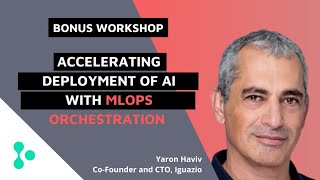
Accelerating Deployment of AI with MLOps Orchestration
Explore MLOps orchestration to simplify AI deployment using Kubernetes and open-source tools. Learn to build efficient ML pipelines, from data preparation to model monitoring, accelerating business value across various use cases.
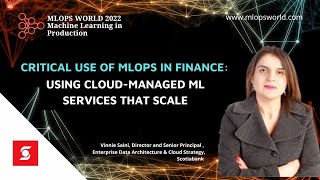
Critical Use of MLOps in Finance Using Cloud-Managed ML Services That Scale
Leverage MLOps to improve quality and consistency of machine learning solutions in finance. Accelerate model experimentation, deployment, and tracking using cloud-managed services for efficient scaling.