True GitOps Using Crossplane and ArgoCD
Explore GitOps concepts, ArgoCD architecture, and Crossplane benefits. Learn how these tools combine to provide a true GitOps solution through an end-to-end demonstration.
Kubernetes Debugging Techniques - Ephemeral Containers
Explore Kubernetes debugging with ephemeral containers, focusing on troubleshooting distroless and slim images. Learn tips and tricks for effective container management.
Kubernetes CKS Certification Guide 2023 - Exam Preparation and Falco Demo
Explore Kubernetes CKS certification essentials, including exam tips, cloud-native concepts, and Falco security tool. Gain insights and practical knowledge to become a certified Kubernetes security specialist.

All-in-One Kubernetes Observability Using Groundcover
Explore Kubernetes observability with groundcover, an eBPF-based monitoring solution. Learn to quickly identify and resolve issues through five failure scenarios, without instrumentation.
Introducing K2D: Kubernetes to Docker Translator for Industrial IoT
Explore K2D: Kubernetes-to-Docker translator for resource-constrained IoT devices. Learn its creation, advantages, and real-world applications through live demonstrations.
Simplify Add-On Management in Kubernetes with Sveltos
Explore Sveltos, a Kubernetes add-on controller simplifying deployment and management across clusters. Learn from project maintainer Gianluca Mardente about its journey and benefits.
Performing CRUD Operations on Kubernetes Using Golang - API Guide
Learn to perform CRUD operations on Kubernetes resources using Go. Master client libraries, environment setup, and essential operations like reading, creating, updating, and deleting pods.
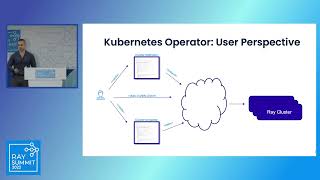
KubeRay - A Kubernetes Ray Clustering Solution
Explore KubeRay, an open-source toolkit for managing Ray clusters on Kubernetes. Learn about architectural decisions, resource management, job submission, and autoscaling capabilities.
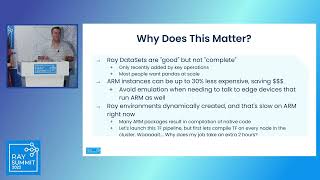
A Cross-Platform, Cross-Tool Ray on Kubernetes Deployment
Deploy Ray, Spark, Dask, and Jupyter on mixed-architecture Kubernetes clusters. Learn cross-building containers, handling Ubuntu versions, and glibc versioning for heterogeneous Ray clusters.

A New Choice for Istio Data Plane: Architectural Innovation for Brand-New Performance
Explore innovative Istio data plane solution using eBPF and kernel enhancements for native traffic governance, reducing latency by 60%+ and simplifying mesh architecture. Discuss future service mesh evolution.
Zero Lock-In VMware Alternatives - Private Cloud Solutions Built with Open Source Components
Explore vendor lock-in free private cloud solutions using open source components. Learn about Mirantis OpenStack for Kubernetes as a VMware alternative, its advantages, and how it empowers partners and maximizes client value.
The Challenges of Kubernetes Data Protection - Real Examples and Solutions
Explore real-world challenges in Kubernetes data protection, focusing on application definition, data consistency, and cross-environment restoration. Learn practical solutions using Velero.
Unlocking Scalability and Simplifying Multi-Cloud Management with Karmada and PipeCD
Explore Karmada and PipeCD for seamless multi-cloud management, addressing challenges in resilience, performance, security, and deployment across multiple cloud environments in the AI era.
Beyond Statefulset: Containerizing Enterprise Stateful Applications in Practice
Explore advanced techniques for containerizing enterprise stateful applications, including leader election, hot loading, and database maintenance, with insights from Alibaba and Xiaohongshu teams.
Accelerating Serverless AI Large Model Inference with Functionalized Scheduling and RDMA
Optimizing serverless AI inference with functionalized scheduling and RDMA for faster response times and efficient KV cache migration, addressing challenges in large-scale model deployment.
Breaking Boundaries - TACC as a Unified Cloud-Native Infrastructure for AI and HPC
Explore TACC, an innovative AI infrastructure solution bridging K8S and Slurm advantages. Learn about seamless UI, multi-tenant resource management, and robust distributed infrastructure for large-scale GPU clusters.
The Experience of ChillyRoom Developing and Managing Session-Based Games on Kubernetes with OpenKruiseGame
Explore ChillyRoom's experience using OpenKruiseGame for session-based game development on Kubernetes, covering automated networking, elastic scaling, and room management for game developers.
Karmada and Istio - Improving Workload and Traffic Resilience in Production Distributed Cloud
Explore how Karmada and Istio enhance resilience in distributed cloud environments, focusing on workload management and traffic distribution across multiple clusters.
How to Increase the Throughput of Kubernetes Scheduler by Tens of Times
Explore advanced techniques to significantly boost Kubernetes scheduler performance, including algorithm optimization, parallel computation, and batch scheduling for improved cluster scalability and resource utilization.
Developing a Standard Multi-Cluster Inventory API
Explore the standardization of cluster inventory APIs, their progress, use cases, and future vision. Learn about multi-cluster management and AI workload scheduling challenges.
Ensuring Success with Kyverno in Production - What You Must Know
Explore essential strategies for successful Kyverno deployment in production environments, covering policy creation, enforcement, scalability, and integration with existing workflows. Gain insights on optimizing performance and maintaining stability.