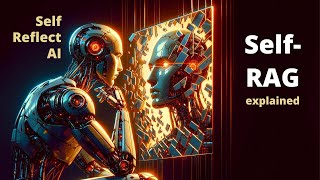
Self-Reflective AI: Understanding Self-RAG Framework for Multi-AI-Agents
Explore the innovative Self-RAG framework that enhances AI language models through self-reflection and intelligent retrieval mechanisms, improving accuracy and contextual relevance in text generation.

Anthropic's Improved Contextual RAG System - Implementation Guide and Performance Analysis
Discover how to implement Anthropic's improved RAG system with contextual retrieval, featuring cBM25, prompt caching, and reranking techniques - applicable across all LLM platforms for enhanced performance.

ColPALI: Efficient Document Retrieval Using Vision Language Models for RAG Systems
Discover how ColPALI revolutionizes document retrieval by using Vision Language Models to efficiently process and retrieve visually rich documents without OCR, enhancing RAG systems performance.
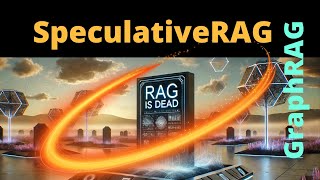
Comparing GraphRAG and SpeculativeRAG Systems for Knowledge Integration
Explore the latest advancements in RAG systems, comparing GraphRAG and SpeculativeRAG frameworks for optimal performance in knowledge integration and response generation.
Evaluating LLM Embeddings for Information Retrieval and Multilingual Applications
Explore the latest evaluation of LLM embedding APIs, focusing on OpenAI and Cohere's performance in domain generalization and multilingual retrieval capabilities for information retrieval tasks.

Advancements and Challenges in Retrieval-Augmented Generation Systems
Explore the latest developments in Retrieval-Augmented Generation systems, their real-world applications, and key challenges in implementing AI-powered information retrieval and generation solutions.

Getting Started with DSPy - Building LLM Programs Tutorial
Discover how to build robust LLM programs using DSPy framework, from basic concepts to creating retrieve-then-read RAG systems with optimized instructions and structured data handling.

Building Agents with LlamaIndex and Qdrant - Beyond the Tutorial
Dive into advanced agent development using LlamaIndex and Qdrant, exploring vector database integration and search engine capabilities for building sophisticated AI solutions.
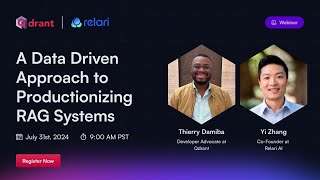
A Data-Driven Approach to Productionizing RAG Systems
Discover practical strategies for deploying RAG applications effectively, focusing on data-driven methods and optimization techniques for enhanced performance and reliability.
Building RAG Systems: From Vector Embeddings to Self-Reflective CRAG - 5 Python Notebooks
Explore practical RAG implementations through 5 Python notebooks, from basic text embeddings to advanced self-reflective systems using LlamaIndex, Ollama, and ReAct Agent frameworks.
Vector Search for Content-Based Video Recommendation
Discover how to implement vector search for video recommendations using Qdrant, exploring practical applications, system architecture, and performance optimization techniques for high-scale platforms.
The Bitter Lesson of Retrieval in Generative Language Model Workflows
Discover how leveraging data and compute in RAG architectures can enhance generative AI applications, with insights from YOKOT.AI's implementation for enterprise data solutions.
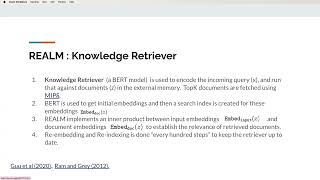
Retrieval Augmented Generation (RAG) - Advances in Generative AI
Dive into retrieval augmented generation (RAG) to enhance AI systems with external knowledge retrieval, improving accuracy and context awareness in generative AI applications.
From Documents to Vectors: Understanding ChatGPT's Technical Architecture with OpenAI Plugins
Dive into the technical architecture of ChatGPT plugins, exploring vector databases, API endpoints, and real-time data retrieval methods for enhanced AI capabilities.
Scaling Conceptual Semantic Search to Terabytes
Scaling semantic search for enterprise performance: methods to achieve 500M comparisons per second on commodity hardware, with focus on alerting platforms for data ingestion and analysis.

Gemini and GPT Sales Agents with RAG - Comparison and Implementation
Explore Gemini and GPT capabilities for building AI sales agents with retrieval-augmented generation, including code demonstrations and practical comparisons.
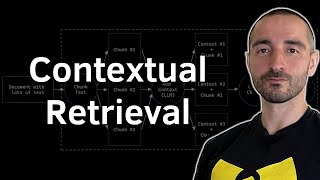
Build Better RAGs with Contextual Retrieval
Enhance RAG systems with contextual retrieval to improve context chunk quality and generate more accurate answers. Learn implementation techniques and practical applications.
Drinking From The Firehose of Science: Developments in Semantic Scholar and Scientific Literature Access
Explore recent developments in Semantic Scholar and learn how to leverage its APIs for scientific literature analysis. Discuss strategies to increase diversity in scientific participation.
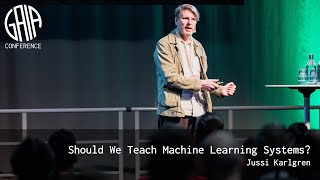
Should We Teach Machine Learning Systems?
Explore feature engineering and instruction in machine learning to improve AI system output quality and reliability. Contrast with current hands-off learning approaches.

The Future of Search - Empowering Semantic Search with LLMs
Explore the evolution of search technology, focusing on vector databases and LLMs. Learn about semantic search setup, real-world applications, and see a practical demonstration.
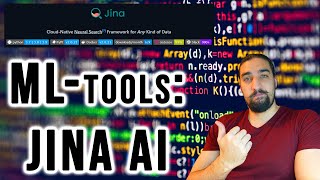
Neural Search with Jina AI - Open-Source ML Tool Explained
Explore Jina AI, an open-source neural search engine. Learn core concepts, set up an MNIST fashion example, and understand indexing, encoding, and evaluation processes for efficient machine learning workflows.