
Reinforcing Long-Term Performance in Recommender Systems with User-Oriented Exploration Policy
Explore advanced techniques for optimizing recommender systems through user-oriented exploration policies, focusing on enhancing long-term performance and session-based recommendations.

Disentangling ID and Modality Effects for Session-based Recommendation
Explore advanced techniques for disentangling identity and modality effects in session-based recommendation systems, focusing on long-term user behavior analysis and pattern recognition.
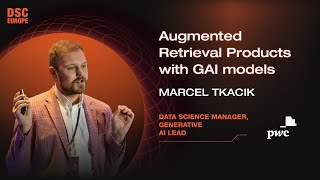
Augmented Retrieval Products with Generative AI Models
Discover how to develop and implement augmented retrieval products using Generative AI, from requirements engineering to deployment on Azure, focusing on smart search optimization and feedback integration.
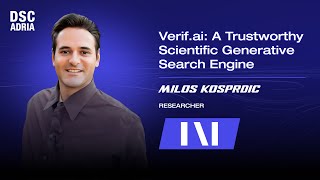
Verif.ai - A Trustworthy Scientific Generative Search Engine
Discover how Verif.ai combines information retrieval, generative models, and verification engines to create a trustworthy scientific search system that delivers referenced, verifiable answers.
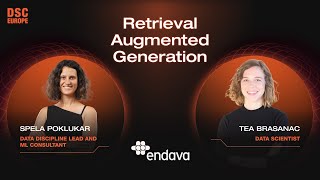
Retrieval Augmented Generation - Understanding Semantic Search and LLM-Based Text Generation
Discover how Retrieval Augmented Generation (RAG) combines semantic search with LLM-based generation to enhance accuracy and reliability in AI responses, featuring practical implementations and tools.
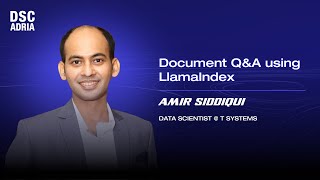
Document Q&A Using LlamaIndex - Building Applications for Unstructured Data Extraction
Master document querying with LlamaIndex, a powerful tool for extracting answers from unstructured data like PDFs, presentations, and images, enabling efficient information retrieval and analysis.
Retrieval Augmented Generation - Bridging the Gap Between Information Retrieval and NLG
Explore the fundamentals and applications of Retrieval Augmented Generation (RAG), focusing on how it enhances LLMs through external knowledge integration for improved document processing.

Under the Hood: Key Algorithms Powering Vector Search - HNSW, LSH, and PQ
Dive into fundamental algorithms like HNSW, LSH, and PQ that power vector search and AI-driven databases, exploring their technical mechanisms and practical applications.
Chunking Strategies for Retrieval Augmented Generation (RAG) with LangChain and LlamaIndex
Master text chunking techniques for RAG systems using LangChain and LlamaIndex, covering fixed-size, recursive, document, and semantic approaches to optimize LLM performance.

Making LLMs Fully Utilize Context - A Data-Driven Approach
Discover how to enhance LLM context utilization through Microsoft's data-driven approach, exploring information-intensive training methods and practical solutions for improved context awareness and reasoning capabilities.

Optimizing LLM Pipelines with DsPy - Part 2
Dive into optimizing LLM pipelines by implementing multi-hop question-answering with DsPy framework, featuring Baleen pipeline and Bootstrap Few Shot algorithm optimization techniques.

Building a RAG Pipeline with LangChain and ChromaDB for Email-Based Chat Applications
Master practical RAG implementation with LangChain and ChromaDB to build an intelligent email-based chatbot system using vector stores, text splitters, and LLM integration.
Improving RAG Pipelines with Contextual Information Retrieval
Master advanced RAG techniques by exploring hybrid approaches combining semantic embeddings with TF-IDF and BM25, plus learn about Anthropic's Contextual Retrieval method for enhanced performance.
Understanding DSPy - Programming AI Pipelines for Language Models
Explore DSPy's innovative approach to AI pipeline programming, from its ColBERT v2 origins to practical applications in modular pipeline generation and self-improving language programs.
Understanding Retrieval Heads in Large Language Models - From Discovery to Applications
Discover groundbreaking research on retrieval heads in transformer architecture, exploring their impact on RAG systems, long-context processing, and chain-of-thought reasoning for enhanced AI capabilities.

INFINI Attention: Efficient Infinite Context Transformers with 1 Million Token Context Length
Explore Google's Infini-attention transformer mechanism, featuring compressive memory integration for handling million-token sequences and efficient long-term information processing.
DSPy Combined with Graph Optimizer in PyG - Multi-Hop RAG Implementation
Explore DSPyG's innovative approach to multi-hop RAG implementation, combining DSPy with graph optimization for enhanced AI research capabilities using minimal computational resources.

DSPy for In-Context Learning and RAG Classification - Code Explained
Explore state-of-the-art extreme multi-label classification using DSPy's Infer-Retrieve-Rank program, combining frozen retrieval with in-context learning for optimal results.

Advanced Search and AI Enhancements for E-commerce Websites
Discover how to enhance e-commerce websites with AI-powered search capabilities, from semantic search and vector databases to personalization and dynamic pricing implementations.

Training High Quality Embedding Models for Production Vector Search
Master practical techniques for training and optimizing embedding models for production-ready vector search, covering data quality, loss functions, and efficient updating strategies.

Boosting LLM Accuracy with Entity Resolution-based RAG
Discover how Entity Resolution enhances RAG systems for LLMs, improving accuracy when handling structured enterprise data like customer records through real-time unified data processing.