Don Quixote Part II - Political and Social Context in Cervantes' Novel
Análisis profundo de la segunda parte del Quijote, explorando su carácter político, urbano y barroco, así como su relación con la primera parte y el desarrollo del realismo literario.

Don Quixote - Introduction to Part II - Lecture 12
Explore the transition between Don Quixote's Parts I and II, examining themes, cultural context, and Cervantes' writing process in this insightful lecture on the classic novel.

Don Quixote, Part I: Chapters XXVII-XXXV - Narrative Mastery and Character Development
Explore narrative mastery in Don Quixote through intertwined stories, character development, and the role of memory, examining the theatricality of life and ethical implications in Cervantes' masterpiece.
Don Quixote - Literature, Reality, and Narrative Techniques in Chapters XXI-XXVI
Explore Cervantes' literary innovations in Don Quixote, examining narrative techniques, character development, and the blurring of reality and fiction in this groundbreaking novel.

Dante's Paradise: The Final Cantos and Beatific Vision - Lecture 23
Explore Dante's final cantos of Paradise, examining the Empyrean, celestial rose, and the poet's struggle to describe his divine vision as his pilgrimage concludes.

Dante in Translation - General Review and Q&A - Lecture 24
Comprehensive review of Dante's Divine Comedy, exploring theological themes, language, and literary aspects through lecture and Q&A session. Ideal for deepening understanding of this classic work.

Paradise XI and XII - Franciscan and Dominican Saints in Dante's Divine Comedy
Exploración de los Cantos X-XII del Paraíso de Dante, analizando las vidas de San Francisco y Santo Domingo y su impacto en la teología medieval a través de una perspectiva poética y filosófica.

Dante's Divine Comedy: Purgatory Cantos X-XII and XVI-XVII - Lecture 12
Explore Dante's Divine Comedy through theological and artistic lenses, examining pride, wrath, and human imagination in Purgatory cantos X-XII and XVI-XVII.

Dante's Inferno - Final Cantos and the Triumph of Comedy over Tragedy
Explore Dante's Inferno's final cantos, examining tragedy's role, language disintegration, and the triumph of comedy. Delve into perspectives, representations, and the poetic myth of Purgatory in this insightful lecture.

Dante's Paradise: Justice, Contemplation, and Vision - Cantos XVIII, XIX, XXI, XXII
Exploración de la justicia divina, la alteridad y la contemplación en el Paraíso de Dante, examinando las fronteras entre culturas y tradiciones espirituales.

Biology and History of Abortion - Global Problems of Population Growth
Explores biological, historical, and cultural perspectives on when life begins, examining scientific evidence, religious views, and legal considerations surrounding abortion and the concept of life's origin.
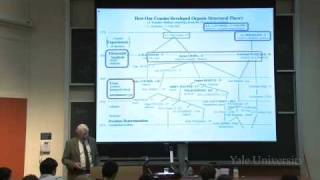
Berzelius, Gay-Lussac, and Davy - Advances in Chemistry from 1805-1832 - Lecture 21
Explore key developments in early 19th-century chemistry, including electrolysis, dualism, and the radical theory, through the work of Berzelius, Gay-Lussac, Davy, Wöhler, and Liebig.

Hemingway's To Have and Have Not - Analysis of Types and Narrative Perspectives
Explore Hemingway's "To Have and Have Not" through its narrative perspectives, character types, and thematic parallels, examining race, class, and sexuality in this complex novel.

Faulkner's The Sound and the Fury - Part IV Analysis
Explore Faulkner's "The Sound and the Fury" through the lens of race, redemption, and community. Analyze the final section's narrative structure and its impact on character development and themes.

Faulkner's The Sound and the Fury - Jason's Section and the Loss of Knowable Community
Explore Jason's narrative in Faulkner's novel, examining the loss of community, modern alienation, and the author's nuanced portrayal of anger and pathos in the face of societal changes.

Faulkner's The Sound and the Fury - Experimental Subjectivity and Benjy's Narrative
Explore Faulkner's experimental narrative in "The Sound and the Fury," focusing on Benjy's unique perspective, sensory experiences, and the novel's innovative approach to time and memory.

The Great Gatsby: Auditory and Visual Fields in Character Relationships - Part 2
Explore the auditory-visual interplay in The Great Gatsby, examining character relationships and themes of accountability, illusion, and disillusionment in Fitzgerald's masterpiece.

Hemingway's In Our Time: Analysis of Expressivity and Emotional Resilience - Part 2
Explore Hemingway's "In Our Time" through analytical frameworks, examining expressivity, substitution, and emotional resilience in his unique blend of tragedy and comedy.

Marx's Theory of Capitalism - Foundations and Labor Theory of Value
Explore Marx's theory of capitalism, focusing on wealth creation, labor theory of value, exploitation, and surplus value. Gain insights into the foundations of Marxist economic thought.
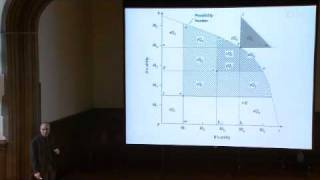
From Classical to Neoclassical Utilitarianism - Moral Foundations of Politics
Explore neoclassical utilitarianism's economic foundations, comparing it with classical utilitarianism. Examine key concepts like Pareto principle and indifference curves, and their implications for redistribution and status quo.

Moral Foundations of Politics - The Trial of Adolf Eichmann and Government Legitimacy
Explore the moral complexities of the Eichmann trial, examining governmental legitimacy and the ethical foundations of political systems through critical analysis and discussion.