Infrastructure for High-Fidelity Testing in HPC Facilities
Explore infrastructure and tools for high-fidelity testing in HPC environments, focusing on hardening software for DOE's Exascale Computing Project and future applications.
How IDEAS-ECP Has Advanced Software Productivity and Sustainability
Discover strategies for enhancing software practices in exascale computing and learn valuable lessons from the IDEAS Productivity Project's experience.
Secure Software Programming Practices and Development for Scientific Software
Explore secure software development practices to mitigate malicious attacks and protect scientific software integrity, authentication, and sustainability.
Supercomputing at the Exascale and Beyond: Future Trends and Challenges
Explore exascale computing advancements, best practices, and future trends in high-performance computing. Learn strategies for developing portable, performant code and adapting algorithms for heterogeneous architectures.
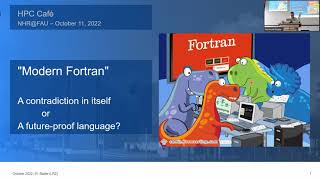
Modern Fortran - A Contradiction or Future-Proof Language?
Explore modern Fortran's evolution, focusing on program design, parallelism, and interoperability. Discover how this 65-year-old language remains relevant for scientific simulations.
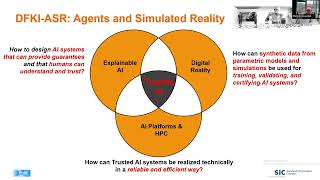
Digital Reality: From Learned Models via Synthetic Data to Trusted-AI - and Back
Explore AI systems' understanding of complex reality through modular learning, simulations, and synthetic data generation. Discover the "Digital Reality" approach combining modeling, AI, and high-performance computing.
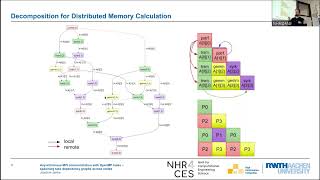
Asynchronous MPI Communication with OpenMP Tasks - Spawning Task Dependency Graphs Across Nodes
Explore asynchronous MPI communication with OpenMP tasks to improve parallel code scalability. Learn to integrate MPI detached communication for real asynchronous execution across processes.
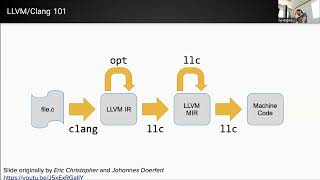
LLVM in HPC - Enabling Performance Portability, Interoperability, and Novel Features - Part 1
Explore LLVM's impact on HPC, covering portable CUDA, debugging at scale, GPU execution of legacy code, and ML in compilers. Learn about efforts to enhance performance, tooling, and development in HPC.
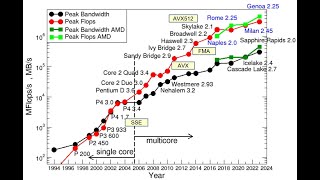
A Review of Processor Advances Over the Past Thirty Years - An Outsider's Perspective
Explore 30 years of processor advancements, focusing on x86 chips in HPC systems. Analyze core properties, memory hierarchy, and compare with Apple Silicon architecture.
New Algorithms in C++23 - Lecture 1
Explore new C++23 Ranges library algorithms and their types, from C++98 to C++23. Gain insights into advanced programming techniques and language features for efficient coding.
Employing Modern C++ for High Performance Delta-Coding Compression
Explore high-performance delta-coding compression using modern C++. Learn reflection-like techniques, delta compression principles, and micro-benchmarking for low-latency code optimization.
C++ Performance Portability - A Decade of Lessons Learned - Lecture
Explore a decade of C++ performance portability challenges and solutions, focusing on Kokkos ecosystem development for efficient cross-platform scientific computing.
Breaking Enigma With the Power of Modern C++ - CppCon 2022
Explore modern C++ techniques to crack the Enigma code, comparing historical methods with contemporary computing power. Learn cryptography and parallel processing concepts.
GPU Accelerated Computing and Optimizations on Cross-Vendor Graphics Cards with Vulkan and Kompute
Explore GPU acceleration and optimizations for cross-vendor graphics cards using Vulkan & Kompute. Learn to implement GPU-accelerated machine learning algorithms and leverage hardware capabilities for performance improvements.
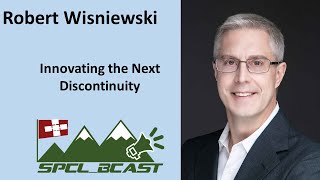
Innovating the Next Discontinuity in HPC and AI Computing
Explore innovative solutions for HPC and AI bottlenecks through Memory Coupled Compute architecture, addressing bandwidth limitations and accelerator efficiency for post-exascale computing.
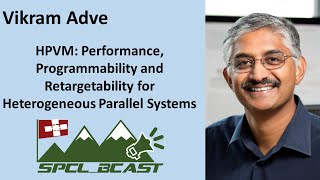
HPVM: Performance, Programmability and Retargetability for Heterogeneous Parallel Systems
Explore HPVM's approach to programming heterogeneous parallel systems, focusing on performance, ease of use, and retargetability across diverse hardware targets.
ML for High-Performance Climate: Data Post Processing, Compression, and Earth Virtualization Engines
Explore advanced ML techniques for climate data processing, compression, and Earth virtualization, enhancing high-performance computing in climate science.
Heterogeneous Multi-Core Systems for Efficient Edge Machine Learning
Explore heterogeneous multi-core systems for efficient embedded ML, addressing challenges in core optimization, workload mapping, and data sharing. Gain insights from KULeuven MICAS research.
Can I Cook a 5 o'clock Compiler Cake and Eat It at 2? - Optimizing Compilers for High-Performance Computing
Explore ML-enhanced compilers and domain-specific code generators in high-performance computing. Examine the programmability/performance dilemma and potential solutions for future compiler development.
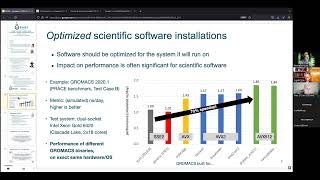
EESSI: A Streamed, Production-Quality, Multi-Platform HPC Software Stack
Explore a versatile HPC software stack for scientific computing across platforms. Learn about EESSI's benefits for education, research, and collaborative development in high-performance computing environments.
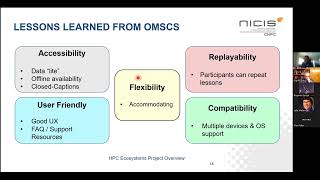
HPC Education in Africa: Workforce Development and Coding Summer School - Seminar 1
Explore HPC education initiatives in Africa: workforce development strategies and a successful coding summer school program.