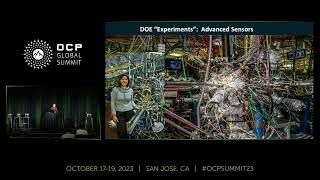
Modular Chiplet Opportunities for High-Performance Computing
Explore how chiplet-based specialized accelerators can revolutionize High-Performance Computing (HPC) systems to overcome Moore's Law limitations and deliver enhanced scientific computing performance.
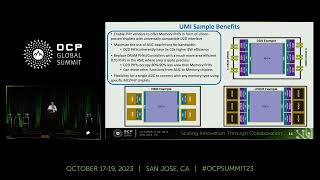
Getting Moore with Less - How Chiplets and Open Interconnect Accelerate Cloud-Optimized AI Silicon
Explore how chiplet technology and open interconnect standards revolutionize AI silicon design, offering solutions to overcome semiconductor scaling limitations and advance high-performance computing.
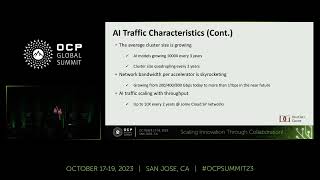
AI Networking Market Overview - Implications for Data Center Infrastructure
Explore the unique characteristics of AI backend networks and their crucial role in connecting accelerated servers for large language models and generative AI workloads.
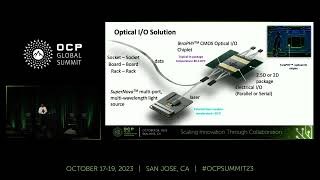
The Next Wave of Computing with Optical I/O - Scaling AI and Cloud Computing Performance
Discover how optical I/O and photonic solutions revolutionize data center performance, enabling higher bandwidth and lower latency for AI, HPC, and cloud computing through advanced chiplet technology.
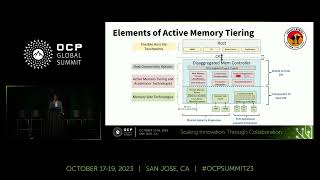
CXL-Enabled Heterogeneous Active Memory Tiering: Architecture and Implementation
Explore CXL Type2-based disaggregated memory architecture and how it extends far memory to remote heterogeneous memory using ethernet, featuring intelligent fabric control and memory tiering.
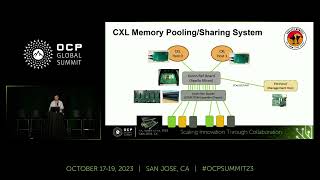
CXL 2.0 Switch Enabling Composable Memory Architecture in AI and HPC Computing
Explore the role of CXL 2.0 switching technology in enabling flexible memory architectures for advanced AI and high-performance computing systems.
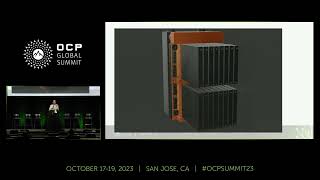
HPC: The Next Generation - A Sustainable Energy-Centric Architecture Innovation
Explore revolutionary sustainable computing architecture that replaces traditional 19" racks with efficient "Wall of Compute" systems, featuring direct water cooling and scalable High Performance Compute Modules.
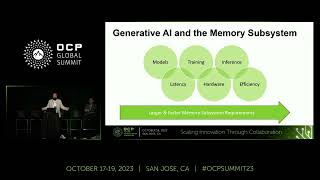
Scalability of Memory Subsystem in AI Storage Systems - IO Profiling and Performance Analysis
Explore IO profiling in AI systems, examining pipeline stages, metadata costs, and filesystem latency impacts on GPU performance, with solutions for optimizing storage systems.
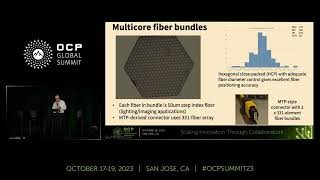
Ultra Low-Power, High-Density Parallel MicroLED Optical Links
Explore groundbreaking microLED optical link technology offering unprecedented power efficiency, bandwidth density, and low latency for next-generation network communications.
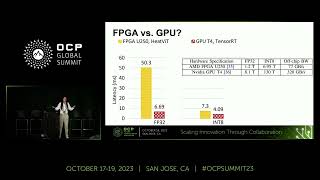
Architectural Challenges and Innovation for Compute Infrastructure Co-Design in Generative AI
Explore architectural solutions for generative AI computing challenges, focusing on heterogeneous computing infrastructure and chiplet-based systems for improved energy efficiency.
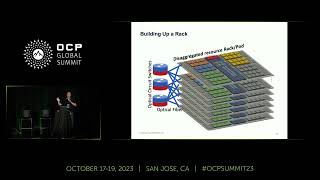
Photonics-Based Resource Disaggregation for HPC
Discover how photonics-based resource disaggregation can revolutionize high-performance computing systems, exploring innovative approaches to enhance data center efficiency and scalability.
The Future of AI/ML Innovation Through Row-Scale Disaggregation
Explore how Composable Disaggregated Infrastructure revolutionizes system architecture for AI/ML applications through innovative network fabric design and extended PCIe capabilities.
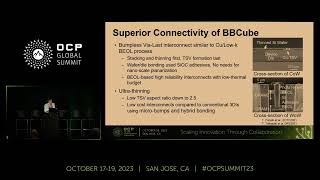
BBCube 3D - Heterogeneous 3D Integration for TB/s Bandwidth in AI and HPC Applications
Discover groundbreaking BBCube 3D technology for heterogeneous integration, offering enhanced bandwidth and energy efficiency through innovative stacking processes and TSV implementation for AI/HPC applications.
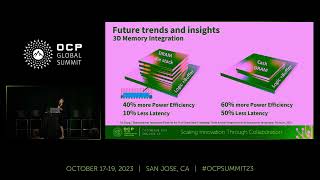
Advanced Packaging Technologies for Chiplet Adoption and Memory Integration in HPC and AI Applications
Explore cutting-edge packaging technologies and chiplet design innovations for next-generation AI and HPC systems, including D2D protocols, hybrid copper bonding, and photonic integration.
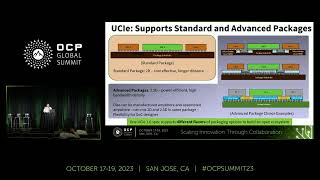
UCIe - Universal Chiplet Interconnect Express for Die-to-Die Integration
Discover how UCIe 1.0 standardizes die-to-die interconnects for high-performance computing, enabling efficient integration of heterogeneous processing units and on-package memory for AI, ML, and cloud computing.
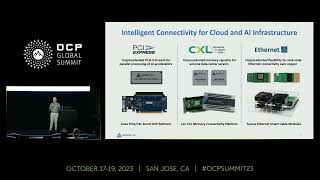
Delivering Unprecedented Scale for AI Infrastructure and Cloud Connectivity
Discover how purpose-built connectivity solutions like PCIe, CXL, and Ethernet overcome performance bottlenecks and scale memory bandwidth, processing, and rack connectivity for AI infrastructure.

Breaking the Barrier: Chip Level Cooling Up to and Beyond 1000W in Single Phase Dielectric Fluid
Discover groundbreaking advancements in single-phase dielectric fluid cooling technology for data centers, achieving unprecedented 1000W+ chip-level cooling capabilities for AI applications.
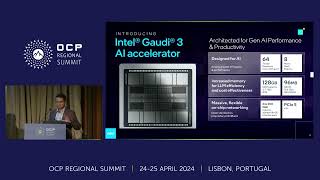
Scaling Systems for Generative AI - Building and Deploying Large Language Models
Discover key strategies for efficiently scaling and deploying generative AI models and large language models across distributed systems using Intel's advanced technologies.
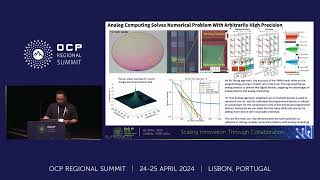
Analog In-Memory Computing with Multilevel Memristive Devices for High Performance Computing
Discover how multilevel memristive devices revolutionize computing by enabling analog in-memory processing, boosting throughput and energy efficiency for deep learning applications and high-performance computing.
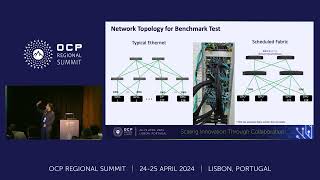
Scheduled Ethernet Fabric for Large-Scale AI Training Clusters
Discover how Scheduled Ethernet Fabric optimizes large-scale AI training clusters, enabling efficient GPU connectivity, workload management, and resilient networking for enhanced computational performance.
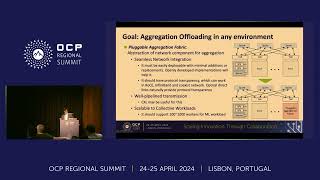
Optcast: Open-Source Aggregation Offloading for Distributed Deep Learning
Discover how to accelerate distributed AI training through open-source in-network aggregation, achieving 1.72x faster performance across multiple GPUs without specialized hardware requirements.