
Open and High Performance Computing
Explore open hardware for high-performance computing, from embedded systems to supercomputers. Learn about OpenPOWER's ecosystem, emphasizing transparency and open-source principles in hardware and software stacks.
Tensorflow on Open Source GPUs
Explore efforts to enable TensorFlow on open-source GPUs using SYCL, LLVM, and OpenCL. Learn about challenges and progress in deploying AI/ML frameworks without proprietary NVIDIA CUDA stack.
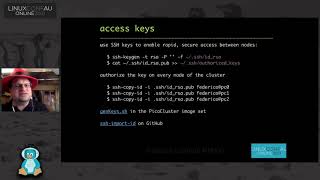
Building Raspberry PI Supercomputers
Learn to build and manage Raspberry Pi supercomputers, from cluster setup to parallel computing. Explore software integration, node configuration, and practical applications using MPI for numerical workloads.

MobX - High Performance Library
Discover MobX: a high-performance state management library. Learn its principles, applications, and inner workings through Noaa Barki's insightful and entertaining presentation.
CPU-Friendly Code
Explore CPU architecture, cache locality, branch prediction, and OS concepts to optimize code performance and efficiency beyond Big-O notation.
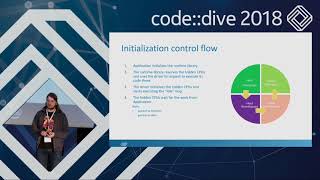
Reducing OS Noise Using Offload Driver
Explore techniques to reduce OS noise and improve performance in multi-core processors using offload drivers, with a focus on Intel® Xeon Phi™ Processors.
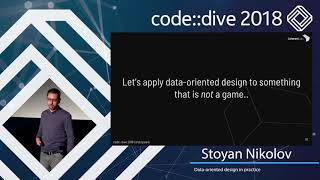
Data-Oriented Design in Practice
Explore data-oriented design as an alternative to OOP in C++, focusing on practical examples from web browsers to demonstrate improved performance, scalability, and maintainability.

Faster than Memcpy
Explore optimization techniques for high-performance image processing, focusing on multi-threading and SIMD instructions for x86-64 architecture to achieve faster-than-memcpy speeds.

Cloud Native C++ - Modern Architecture for Cloud Applications
Explore how modern C++ can be leveraged for cloud-native applications, offering high performance without sacrificing readability and maintainability. Learn to adapt C++ for cloud deployment without rebuilding in other frameworks.
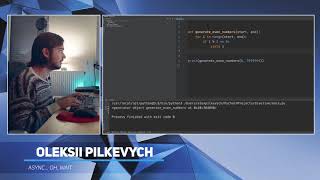
Async - Oh, Wait
Explore common pitfalls and challenges in asynchronous Python programming, with insights on improving code efficiency and avoiding mistakes for developers new to asyncio.
Metaprogramming Applied to Numerical Problems
Explore advanced Template Metaprogramming techniques for implementing efficient Runge-Kutta schemes to solve ordinary differential equations in various scientific fields.
HPX - A C++11 Parallel Runtime System
Explore HPX, a C++11 parallel runtime system offering an alternative to MPI for computational science applications, featuring lightweight user-threads and Active Global Address Space.
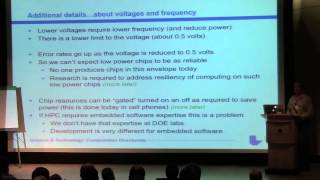
C++ Use in High Performance Computing Within DOE - Past and Future
Exploration of C++'s role in high-performance computing at the Department of Energy, examining historical applications and future prospects in scientific and technical computing.
Scaling with C++11
Techniques for building hyperscalable software: design principles, multithreading patterns, memory management, and asynchronous I/O in C++11 for maximizing parallel execution and reducing inter-thread dependencies.
HPX - A C++ Runtime System for Parallel and Distributed Computing
Explore HPX, a C++ runtime system for parallel and distributed computing. Learn about its innovative approach to multi-core processing, asynchronous task execution, and scalable addressing for high-performance applications.
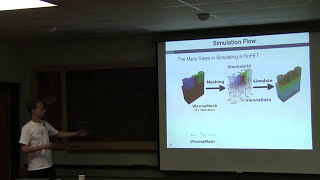
A Discussion of Selected Vienna-Libraries for Computational Science
Explore Vienna-Libraries for computational science: ViennaCL, ViennaGrid, ViennaData, ViennaMath, and ViennaFEM. Learn how C++ can better meet scientific computing needs.

Multi-Threading with C++11 and Boost
Explore C++11 and Boost for multi-threading through practical examples, including thread-safe queues, parallel tasks, and task interruption. Learn about threads, mutexes, and condition variables.
The Numerical Template Toolbox for High Performance Computing
Explore the Numerical Template Toolbox for high-performance computing in C++, focusing on efficient array operations, architectural optimization, and intuitive API design using Boost components.
Numerical Weather Prediction - Facing the Future with C++
Explore numerical weather prediction's future with C++, addressing challenges in data processing, scalability, and power efficiency for complex atmospheric modeling and forecasting.
Back to the Future
Exploring advanced C++ abstractions for multi-core and parallel computing, focusing on a heterogeneous, extensible future implementation that outperforms existing models like OpenMP and MPI.

Boost.Compute - A Library for GPU - Parallel Computing
Explore Boost.Compute, a high-level API for GPU/parallel computing. Learn to write efficient C++ applications for GPUs, FPGAs, and multi-core CPUs using this portable, STL-like library.