GraphLab - Machine Learning for Big Data in the Cloud
Explore GraphLab, a framework for efficient parallel machine learning algorithms handling Big Data. Learn about its advantages over existing tools and its impact on large-scale tasks.

AI for Everyone - Learn Modern Artificial Intelligence from Scratch
Learn to effectively use AI for daily tasks and build amazing apps, covering basics to advanced topics like prompt engineering, GPU usage, and app development.

Machine Learning News: Gemma, Gemini, Groq, Sora, and AI Developments
Explore latest ML developments: Gemma, Groq, Sora, Gemini updates. Dive into hardware advancements, AI ethics, and amusing incidents. Stay informed on cutting-edge AI progress and industry news.
Network Configurations for High-Performance Streaming Connectivity in Kubernetes
Optimize Kubernetes networking for high-performance streaming. Explore network setups, Container Network Interface, and proxy solutions to enhance data connectivity and reduce latency in K8s environments.

Answer.ai - Addressing Industry and Academia Challenges
Explore Jeremy Howard's insights on answer.ai, industry and academia challenges, and unlocking human potential in AI. Gain valuable perspectives on the future of AI development and education.

Creating a Viral Deep Fake Using Face Fusion - CPU and GPU
Explore the creation of viral deep fakes using Face Fusion, covering installation, GPU usage, and the artistic process behind realistic AI-generated videos.
Efficient Multi-Cluster GPU Workload Management with Karmada and Volcano
Explore efficient multi-cluster GPU workload management using Karmada and Volcano for AI/ML platforms, addressing challenges in resource allocation, scheduling, and operational costs across diverse environments.
Advanced Resource Management for Running AI/ML Workloads with Kueue
Explore Kueue's advanced resource management for AI/ML workloads on Kubernetes, including quota-based sharing, priority scheduling, and real-world applications in multi-tenant environments.
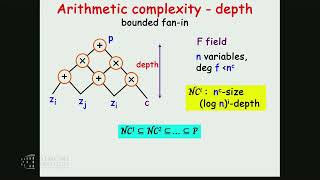
Faster Parallel Algorithms for Basic Linear Algebra Problems
Explore advanced parallel algorithms for fundamental linear algebra, enhancing computational efficiency in mathematical problem-solving.
Investigating Checkpoint and Restore for GPU-Accelerated Containers
Explore checkpoint and restore capabilities for GPU-accelerated containers, examining current functionalities and ecosystem gaps to optimize resource utilization in model training.
Vendor-Neutral GPU Programming in Chapel
Explore Chapel's vendor-neutral GPU support for portable, parallel computing across diverse hardware. Learn to write GPU-enabled programs and discover opportunities for open-source involvement.
Advanced NATS - Cloud Native Live
Explore advanced NATS concepts for cloud-native messaging, enhancing your understanding of distributed systems and real-time communication in modern architectures.
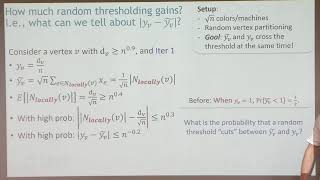
Graph Algorithms in the Massively Parallel Computation Model
Explore efficient graph algorithms in the Massively Parallel Computation model, focusing on techniques for near-linear memory regime and comparing MPC to other distributed/parallel models.
Conditional Hardness for Massively Parallel Computing Via Distributed Lower Bounds
Explore conditional hardness in massively parallel computing through distributed lower bounds, examining theoretical challenges and algorithmic implications for sublinear algorithms.
An Introduction to Distributed, Massively Parallel, and Local Computation Algorithms
Explore distributed, massively parallel, and local computation algorithms, focusing on their applications, challenges, and recent advancements in sublinear algorithmic techniques.
Accomplishments of the Exascale Computing Project
Explore the Exascale Computing Project's legacy, including key outcomes in algorithm design, performance portability, and multidisciplinary collaboration for advanced computational science.
Running Plain Kubernetes Pods on SLURM - April 17, 2024
Explore innovative techniques for running Kubernetes pods on SLURM, bridging cloud-native and HPC environments for enhanced computational workflows and resource management.
Performance and Scale: Domain-Oriented Objects vs Tabular Data Structures - Fintech Applications
Explore efficient data handling in Fintech: comparing domain-oriented objects vs tabular structures for high-performance CSV processing, focusing on scalability and advanced data processing capabilities.

Using SwarmUI and Stable Diffusion 3 on Cloud Services - Installation and Usage Guide
Learn to install and use SwarmUI with Stable Diffusion 3 on cloud services like Massed Compute, RunPod, and Kaggle. Covers setup, GPU optimization, model downloading, and image generation across platforms.
A High-Performance Design, Implementation, Deployment, and Evaluation of The Slim Fly Network
Explore the first real-world Slim Fly network installation, offering cost and power advantages over traditional topologies. Learn about deployment, management, and performance analysis of this innovative low-diameter network.

Using RunPod Storage Network Volume with Automatic1111 and ControlNet - Advanced Tutorial
Comprehensive guide on using RunPod's Storage Network Volume, deploying Automatic1111 with ControlNet, and leveraging InstantID for advanced image generation and face transfer techniques.