
Syphilis: From the "Great Pox" to the Modern Version - Epidemics in Western Society
Explore syphilis' history, origins, symptoms, and societal impact from the 16th century to modern times. Delve into debates surrounding its emergence and spread across Europe.

The Sanitary Movement and the 'Filth Theory of Disease' - Epidemics in Western Society Since 1600
Explore the 19th-century sanitary movement's impact on public health, urban planning, and social reform, focusing on key figures and cities that shaped modern approaches to disease prevention.

Asiatic Cholera: Five Pandemics and Their Impact on 19th Century Society - Lecture 2
Explore the impact of Asiatic cholera in 19th-century Europe, its symptoms, societal effects, and community responses. Understand how this disease shaped social perceptions and political anxieties of the era.

Smallpox - From Endemic Disease to Eradication - Lecture 2
Explore smallpox's impact on Europe and the New World, public health responses, and the development of inoculation and vaccination techniques in this historical analysis.

Smallpox - The Speckled Monster and Its Impact on Western Society - Lecture 6
Explore the history, transmission, symptoms, and treatments of smallpox in 18th century Western society, from its rise as a feared disease to early attempts at prevention and cure.

Plague Responses and Public Health Measures in Western Society - Lecture 4
Explores community responses to bubonic plague, from panic and persecution to religious revivals and the emergence of public health programs, examining their effectiveness in combating the pandemic.

Evolution of Pesticide Regulation in the United States - Lecture 9
Explore the evolution of pesticide regulation in the US, from early food laws to modern risk assessment, reflecting changes in scientific understanding and societal values over time.
Nineteenth-Century Cities - Urban Growth and Social Change in Europe and America
Explore 19th-century urbanization, class segregation, and city development through the lens of European history, with a focus on Paris as a case study of urban transformation and social dynamics.
Interspecific Competition in Ecology and Evolution - Lecture 27
Explore interspecific competition's impact on evolution, including classical patterns, experimental evidence, conceptual frameworks, and real-world implications in ecology and biology.
Selfishness and Altruism in Evolution, Ecology, and Behavior - Lecture 36
Explore evolutionary explanations for altruism, including kin selection and ecological constraints, challenging the idea that self-sacrifice contradicts natural selection.
Life History Evolution - Principles of Evolution, Ecology and Behavior
Explore evolutionary tradeoffs in organism traits: maturity, offspring, and lifespan. Understand how genes and environment shape life history strategies for survival and reproduction.
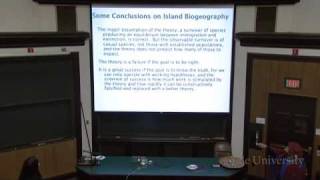
Island Biogeography and Invasive Species - Principles of Evolution, Ecology and Behavior
Explore island biogeography, metapopulations, and their ecological significance. Learn how these concepts apply to species distribution, extinction risks, and even epidemiology in this insightful lecture.
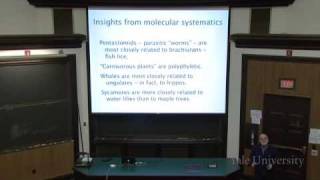
Phylogeny and Systematics - Principles of Evolution, Ecology and Behavior
Explore genetic analysis techniques for constructing accurate evolutionary trees, understanding common ancestry, and avoiding misleading analogies in phylogenetic grouping.

SARS, Avian Influenza, and Swine Flu - Lessons and Prospects for Global Health
Explore SARS, avian flu, and swine flu as modern epidemics, examining their global impact, public health responses, and lessons for future disease outbreaks in this insightful Yale lecture.

AIDS: A Clinician's Perspective on the Modern Epidemic - Lecture 23
Dr. Margaret Craven explores AIDS as a modern epidemic, discussing its rapid global spread, medical and social factors, challenges in public health response, and future directions in treatment and prevention.

AIDS: Global Impact and Public Health Strategies - Lecture 1
Explore the global AIDS pandemic, its transmission, epidemiology, societal impacts, and public health strategies, with a focus on regional differences and local factors affecting the epidemic.

Malaria - The Global Challenge and Eradication Efforts - Lecture 17
Explore the history of malaria, its complexity, and global eradication efforts, focusing on Italy's successful campaign and its implications for future strategies.

Malaria - The Case of Italy and Its Global Impact
Explore malaria's profound impact on human biology, society, and global health disparities. Discover its etiology, symptoms, and the mosquito theory of transmission in this comprehensive historical overview.

The Germ Theory of Disease - Epidemics in Western Society Since 1600
Explore the revolutionary germ theory of disease, its preconditions, key figures like Pasteur and Koch, and its profound impact on medical science and public health.

Contagionism versus Anticontagionism in 19th Century Medicine - Lecture 13
Explore the 19th-century debate between contagionists and anticontagionists, examining their theories, key figures, and lasting impacts on public health policy and disease control.

Asiatic Cholera - Historical Detective Work and Concealment - Lecture 1
Uncover the hidden 1911 cholera epidemic in Italy and its deliberate concealment by authorities. Explore the historical detective work, public health implications, and parallels to modern disease outbreaks.