
Keeping Your Heart Healthy - Cardiovascular Disease Prevention Strategies
Discover strategies for cardiovascular health, including risk factor management, exercise importance, diagnostic tests, and glucose control, with insights from a preventive cardiology expert.
Divide and Conquer - Concept-based Models for Efficient Transfer Learning
Exploring concept-based interpretable AI models for efficient transfer learning in healthcare, focusing on generalizability and minimal data requirements for domain adaptation in medical imaging.

AI's Role in Improving Health Care Services in Our Communities
Stanford experts discuss AI initiatives in healthcare, focusing on early disease detection, preventive care, and reducing provider burnout, while addressing privacy and equity concerns.
Towards Robust Radiogenomic Models for Brain Tumor Characterization - MedAI #123
Exploring stability of radiomics features in brain tumor segmentation and impact on predictive models. Investigates how stable, discriminatory features lead to generalizable radiogenomics for tumor characterization.
Integrating Pathology Images and Genomics Data for Cancer Grading
Innovative AI methods for integrating pathology images and genomics data to enhance cancer grading accuracy, addressing modality challenges and improving performance when genomics data is missing.
HECTOR - Multimodal Deep Learning Model for Predicting Recurrence Risk in Endometrial Cancer
Multimodal deep learning model HECTOR predicts endometrial cancer recurrence risk using histopathology images and tumor stage, outperforming current standards for personalized treatment decisions.
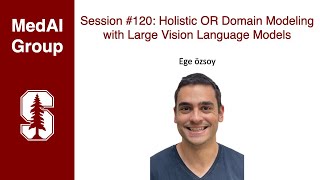
Holistic OR Domain Modeling with Large Vision Language Models - MedAI #120
Innovative approach to automated OR modeling using Large Vision Language Models, leveraging semantic scene graphs for comprehensive surgical environment understanding and enhanced decision-making.
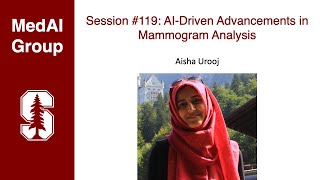
AI-Driven Advancements in Mammogram Analysis - MedAI #119
Exploring AI applications in mammogram analysis for cancer screening and cardiovascular risk assessment, addressing challenges in healthcare AI adaptation and extracting actionable clinical insights.

Lung Cancer in Asian Americans: Screening, Treatment, and Advancements
Explore lung cancer's impact on Asian Americans, screening guidelines, and treatment advancements. Learn about rising rates among non-smokers and cutting-edge surgical techniques for improved outcomes.

Navigating Medication Management for Diabetes - Stanford Wellness Webinar
Gain expert insights on diabetes medication management, including adherence strategies, cost reduction, and supplement considerations. Enhance your healthcare provider discussions and treatment plan.

Knee Osteoarthritis: Non-Operative Approaches to Treatment
Explore non-operative treatments for knee osteoarthritis, including supplements, diet, braces, and injections. Learn from a Stanford expert about managing this common condition effectively.
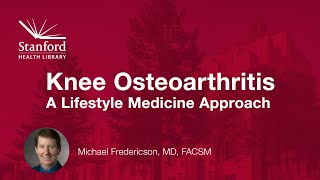
Knee Osteoarthritis: A Non-Operative Approach to Treatment
Explore non-operative treatments for knee osteoarthritis, including supplements, diet, braces, and injections. Learn from a Stanford expert about managing this common condition without surgery.

Liver Disease in Asian Americans: Unique Risk Factors and Treatment Advancements
Uncover the unique risks and patterns of liver disease in Asian Americans, exploring early signs, screening importance, and latest treatments with Dr. Mindie Nguyen.

MIT Computational Biology - Genomes, Networks, Evolution, Health - Fall 2018
Comprehensive exploration of computational biology, covering genomics, networks, evolution, and health applications through advanced algorithms, data analysis, and cutting-edge research topics.

Police Brutality Teach-Out
In this Teach-Out, you will learn about the history of police violence in America, become aware of laws and policies that prevent accountability, understand the demands of protesters, and gain the knowledge and tools to fight for change locally.

William Butler Yeats's Late Poetry - Analysis and Interpretation - Lecture 6
Explore Yeats's late poetry, examining themes of aging, knowledge, and art. Analyze works like "Sailing to Byzantium" and "Lapis Lazuli" to understand his evolving perspectives on life and creativity.

Demographic Transition in Europe - Global Problems of Population Growth
Explore Europe's demographic shift: from marriage-controlled fertility to individual choice, rapid population growth, and increased life expectancy, reshaping societal norms and human experiences.

Economic Motivations for Fertility - Lecture 19
Explore economic factors influencing fertility rates, including children as goods, education's role, and modernization's impact on family planning decisions and resource allocation.

From Ape to Human - Evolution of Violence and Fertility
Explore human violence, warfare, and fertility patterns throughout history, comparing them to other great apes and examining their impact on population growth and societal development.

Global Demography of Abortion - Lecture 21
Explore global abortion trends, rates, legality, health impacts, and controversies. Examine the relationship between contraception and abortion across different countries and cultures.

Pandemic Influenza: Historical Patterns and the 1918-1920 Spanish Flu
Explore the history of influenza pandemics, focusing on the devastating 1918-1920 Spanish flu, its unique characteristics, and lessons for modern public health responses.