
Inclusive Excellence at Harvard and Beyond - A Conversation with John Wilson
Explore Harvard's inclusive excellence initiatives and lessons from HBCUs with John Wilson, discussing strategies for building a more diverse and welcoming academic environment.

Conflicts Over Science and Policy at the EPA - Environmental Challenges and Future Directions
Explore challenges facing environmental science and policy in the U.S., including EPA changes, regulatory rollbacks, and their public health implications. Experts discuss impacts and potential steps forward.

The Fruit Fly as a Research Tool for Human Disease
Explore how fruit fly genetics contribute to human disease research, including cancer and neurodegenerative disorders, and their potential for developing new treatments.

Clinical Trial Lightning Round: HIV Cure Research Studies at Harvard
Explore cutting-edge HIV cure research through rapid-fire presentations by Harvard faculty, covering diverse topics from mucosal studies to treatment interruption.
Rethinking Architecture Design for Data Heterogeneity in FL - Liangqiong Qu
Explores innovative architecture designs for federated learning in medical AI, focusing on Transformers to address data heterogeneity challenges and improve model performance across diverse healthcare institutions.
Frontiers of Medical AI - Therapeutics and Workflows
Explore cutting-edge AI applications in medicine, focusing on therapeutics and workflow optimization. Learn about AI-driven cancer treatment decisions, protein engineering, and specialized medical search engines.
Style Transfer Augmentations for Computational Pathology - Rikiya Yamashita
Innovative style transfer augmentation technique for improving machine learning model generalization in computational pathology, enhancing robustness to domain shifts and achieving state-of-the-art performance in classification tasks.
Learning the Structure of EHR with Graph Convolutional Transformer - Edward Choi
Explore graph convolutional transformers for learning EHR structure, combining graph convolution and self-attention for supervised prediction tasks in healthcare analytics and representation learning.
Patient-Specific COVID-19 Resource Utilization Prediction Using Fusion AI Model - Amara Tariq
Explore AI-driven prediction of COVID-19 resource utilization using fusion modeling, combining patient history and current indicators for efficient healthcare planning and allocation.
Self-Supervision & Contrastive Frameworks - A Vision-Based Review
Comprehensive review of self-supervised and contrastive learning frameworks in computer vision, exploring methodologies, performance, and potential applications in medical imaging.

Segmentation and Quantification of Breast Arterial Calcifications - Xiaoyuan Guo
Explore innovative techniques for segmenting and quantifying breast arterial calcifications in mammograms, aiming to improve cardiovascular risk assessment for women through non-invasive methods.
Few-Shot Chest X-Ray Diagnosis Using Clinical and Literature Images
Explore innovative few-shot learning methods for chest X-ray diagnosis using clinical and literature images, enhancing radiology image analysis with advanced machine learning techniques.
Understanding Scanner Utilization with Metadata Extraction - Pradeeban Kathiravelu
Real-time DICOM metadata extraction for analyzing scanner utilization in radiology. Niffler framework enables accurate performance metrics, supports ML pipelines, and improves resource management in healthcare networks.
Opioid Use Disorder Prediction Using AI and Existing Risk Models
Comparative study on AI models for predicting opioid use disorder, showcasing superior performance of transformer-based AI over existing clinical tools and other machine learning approaches.

Denoising Diffusion Models for Denoising Diffusion MRI - Tiange Xiang
Explore innovative self-supervised denoising techniques for diffusion MRI using denoising diffusion models. Learn about a three-stage framework integrating statistic-based theory for improved medical imaging quality.
Explaining Model Decisions and Fixing Them Through Human Feedback
Explore algorithms for explaining deep network decisions, building user trust, incorporating domain knowledge, learning grounded representations, and correcting unwanted biases in AI models.
Fairness in Representation Learning - Natalie Dullerud
Explore fairness in deep metric learning, evaluating bias in representations and its impact on minority subgroups. Learn about a novel approach to mitigate bias and improve fairness in machine learning models.
Real-Time Seizure Detection Using EEG - Hyewon Jeong
Comprehensive comparison of state-of-art models for real-time seizure detection using EEG, evaluating performance metrics and exploring optimal feature extractors for practical clinical applications.
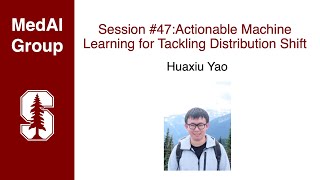
Actionable Machine Learning for Tackling Distribution Shift - Huaxiu Yao
Explore techniques for building robust machine learning models that can handle distribution shifts, including subpopulation and domain shifts, and adapt to new test distributions with minimal labeled data.
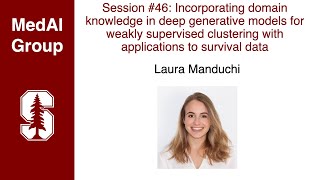
Generative Models With Domain Knowledge for Weakly Supervised Clustering
Explore deep generative models for weakly supervised clustering, incorporating domain knowledge and survival data to guide algorithms towards medically meaningful findings in biomedical datasets.
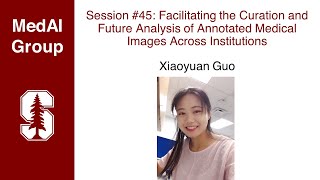
Curation and Analysis of Annotated Medical Images Across Institutions - Xiaoyuan Guo
Explore techniques for curating and analyzing annotated medical images across institutions, focusing on data sharing challenges, anomaly detection, and OOD-aware image retrieval for improved dataset quality and future analysis.